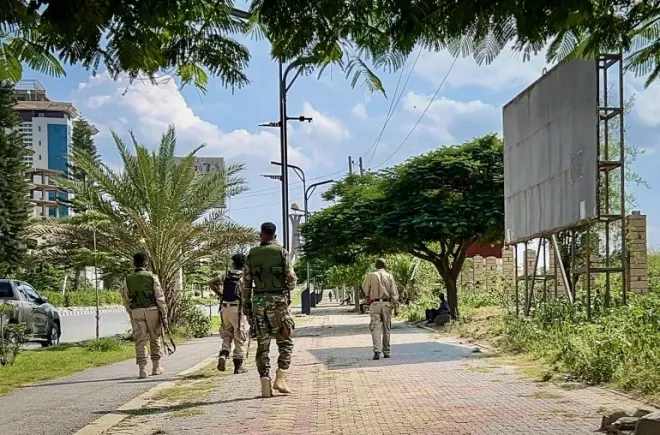
The conflict in northern Ethiopia has taken a concerning turn as fighting between the federal military and forces from the Tigray region, along with their allies, has led to a significant disruption in telecom and internet networks. This development has sparked fears of a repeat of the devastating communications blackout and supplies blockade that occurred during the 2020-2022 civil war in northern Ethiopia. The blackout has been reported to have started on Friday, with web monitor NetBlocks detecting an internet disruption in northern Ethiopia.
According to reports, the Tigray People’s Liberation Front, the ruling party of Tigray, ordered private operator Safaricom and state-owned Ethio telecom to cut off access to phone and internet networks in the region. This move is believed to be a tactic to neutralize the advantage of government forces using battlefield drones. The conflict has been escalating, with lower-level clashes between federal and Tigrayan forces ongoing for some time, but this week saw a significant intensification of fighting across Tigray and into the neighboring Afar and Amhara regions.
A new alliance of seven armed groups, known as the Ethiopian Peoples’ Forces Alliance for Survival, has been formed with the goal of removing the government of Prime Minister Abiy Ahmed. This alliance has committed itself to countering the current government, and the Tigray Army has reported that the federal government has launched a full-scale offensive involving infantry, mechanized units, and drones. In response, Tigrayan forces have begun what they describe as a defensive war.
The alliance forces have made significant gains, seizing control of three airports and launching attacks against federal troops in Afar and Amhara. The federal government has accused Eritrea of financially backing the TPLF and its allies, a claim that Eritrean leaders in the capital Asmara deny. Abdisalam Balema, a member of the TPLF’s central committee, has stated that the situation has escalated into a full war, marking the most serious escalation since the civil war in 2020-2022.
The renewed fighting comes at a sensitive time, particularly for the United States, which recently lifted sanctions on Ethiopia and Eritrea related to atrocities committed during the last civil war. The US had declared that the national emergency had expired, but the current conflict may draw in neighboring Eritrea, which fears that landlocked Ethiopia is planning to invade it to gain access to the Red Sea. This development has raised concerns about the potential for further escalation and regional instability.
The impact of the conflict on civilians is already being felt, with reports of people in Tigray rushing to stock up on basic supplies and withdraw cash. The communications blackout and potential supplies blockade have raised fears of a repeat of the famine-like conditions that occurred during the 2020-2022 conflict, which killed an estimated 600,000 people. The situation remains dire, with the potential for significant humanitarian consequences.
The international community is closely watching the developments in northern Ethiopia, with concerns about the potential for further escalation and the impact on regional stability. The conflict has significant implications for the region, and efforts to de-escalate the situation and find a peaceful resolution are underway. The situation remains fluid, and the humanitarian consequences of the conflict continue to grow.
Key points
- The conflict in northern Ethiopia has led to a significant disruption in telecom and internet networks, sparking fears of a repeat of the devastating communications blackout and supplies blockade that occurred during the 2020-2022 civil war.
- A new alliance of seven armed groups has been formed with the goal of removing the government of Prime Minister Abiy Ahmed, and the conflict has significant implications for regional stability.
- The impact of the conflict on civilians is already being felt, with reports of people in Tigray rushing to stock up on basic supplies and withdraw cash, and fears of a repeat of the famine-like conditions that occurred during the 2020-2022 conflict.