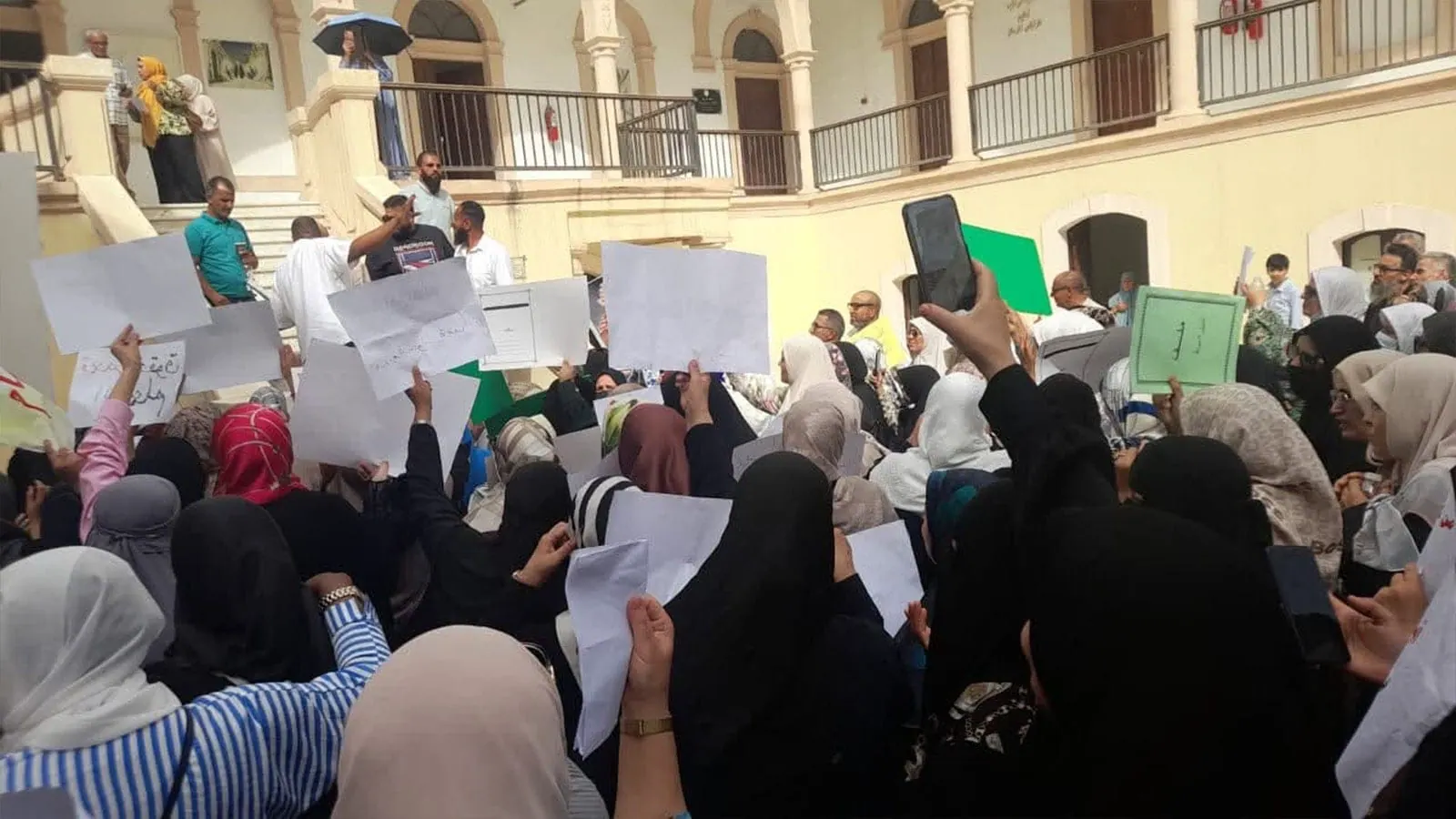
The general strike by teachers in several Libyan cities has continued for a third consecutive week, with unions insisting on their demands related to financial and job conditions for educators. The strike, announced by the Libyan Teachers' Movement, involves all educational institutions nationwide. The movement stated that the strike would continue until their demands are met.
The Libyan Teachers' Movement said the strike was a result of the lack of serious response and implementation of teachers' demands. They emphasized that the strike was not against education or the Libyan people but a professional and rights-based movement to defend teachers' dignity and rights. Key demands include a unified salary scale, payment of due financial differences, medical insurance, and improved working conditions for teachers and school principals.
The movement highlighted that the strike would persist until their demands are transformed into concrete decisions and implemented on the ground. They stressed unity among teachers across different cities and regions, calling for a unified stance and maintaining the peaceful nature of the movement. The strike is taking place amid efforts by the Ministry of Education to address outstanding issues.
On September 15, the Minister of Education, Muhammad Al-Qarriw, met with union representatives and announced a roadmap to tackle the raised issues and find practical and sustainable solutions. Al-Qarriw emphasized on September 20 that empowering teachers, regular schooling, and stabilizing educational institutions are priorities for the upcoming phase.
Al-Qarriw and Minister of State for the Prime Minister and Cabinet Affairs, Muhammad bin Ghalbun, discussed strategic challenges facing the education sector and ways to address them on September 23. The Ministry stated that the meeting focused on preparing a comprehensive executive vision in coordination with the Prime Minister's office and relevant parties.
The ongoing strike comes as parties have not announced a comprehensive final settlement regarding teachers' demands. The movement continues to demand clear official decisions, timelines, and binding implementation mechanisms for all their demands. Various cities, including Zawiya, Sorman, and Sabrata, have seen continued strikes by teachers' unions.
The strike's impact on the new academic year's start is uncertain, with the situation appearing increasingly uncertain. The Ministry of Education's efforts to resolve the issues and the teachers' unions' determination to press on with their demands will be crucial in determining the outcome. The situation remains fluid, with no clear resolution in sight.
Key points
- The strike is over teachers' demands for better financial and job conditions.
- The Libyan government is working to address the teachers' demands.
- The strike's impact on the new academic year is uncertain.