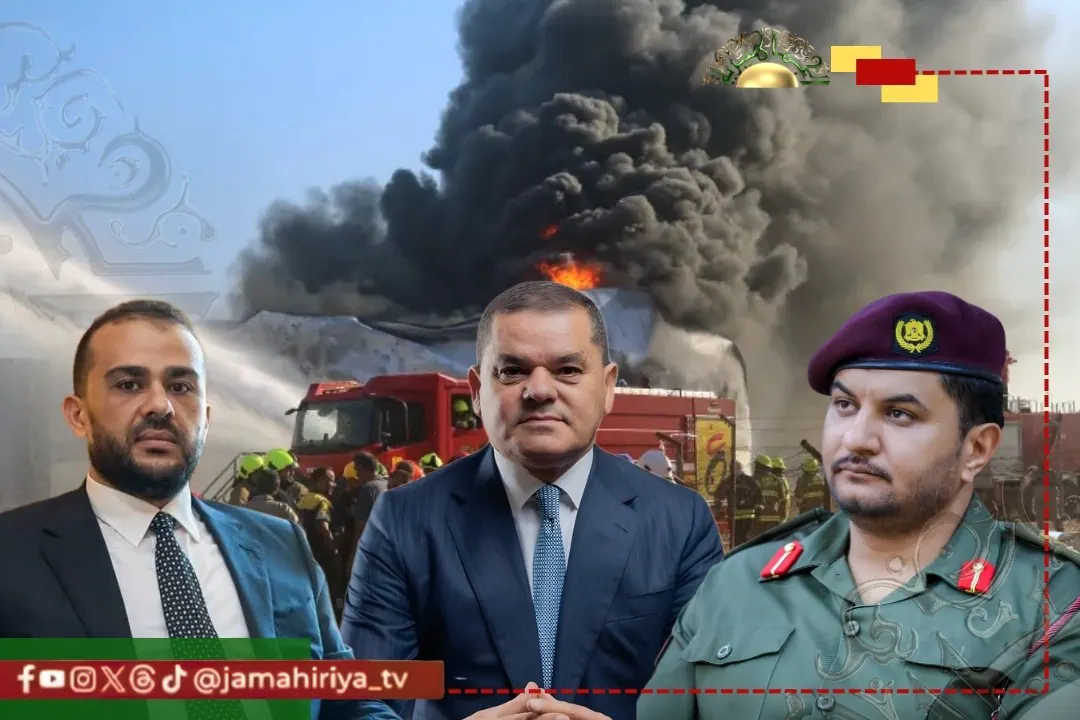
Libyan Prime Minister Abdul Hamid Dbeibeh has accused Sadam Al-Haftar, a prominent figure in the country's volatile security landscape, of leading a cell that targeted oil facilities in Zawiya and Tripoli. During a meeting with notables from the city of Misrata on September 26, 2026, Dbeibeh claimed that Sadam Al-Haftar directly ordered the operations. The alleged cell, reportedly linked to the Tariq bin Ziyad Brigade, carried out attacks on oil facilities and attempted to assassinate high-ranking officials, including Abdul Salam Al-Zubi and Abdullah Al-Lafi.
According to the Italian newspaper Il Follio, Dbeibeh revealed that five individuals connected to the cell had been apprehended, including two Spanish nationals and three Libyans. The prime minister stated that the cell received instructions from Sadam Al-Haftar through Yunus Sharif al-Din. The arrests and subsequent investigations uncovered a laptop containing documents related to the attacks, as well as information on the cell's activities and contracts with Spanish companies.
The laptop, found in an apartment in Tripoli, allegedly contained documents that implicated the cell in military operations within Sudan. Il Follio also reported that a manager at the Spanish company Repsol was accused of providing a cover for the cell members by presenting them as technicians and engineers. However, Repsol denied the allegations, calling them "completely false." The company declined to comment on the whereabouts of the accused manager.
Following the discovery of the laptop's contents, secret negotiations took place between Tripoli and Benghazi in an effort to reach a settlement on the issue. Il Follio reported that Sadam Al-Haftar and Abdul Salam Al-Zubi met in the United Arab Emirates as part of these negotiations. The UAE allegedly played a direct role in mediating a resolution, which may be linked to the reported activities of the cell in Sudan.
Six participants in the Misrata meeting told Il Follio that Dbeibeh confirmed the existence of negotiations regarding the case, despite Al-Zubi's denial. The talks aimed to de-escalate tensions and address the security concerns raised by the cell's activities. The involvement of external actors, including the UAE, highlights the complex nature of Libya's security landscape and the challenges faced by the government in maintaining stability.
The accusations made by Dbeibeh against Sadam Al-Haftar and the alleged cell have significant implications for Libya's security and politics. The country's oil facilities have been a recurring target for armed groups, and the government's ability to protect these critical infrastructure sites remains a pressing concern. The reported involvement of foreign nationals and companies adds another layer of complexity to the situation.
The situation remains fluid, with multiple stakeholders and interests at play. As Libya continues to navigate its fragile security environment, the government's response to these allegations and the subsequent negotiations will be closely watched. The international community is likely to be invested in the outcome, given the potential implications for regional stability and the global energy market.
Key points
- * Libyan Prime Minister Abdul Hamid Dbeibeh accused Sadam Al-Haftar of leading a cell that targeted oil facilities in Zawiya and Tripoli. * The alleged cell, linked to the Tariq bin Ziyad Brigade, carried out attacks and attempted to assassinate high-ranking officials. * Secret negotiations between Tripoli and Benghazi, facilitated by the UAE, aimed to reach a settlement on the issue.