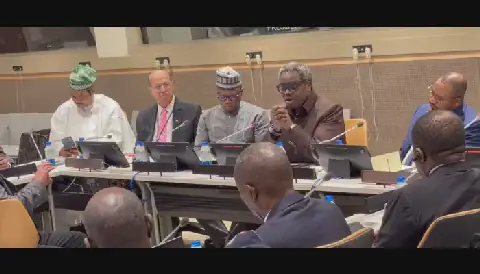
Former General Manager at the Nigerian National Petroleum Corporation (NNPC), Engr. Babajide Soyode, has urged the Federal Government to ensure that marketers acquire the existing 21 petroleum product and distribution depots across Nigeria to streamline fuel distribution. This move aims to reduce the cost and logistical challenges associated with moving petrol and other refined products across the country. Soyode suggested that the government form a company called "Petroleum Products Storage and Distribution Company of Nigeria" with NNPC Ltd having a minimum equity.
Soyode emphasized that all marketers must own equities and liaise with NNPC, which should have a minimum equity. He highlighted the importance of strategically located depots, such as Mosimi Depot, in supporting Nigeria's transition from an import-dependent petroleum market to a more integrated domestic refining and distribution system. These depots, he argued, are national economic assets that can play a major role in solving Nigeria's longstanding petroleum distribution challenges.
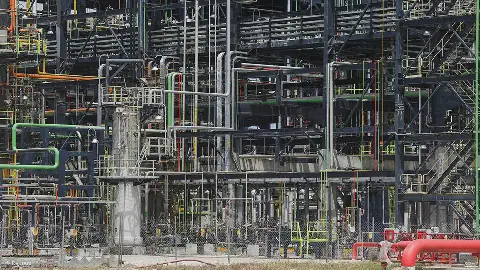
The majority of the 21 strategic petrol product depots have been inactive due to chronic sabotage and lack of active pumping capacity. The multi-product pipeline network connecting them to refineries and coastal jetties has been crippled, and criminal networks have targeted national pipeline corridors, severely constraining the hydraulic transport of products directly to inland depots. As a result, petroleum product evacuation and distribution heavily depend on expensive bridging and trucking via road networks.
Soyode pointed out that Nigeria already possesses critical distribution infrastructure that could be repositioned to support domestic refineries and ensure efficient movement of petroleum products. He specifically mentioned the Mosimi Depot and other strategically located facilities as assets that could be integrated into a coordinated national supply network. This would enable products to be received from refineries and distributed to different parts of the country, reducing transportation costs and supply bottlenecks.
The expert argued that existing depots should not be abandoned merely because their infrastructure has deteriorated or because the pattern of petroleum distribution has changed over the years. Instead, the government should assess the facilities, acquire those considered strategically important, and upgrade them for modern distribution requirements. This forms part of a broader proposal for restructuring Nigeria's downstream petroleum industry, with the government focusing on regulation, strategic infrastructure, and energy security.
Soyode also criticized the proliferation of petroleum depots around Lagos, arguing that their concentration around the Apapa axis has contributed to congestion and increased pressure on roads and other infrastructure. He suggested that some existing depots could be converted or repositioned for other energy-related uses, including petrochemical production. Strategically important facilities could be incorporated into a national petroleum distribution network to support the development of domestic refining capacity.
With the emergence of the Dangote Petroleum Refinery and efforts to revive government-owned refineries, Soyode emphasized that Nigeria must ensure that refined products can move efficiently from production centers to major consumption markets. A functional network of strategically located depots would allow products to be stored closer to major markets and distributed through shorter and more efficient routes, reducing costs and exposing roads to less heavy truck traffic.
Key points
- Expert calls for efficient use of 21 petroleum product depots to reduce fuel distribution costs and logistical challenges in Nigeria.
- Government should form a company to manage petroleum products storage and distribution with NNPC Ltd having a minimum equity.
- Existing depots should be assessed, acquired, and upgraded for modern distribution requirements to support domestic refineries and efficient movement of petroleum products.