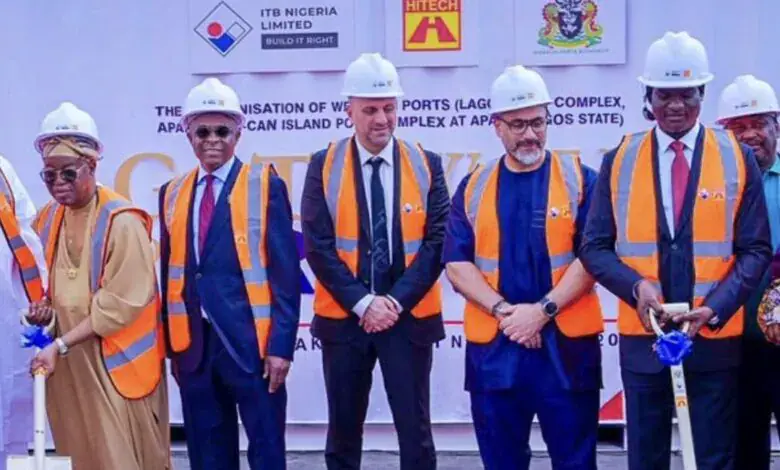
The Federal Government of Nigeria has initiated a groundbreaking N1.45 trillion modernization project for the Lagos Port Complex, Apapa, and Tin Can Island Port. The project aims to reposition Nigeria as a leading maritime hub in Africa and strengthen the country's competitiveness in global trade. Minister of Marine and Blue Economy, Dr. Adegboyega Oyetola, described the project as a strategic investment that will address decades of infrastructure deficits.
The modernization programme is a significant step towards realizing President Bola Ahmed Tinubu's Renewed Hope Agenda, which prioritizes infrastructure development as a catalyst for economic growth, investment, and job creation. The project will cost £746 million, approximately N1.45 trillion, and is expected to create at least 20,000 direct and indirect jobs across construction, engineering, dredging, logistics, transportation, port operations, and related services.
The two ports, which have served as major gateways for Nigeria's international commerce for decades, have become increasingly inadequate to meet the demands of a rapidly expanding economy and changing global shipping requirements. Apapa Port, established in 1913, is over a century old, while Tin Can Island Port was commissioned in 1977 when Nigeria's population stood at approximately 67.2 million.
Nigeria's population has grown to approximately 240 million, with merchandise trade exceeding $100 billion annually, while cargo throughput has increased to 129.3 million metric tons, nearly 16 times its 1977 level. The mismatch between growing economic activities and ageing port infrastructure has made comprehensive modernization both urgent and unavoidable.
The project will entail the comprehensive rehabilitation and upgrading of critical port infrastructure, including quay walls and berths, dredging and navigation channels, access facilities, cargo-handling equipment, and operational systems. It will address longstanding physical constraints while advancing more integrated, efficient, and digitally enabled port operations.
The modernization project is expected to reduce delays and associated costs for importers and exporters, improve the competitiveness of Nigerian goods, and deliver wider benefits to manufacturers, farmers, and consumers. Minister of Finance and Coordinating Minister of the Economy, Mr. Taiwo Oyedele, described the modernization programme as a major step towards reducing the cost of doing business and accelerating economic growth.
The project forms part of a broader national maritime transformation agenda, which also includes the approved modernization of Onne, Rivers, Delta, and Calabar ports. An Inter-Ministerial Committee has been established to develop a comprehensive Port Business Continuity and Cargo Flow Management Plan to coordinate phased construction, vessel scheduling, cargo evacuation, and truck traffic.
Key points
- The project aims to create at least 20,000 direct and indirect jobs.
- The modernization programme will address decades of infrastructure deficits and reduce logistics costs.
- The project is expected to improve the competitiveness of Nigerian goods and deliver wider benefits to manufacturers, farmers, and consumers.
Reporting sources
- FG Bets N1.45trn On Lagos Ports Overhaul To Unlock 20,000 Jobs · Independent Nigeria