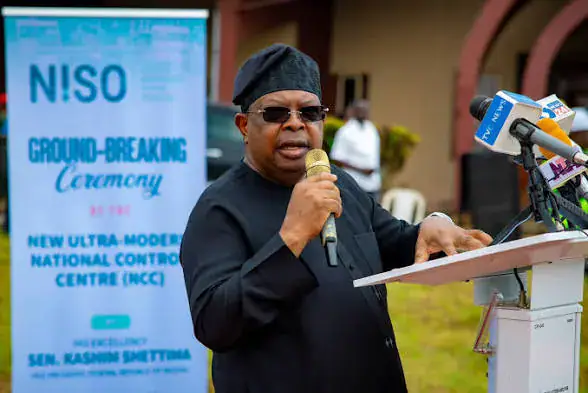
The Minister of Power, Joseph Olasunkanmi Tegbe, has reaffirmed the Federal Government's commitment to transforming Nigeria's electricity sector. Speaking at an interactive luncheon with senior editors in Lagos, Tegbe acknowledged Nigerians' frustration over unreliable electricity supply. He assured them that the government was addressing the sector's longstanding challenges through coordinated and measurable interventions. The Minister stressed that rebuilding public confidence would require not only improved electricity supply but also transparency, accountability, and sustained engagement with the media.
Tegbe described the sector's challenges as systemic, citing gas supply constraints, ageing infrastructure, vandalism, transmission constraints, poor metering, and commercial challenges affecting the entire electricity value chain. According to him, these interconnected problems require disciplined reform implementation rather than isolated interventions or short-term solutions. The Minister highlighted that the government had settled ₦1.23 trillion of the ₦3.3 trillion approved by President Bola Ahmed Tinubu for verified legacy debts owed to electricity generation companies.
The Federal Government has made progress in metering electricity customers, with over 2.8 million customers metered between 2023 and October 2026 under the Presidential Metering Initiative. Recently commissioned substations and equipment have added over 1,300MVA to national transmission capacity. The transmission improvements cover locations including Apapa, Ijora, Ikeja, Kumbotoso, Dankata, Mashi, Dan-Agundi, Biliri, and Walalambe. These efforts aim to enhance the reliability and efficiency of the national grid.
The Ministry of Power is implementing a corridor-based electricity development strategy, targeting critical energy zones such as the Lagos-Ogun, Benin-Enugu-Port Harcourt, and Abuja-Kaduna-Kano economic corridors. The Lagos-Ogun axis and Abuja franchise area, which account for more than 50 per cent of national electricity demand, will serve as proposed pilot locations for 24-hour energy zones. This initiative seeks to align generation, transmission, and distribution capacity with demand in major economic centres.
To address infrastructure security, the Federal Government has approved a coordinated anti-vandalism campaign involving relevant security agencies, supported by stronger legal measures to protect critical electricity assets. The Minister called for a constructive partnership with the media, built on factual reporting, professional scrutiny, and transparent communication of government interventions. Nigerians deserve timely explanations of electricity disruptions, remedial actions, and the responsibilities of institutions across the power value chain.
The Minister expressed confidence that sustained reforms, institutional collaboration, and disciplined implementation would progressively improve electricity supply. While acknowledging that the sector remained far from meeting national expectations, Tegbe emphasised that the government was committed to addressing the challenges. The Ministry aims to expand generation capacity to 10,000MW and is building a new National Grid Control Centre in Osogbo to replace the existing facility, which is over 60 years old.
The government's efforts to improve electricity supply are ongoing, with a focus on transparency, accountability, and engagement with stakeholders. The Minister's assurance of sustained reforms and investments in the sector is a step towards rebuilding public confidence. Key initiatives, including the Presidential Metering Initiative and infrastructure upgrades, demonstrate the government's commitment to addressing Nigeria's power challenges.
Key points
- The Federal Government has settled ₦1.23 trillion of the ₦3.3 trillion approved for verified legacy debts owed to electricity generation companies.
- Over 2.8 million electricity customers have been metered between 2023 and October 2026 under the Presidential Metering Initiative.
- The Ministry aims to expand generation capacity to 10,000MW.
Reporting sources
- FG On Top Of Power Challenge, Tegbe Assures Nigerians · Independent Nigeria