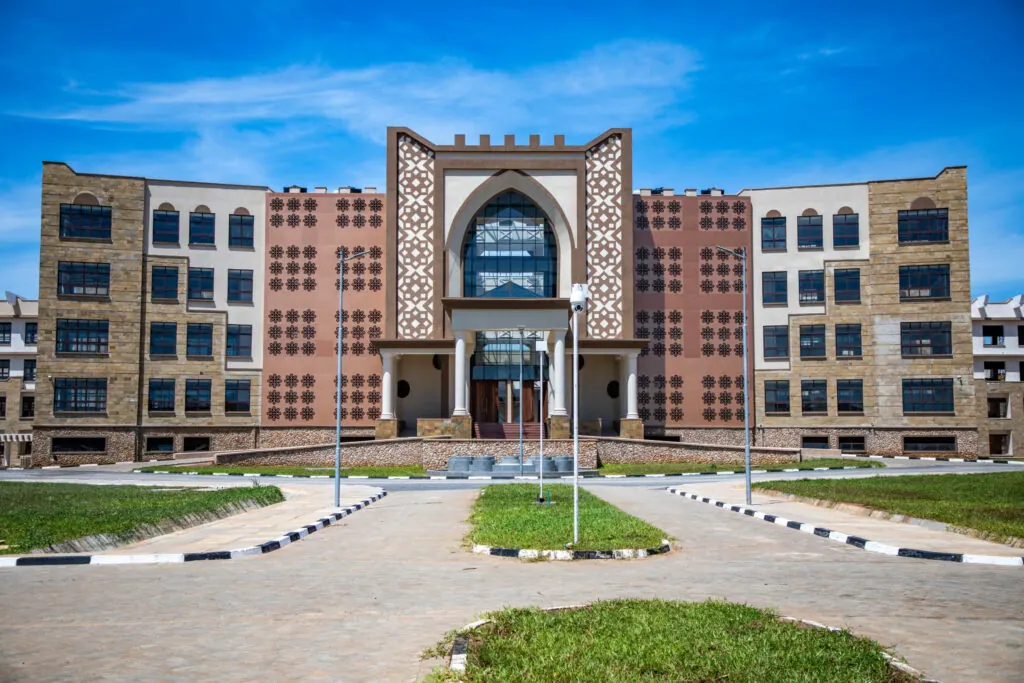
The Ronald Ngala Utalii College project in Vipingo, Kilifi County, has been embroiled in controversy for nearly three decades. Initially conceived as a Coast branch of Kenya Utalii College, the project was approved by Cabinet on February 1, 1996. The idea was to provide a specialised tourism college near the industry, which was already a significant part of Kenya's economy. However, years passed without the institution materialising.
In 2007, the government revived the proposal, estimating the project would cost approximately KSh1.948 billion and accommodate about 600 students. Financing was expected to take place over four years. The main construction contract was awarded to Mulji Devraj & Brothers Ltd in May 2013 at KSh8.961 billion, significantly higher than the earlier Cabinet-approved figure. The National Treasury subsequently raised concerns about funding.
The project's cost escalated dramatically, with allegations that the Tourism Fund had fraudulently paid approximately KSh8.5 billion towards the college. The Ethics and Anti-Corruption Commission (EACC) investigated allegations concerning the award of the construction tender to Mulji Devraj & Brothers. The EACC recommended charges against several actors, including former officials, tender committee members, and directors of Mulji Devraj & Brothers.
The Auditor-General, Edward Ouko, examined the KSh8.9 billion tender and questioned why Mulji Devraj & Brothers had received the contract despite being the third-lowest prequalified bidder. Ouko also criticised contractual provisions involving a 10 per cent advance payment and interest charges for delayed payments. The project attracted parliamentary scrutiny, with MPs interrogating why billions had been disbursed while the college remained incomplete.
In 2016, then Treasury Cabinet Secretary Henry Rotich told Parliament that the Tourism Ministry had secured an additional KSh500 million through Parliament after Treasury declined to authorise the requested allocation. MPs questioned how the money had been approved, while Rotich told the Public Investments Committee that the project had moved from the earlier KSh1.9 billion Cabinet-approved figure to KSh8.9 billion without Cabinet backing for that escalation.
Several officials and companies were linked to the troubled project, including former Tourism Minister Najib Balala, former Tourism Permanent Secretary Leah Adda Gwiyo, and former Tourism Fund chief executives Allan Wafula Chenane and Joseph Rotich Cherutoi. Some faced criminal allegations, which they denied, although the prosecution ultimately ended without convictions. The project's history involves billions of shillings, changing designs, disputed procurement decisions, expensive delays, parliamentary investigations, and an EACC investigation.
The central question surrounding the project is not merely why the college took so long to complete, but who made the critical decisions, who received the billions paid through the project, what taxpayers ultimately received for that money, and whether every shilling can be properly accounted for. The project's legacy serves as a significant example of the challenges and controversies that can arise in large-scale public projects.
Key points
- The Ronald Ngala Utalii College project was initially estimated to cost KSh1.948 billion in 2007 but ultimately cost billions more.
- The project's main construction contract was awarded to Mulji Devraj & Brothers Ltd at KSh8.961 billion in 2013.
- The EACC recommended charges against several actors, including former officials and directors of Mulji Devraj & Brothers, over allegations of procurement irregularities.