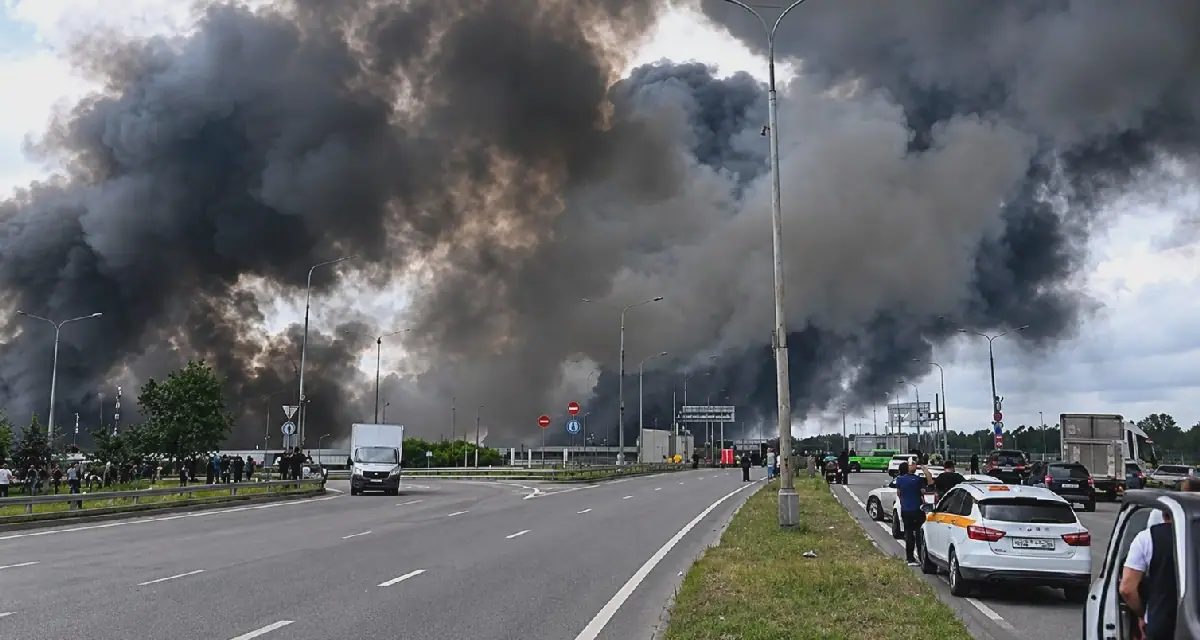
Multiple explosions were reported in Riyadh, Saudi Arabia, on Tuesday, marking another day of disruption in the city. The explosions occurred as the Houthi militia, backed by Iran, continues to launch attacks on the kingdom. Residents of Riyadh received a warning message on their phones for the third consecutive day, advising them to take shelter due to an "air threat." The alert was lifted a few minutes later.
The Saudi-led military coalition reported that its defense systems had intercepted and destroyed a ballistic missile and a cruise missile launched by the Houthis towards Riyadh. Earlier in the night, the same forces had downed another missile heading towards the south of the country. The ongoing attacks have led several companies to adopt remote work arrangements, and students have reverted to online learning after only two days of returning to schools.
The Houthis have warned that most of Saudi Arabia's airspace is "not safe," and their attacks have targeted various infrastructure, including oil facilities. On Sunday, they claimed to have attacked Riyadh's airport, and the financial district was also targeted, with a skyscraper owned by the oil giant Aramco sustaining damage. Images released by the official Saudi Press Agency showed significant damage to the building's facade.
The attacks have not been limited to Riyadh, with the Houthis also targeting Saudi Arabia's oil infrastructure. The country's strategic East-West pipeline, which allows some of its oil exports to bypass the Strait of Hormuz, was attacked in the Medina region on Monday, resulting in a "limited fire." However, the energy ministry assured that operations were not affected.
The conflict in Yemen, which began in 2014 when the Houthis seized Sanaa, has escalated in recent weeks. The Saudi-led coalition has conducted airstrikes on Houthi targets, including a gas installation and a building of the Yemeni oil company in Sanaa. The Houthis have also reported attacks on villages, resulting in significant casualties, including children.
The situation in Yemen has deteriorated since the collapse of a truce in 2022, with fighting intensifying over the summer. The Houthis have strengthened their control over the strategic Bab el-Mandeb strait, which connects Europe to Asia via the Suez Canal. The ongoing conflict has raised concerns about the humanitarian situation in Yemen and the impact on global oil supplies.
The attacks on Saudi Arabia have been condemned by the authorities, with the deputy governor of Riyadh denouncing the "targeting of civilian installations by the Houthis." The international community has expressed concern about the escalating conflict, and efforts to broker a ceasefire have so far been unsuccessful. The situation remains volatile, with the potential for further escalation.
Key points
- The Houthi attacks have disrupted daily life in Riyadh, prompting schools to switch to online learning and companies to adopt remote work arrangements.
- The conflict in Yemen has escalated in recent weeks, with airstrikes and ground fighting reported in various parts of the country.
- The attacks on Saudi Arabia's oil infrastructure have raised concerns about the impact on global oil supplies and the humanitarian situation in Yemen.