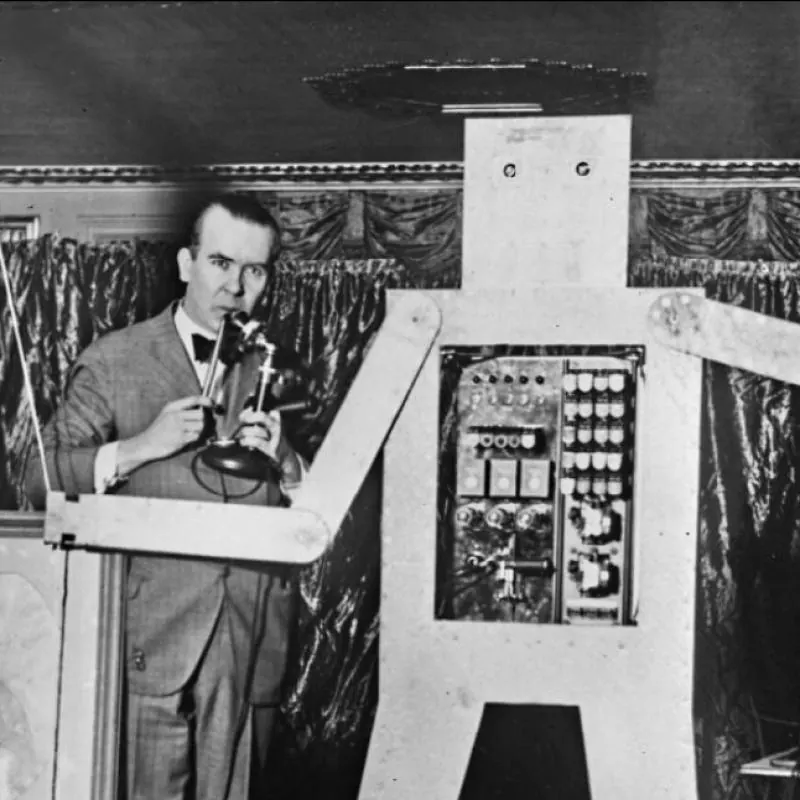
The idea of artificial intelligence has been a part of human imagination for millennia, with roots in ancient Greece, where mythological figures like Talos, a bronze giant created by Hephaestus, were said to possess intelligence and autonomy. According to Alexandre Gefen, director of research at the Sorbonne Nouvelle-Paris 3 university, this concept has been present in literature, philosophy, and science for over 2,000 years. Gefen, who has written extensively on the subject, notes that the notion of artificial intelligence has evolved significantly over time, influenced by various cultural and scientific developments.
The concept of artificial intelligence was not limited to ancient Greece, as similar ideas can be found in other cultures, including the Leizi taoïste, which tells the story of an automaton that danced for the king of Zhou, and the Indian yantra, mechanical devices that performed various tasks. The idea of creating artificial life forms has been a recurring theme in human history, with figures like Pygmalion's statue and the Golem of Jewish mythology. These early concepts of artificial intelligence were often linked to the idea of creating life-like machines that could think and act like humans.
The development of automata in the 18th century, such as the famous canard digérateur and the flute player by Vaucanson, marked a significant milestone in the evolution of artificial intelligence. These machines, which were designed to mimic human-like movements and actions, were not only entertaining but also philosophical, as they challenged people's understanding of the human body and its functions. According to Raphaële Andrault and Charles Wolfe, these automata were "machines philosophiques" that forced spectators to think about the nature of life and intelligence.
The idea of artificial intelligence has also been influenced by the concept of the "test of Turing," which was first proposed by Alan Turing in the 1950s. However, as early as the 18th century, the Turc joueur d'échecs, a mechanical device that played chess, was seen as a precursor to this test. The device, which was later revealed to have a human player hidden inside, showed that people were willing to attribute intelligence to machines based on their performance. This ambivalence towards automata has been a recurring theme throughout history, with some people seeing them as fascinating and others as threatening.
The publication of "Histoire culturelle de l'IA" (Cultural History of AI), a book that explores the history of artificial intelligence, marks a significant milestone in the study of this subject. The book, which was written by a team of researchers led by Alexandre Gefen, provides a comprehensive overview of the evolution of artificial intelligence, from ancient myths to modern-day developments. According to Gefen, the book aims to provide a nuanced understanding of the complex and multifaceted history of artificial intelligence.
The study of artificial intelligence has significant implications for our understanding of human nature and society. As Diderot noted, the idea of machines that can think and act like humans raises important questions about the nature of life and intelligence. The development of artificial intelligence also raises concerns about the impact of technology on society, including the potential for machines to replace human workers. As Marx and Taylor later argued, the mechanization of work can have significant social and economic consequences.
Today, the study of artificial intelligence continues to evolve, with researchers exploring new developments in machine learning, robotics, and cognitive science. As we continue to push the boundaries of what is possible with artificial intelligence, it is essential to understand the rich history and cultural context of this field. By examining the evolution of artificial intelligence, we can gain a deeper understanding of the complex relationships between technology, society, and human nature.
Key points
- The concept of artificial intelligence has a rich history spanning over two thousand years, from ancient Greece to modern times.
- The development of automata in the 18th century marked a significant milestone in the evolution of artificial intelligence.
- The study of artificial intelligence has significant implications for our understanding of human nature and society.