The Senegalese government's 2027 budget, as outlined in the initial finance bill, has sparked interest with its increased allocations for key institutions. The Presidency's budget has risen from 204.5 billion FCFA to 223.8 billion FCFA. According to Finance Minister Cheikh DIBA, this increase is primarily due to two factors. The Intergenerational Fund's allocation has grown from 7.6 billion FCFA to 39.7 billion FCFA. Additionally, the Presidency has taken over the administrative building rent chapter, previously under the Urban Planning ministry, worth 7.6 billion FCFA.
Despite the overall increase, the Presidency's budget, excluding special treasury accounts, has decreased from 196.1 billion FCFA to 183.3 billion FCFA, marking a 6.52% drop. The Prime Minister's Office has seen a budget increase from 29.5 billion FCFA to 32.3 billion FCFA. This rise is mainly attributed to the inclusion of two projects: the 2026-2030 health and social protection system strengthening project, valued at 1.7 billion FCFA, and the construction of a WAQF commercial and residential complex in Dakar for Daara schools, with an increased allocation of 2.23 billion FCFA.
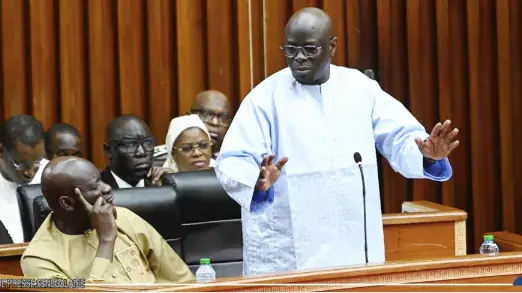
Not all institutions have seen budget increases. The National Assembly's allocation has decreased from 22.3 billion FCFA to 21.1 billion FCFA. Finance Minister Cheikh DIBA attributes this decline to a generalized reduction in general budget expenditures but did not specify which areas were affected. Other institutions have experienced mixed changes. The Constitutional Council's budget has increased from 1.3 billion FCFA to 1.5 billion FCFA, largely due to additional personnel expenses and preparations for the 2027 elections.
The Supreme Court's budget has decreased from 4.7 billion FCFA to 4.6 billion FCFA, while the Court of Accounts' budget has dropped by 378 million FCFA to 13 billion FCFA. These changes reflect the varied needs and priorities of different state institutions. The minister's explanations aim to provide clarity on the budget adjustments, which have been under scrutiny.
The budget discussions took place before the Finance and Budget Control Commission, where Minister Cheikh DIBA provided detailed explanations of the changes. The Commission's review is crucial in understanding the budget's implications for the country's governance and public services. The adjustments highlight the government's efforts to reallocate resources in line with its priorities.
The 2027 budget reflects the government's strategic planning and resource allocation. The increases for the Presidency and Prime Minister's Office indicate a focus on enhancing governance and public services. However, the decreases in other areas suggest a need for careful financial management. The budget's implementation will be closely watched by various stakeholders, including civil society and the general public.
As the country prepares for the 2027 elections, the budget allocations for institutions like the Constitutional Council are being closely examined. The government's financial priorities will likely have a significant impact on the country's political and social landscape. The budget's effects will be monitored closely, with a focus on its contribution to Senegal's economic growth and development.
Key points
- The 2027 budget for Senegal's Presidency has increased to 223.8 billion FCFA, driven by growth in the Intergenerational Fund and the addition of administrative building rents.
Reporting sources
- WalFadjri · WalFadjri