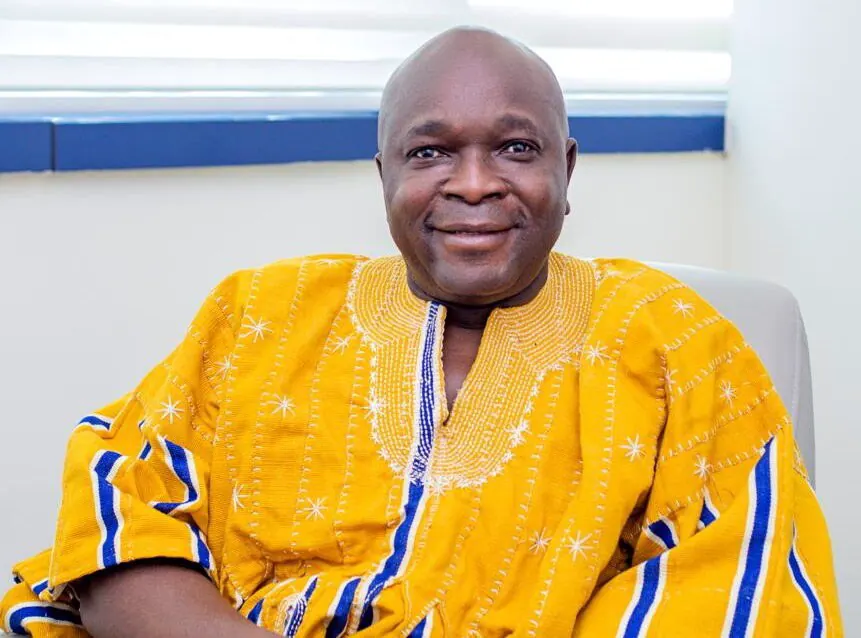
Alhaji Seidu Agongo, founder of Heritage Bank, which was shut down in Ghana's 2018 banking clean-up, has announced a nationwide programme to distribute 10,000 free sewing machines to vulnerable women and youth. The initiative is being rolled out in partnership with the National Entrepreneurship and Innovation Programme (NEIP), a government agency that supports start-ups and skills training for young Ghanaians. This programme aims to provide the necessary tools and support for individuals to start their own businesses in trades such as dressmaking and tailoring.
According to reports, Agongo's idea for the programme grew out of his travels across Ghana, where he encountered the harsh living conditions faced by many underprivileged families. He observed that many young people and women remain trapped in poverty despite having the drive to change their circumstances. The programme targets school dropouts, widows, orphans, and other socially disadvantaged people who often struggle to find steady work.
The distribution of sewing machines is non-partisan, with guidelines in place to ensure fairness and equal access for recipients across the country. Agongo's initiative is expected to help thousands build sustainable livelihoods and contribute to the country's economic development. The programme will provide beneficiaries with the opportunity to become self-employed in dressmaking and tailoring, sectors that require relatively low start-up capital.
Agongo's business legacy is complicated, given the collapse of Heritage Bank during the 2018 banking sector clean-up. The clean-up, which saw regulators shut down or merge several struggling banks, left depositors and investors scrambling. Despite this, Agongo has been involved in various philanthropic activities, including donating relief items worth GH¢1.4 million to victims of flooding in Accra.
In addition to his recent donation, Agongo has supported Korle Bu Teaching Hospital with medical equipment, funded school construction and renovation projects, paid school fees for underprivileged children, and settled hospital bills for patients unable to afford care. His philanthropic efforts demonstrate his commitment to giving back to the community.
The partnership with NEIP is expected to enhance the programme's impact by leveraging the agency's expertise in supporting start-ups and skills training. However, details about the timeline for distribution, beneficiary selection, and regional allocation of machines are not yet available. It is also unclear how the programme intersects with NEIP's existing entrepreneurship schemes.
The programme's success will depend on its effective implementation and the support provided to beneficiaries. If successful, it could serve as a model for similar initiatives aimed at empowering vulnerable groups and promoting economic development. The distribution of sewing machines has the potential to make a positive impact on the lives of thousands of Ghanaian women and young people.
Key points
- The programme aims to distribute 10,000 free sewing machines to vulnerable women and youth nationwide.
- The initiative is being rolled out in partnership with the National Entrepreneurship and Innovation Programme (NEIP).
- The programme targets school dropouts, widows, orphans, and other socially disadvantaged people who often struggle to find steady work.