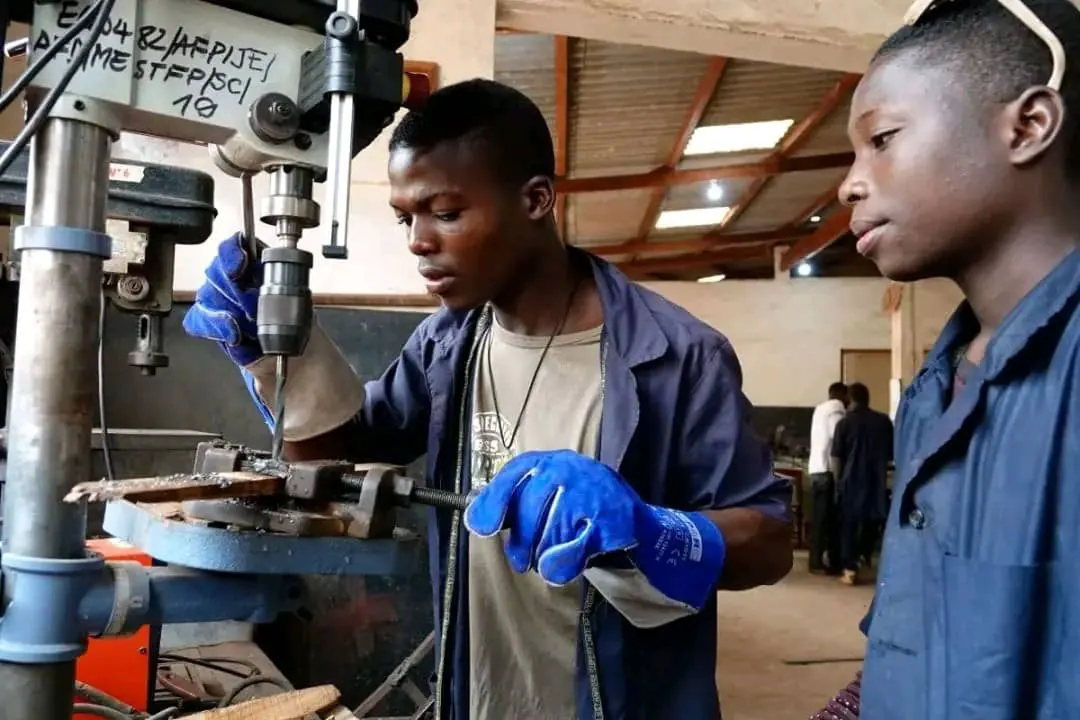
Many developed countries have prioritized technical and vocational education in their systems. In Benin, successive governments have invested in this sector, with the creation of technical high schools and their equipment illustrating this commitment. President Wadagni aims to enhance the visibility of technical and vocational education, viewing it as a strategic lever for stimulating economic growth, reducing youth unemployment, and meeting job market demands.
The President's focus on technical education aligns with the needs of a rapidly changing world. In an increasingly globalized economy, countries must develop unique skills to compete. Benin's technical education system must be rooted in its cultural heritage and values, building on traditional techniques to foster innovation. This approach would enable citizens to understand, utilize, and transform their environment.
The concept of innovation in technical education involves transforming existing knowledge into modern solutions. This process, inspired by the principles of Lavoisier, emphasizes that nothing is lost, created, or transformed, only adapted. For Benin, this means rethinking its technical education strategy to create a system that not only imparts skills but also encourages creativity and problem-solving.
To achieve this goal, the government is considering revising the mapping of technical and vocational high schools across the country. The plan involves establishing schools that cater to the unique skills and traditions of different regions. For instance, the Abomey plateau, known for its metalwork, could host a technical high school focused on metallurgy, while the Ouémé valley could have a school for fisheries and aquaculture.
This strategic approach would enable Benin to leverage its cultural strengths and regional expertise, making its technical education system more relevant and effective. By building on existing skills and traditions, the country can create a workforce that is better equipped to drive economic growth and innovation. Additionally, this approach would help preserve Benin's cultural identity while fostering global competitiveness.
The proposed system would also prioritize the use of local materials and resources, reducing reliance on expensive and often unsuitable imported materials. This focus on sustainability and adaptability would enable Benin's technical education system to address the country's specific environmental challenges and needs. By doing so, the system would contribute to the development of a sovereign technical capacity.
Ultimately, Benin's goal is to create a technical education system that not only enhances the skills and employability of its citizens but also drives economic growth, innovation, and global competitiveness. By rethinking its approach to technical education and prioritizing cultural relevance, regional expertise, and sustainability, Benin can unlock its full potential and take its place in the global economy.
Key points
- Benin's President Wadagni aims to prioritize technical and vocational education to drive economic growth and reduce youth unemployment.
- The proposed technical education system would be rooted in Benin's cultural heritage and values, building on traditional techniques to foster innovation.
- The government plans to revise the mapping of technical and vocational high schools to cater to the unique skills and traditions of different regions.