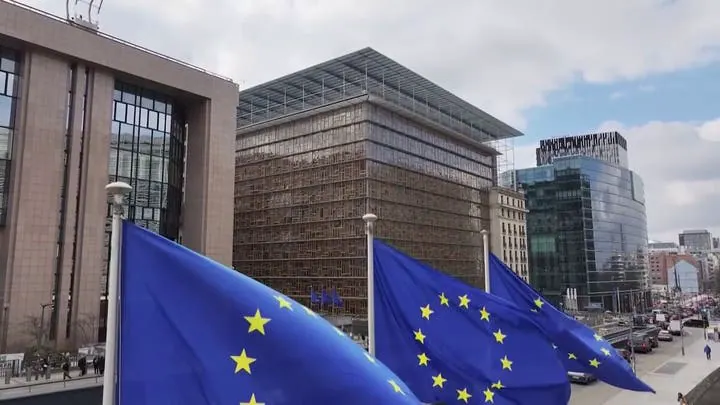
The European Union has called on its member states to prepare for winter and consider measures to reduce their gas and electricity consumption. This comes as energy prices continue to rise and concerns grow about supply shortages. In a letter to energy ministers, EU Commissioner for Energy Dan Jorgensen stated that the bloc is facing an energy price crisis linked to a supply crisis. He urged member states to explore ways to support gas storage and reduce demand for gas and electricity.
The call to action comes as the EU continues to deal with the aftermath of the conflict between the US, Israel, and Iran, which has impacted oil and gas markets. The EU has been reducing its reliance on Russian energy sources, particularly piped gas, since 2022. Instead, it has increased its imports of liquefied natural gas from global markets. According to the European Commission, the share of Russian gas in EU imports fell from 45% in 2021 to 12% in 2025. Meanwhile, the share of liquefied natural gas rose from 20% to 45% during the same period.
The shift away from Russian piped gas to liquefied natural gas has led to increased price volatility. The European Commission acknowledges that high energy costs remain a significant challenge to the competitiveness of European industry. The European Central Bank noted that electricity prices for industry in the EU are around two and a half times higher than in the US. Gas prices are nearly five times higher, putting pressure on energy-intensive industries such as chemicals and metals.
Jorgensen emphasized that the EU is better prepared to face energy challenges this winter compared to 2021. However, the bloc still needs to take measures to mitigate the impact of high energy prices. The European Commission is encouraging member states to explore ways to reduce their energy consumption and support gas storage. This can include measures such as increasing energy efficiency, promoting renewable energy sources, and implementing demand-response programs.
The EU's efforts to reduce its reliance on Russian energy sources have been ongoing since 2022. The bloc has been diversifying its energy imports and investing in renewable energy sources. However, the transition to liquefied natural gas has also led to increased competition for supplies, contributing to price volatility. The European Commission is working to address these challenges and ensure a stable energy supply for the EU.
The impact of high energy prices is being felt across the EU, particularly in energy-intensive industries. The European Central Bank has warned that high energy costs could lead to reduced competitiveness and investment in the region. The EU is exploring ways to mitigate the impact of high energy prices, including measures to increase energy efficiency and promote renewable energy sources.
The EU's energy challenges are likely to continue in the coming months. The bloc will need to navigate the complexities of the global energy market while ensuring a stable energy supply for its member states. By working together and implementing measures to reduce energy consumption and increase efficiency, the EU aims to mitigate the impact of high energy prices and ensure a sustainable energy future.
Key points
- The European Union has called on its member states to reduce their gas and electricity consumption as energy prices continue to rise.
- The EU has been reducing its reliance on Russian energy sources, particularly piped gas, since 2022.
- High energy costs remain a significant challenge to the competitiveness of European industry.