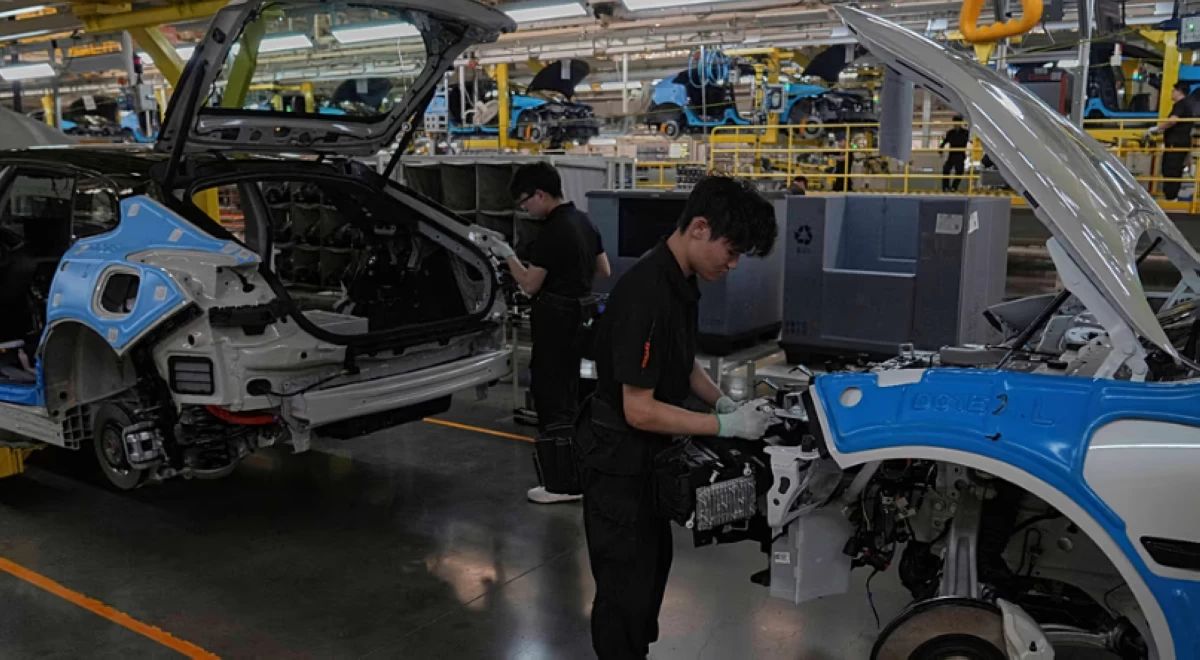
A recent report by the independent research institute Bruegel has highlighted the struggles of the European car industry, citing protectionist policies that prioritize established manufacturers over consumers and taxpayers. The report suggests that these policies may increase the cost of electric vehicles by over €2000, hindering the industry's competitiveness. According to Bruegel, the European Union's approach to the car industry is flawed, and instead of protecting manufacturers, it should support their transition to electric vehicles.
The report points out that the EU's recent measures, including tariffs on Chinese vehicles and proposals for local content requirements, may be counterproductive. The requirement to manufacture battery cells in the EU, for example, could increase the cost of electric vehicles by around €2100. Additionally, the use of low-carbon steel would add another €200 to the cost. In contrast, the proposed relaxed rules on vehicle approvals would only save manufacturers €61 per vehicle.
The burden of these increased costs would fall heavily on consumers, particularly those purchasing more affordable models. Bruegel argues that the most cost-effective way to produce electric vehicles is through global supply chains, while the most flexible approach relies on local supply chains. The report's authors contend that the EU's current policies attempt to achieve both, but with hidden costs.
The impact of these policies is already being felt in some European countries. In France, for instance, a consumer support program that effectively excludes Chinese car manufacturers has led to a 60% decline in sales of non-eligible electric models. This may have contributed to a slowdown in overall demand for electric vehicles. The report warns that the constant changes to policies are causing uncertainty and increasing costs.
The EU's tariffs on Chinese electric vehicles, imposed in October 2024, have had limited success. While the tariffs, which range up to 35.3%, apply to fully electric vehicles, they do not cover hybrid vehicles. As a result, imports of hybrid vehicles have surged, undermining the effectiveness of the tariffs in protecting European manufacturers.
The European car industry is facing significant challenges, with production declining by 2.6 million units since 2019. However, despite these challenges, the sector remains a significant employer, with 14 million people working in the industry across the EU. Bruegel emphasizes that the industry is not on the brink of collapse, but rather faces a risk of erosion of its market share and technological leadership.
To address these challenges, Bruegel recommends that the EU adopt a more nuanced approach, including equalizing tariffs on different types of vehicles and negotiating a limited-time agreement with China to establish export quotas. The report also suggests that the EU should welcome foreign investment as an opportunity to catch up with competitors, rather than restricting it.
Key points
- The EU's protectionist policies may increase the cost of electric vehicles by over €2000.
- The European car industry faces significant challenges, including declining production and increasing competition from Chinese manufacturers.
- Bruegel recommends that the EU adopt a more nuanced approach to support the car industry, including equalizing tariffs and welcoming foreign investment.