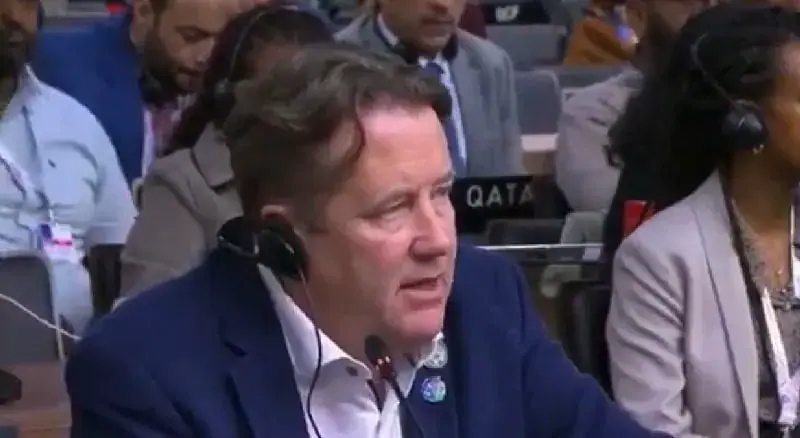
The European Union has rejected the proposed COP31 cover decision, citing its failure to address the urgent need to reduce fossil fuels and match the scale of the global climate crisis. Ireland's Minister for Climate, Energy and the Environment, Darragh O'Brien, speaking on behalf of the EU, emphasized that the draft lacked the necessary ambition to keep the 1.5°C global warming limit within reach.
O'Brien stated that the EU would not support an outcome that ignored scientific evidence, failed to address the gap between climate commitments and implementation, and omitted any reference to fossil fuels, the main driver of climate change. He stressed that the EU would not endorse a cover decision that does not mention fossil fuels and would not accept negotiating backwards or greenwashing fossil fuels.
The EU also expressed dissatisfaction with the draft's provisions on adaptation and loss and damage, arguing that they did not sufficiently address the needs of developing countries and communities bearing the brunt of climate impacts. The bloc questioned the limited recognition given to scientific evidence, particularly the work of the Intergovernmental Panel on Climate Change (IPCC).
O'Brien noted that the EU had participated constructively in the negotiations and held extensive consultations with the COP Presidencies and other parties in an effort to reach an agreement. He warned that the consensus-based approach of the United Nations climate process should not be used to justify an agreement with weak commitments.
The EU reaffirmed its commitment to expanding access to funding, converting financial pledges into practical projects for vulnerable communities, and fulfilling the pledge to triple adaptation finance. The bloc maintained that the draft required stronger political commitments, concrete measures, and a balanced approach across climate action areas before it could secure the EU's backing.
O'Brien cautioned that the proposed decision risked serving as an investment prospectus for the fossil fuel industry instead of reflecting the realities of communities already suffering the effects of climate change. Despite opposing the draft, the EU reaffirmed its commitment to the United Nations Framework Convention on Climate Change (UNFCCC) process and preparations for COP32 in Addis Ababa, Ethiopia.
The EU's rejection has complicated efforts by the COP31 Presidencies to secure consensus on the final cover decision, with divisions remaining over the inclusion of fossil fuels and the level of ambition required in the global response to climate change. The bloc reiterated its support for renewable energy and a transition away from fossil fuels, describing the shift to cleaner energy as essential to protecting public health and economic security.
Key points
- The European Union rejected the COP31 draft decision due to its failure to address fossil fuels and match the scale of the global climate crisis.
- The EU emphasized the need for stronger political commitments, concrete measures, and a balanced approach across climate action areas.
- The rejection has complicated efforts to secure consensus on the final cover decision, with divisions remaining over fossil fuels and the level of ambition required.
Reporting sources
- EU rejects COP31 draft de... · ModernGhana