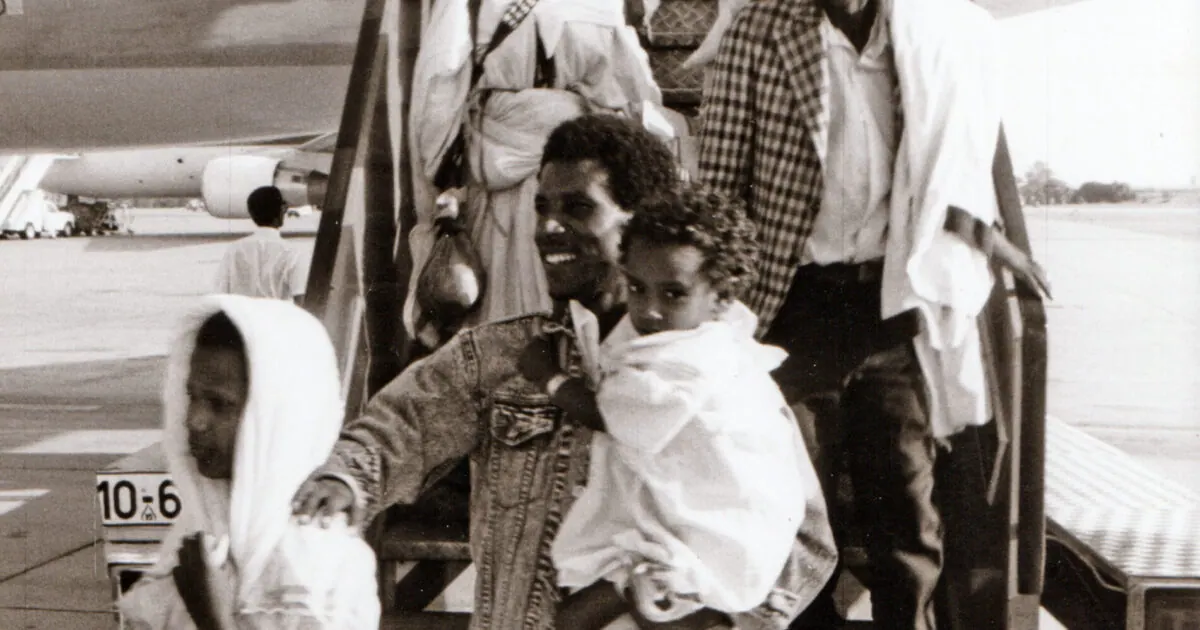
For generations, Ethiopian Jews, also known as Beta Israel, have preserved their faith and developed distinct traditions while living largely separated from Jewish communities elsewhere in the world. In villages across northern Ethiopia, they maintained a connection to Jerusalem, a place most had never seen. Their story is a striking reminder that Jewish culture has never looked the same everywhere. The Ethiopian Jewish community developed distinctive Jewish customs, led by spiritual leaders known as Kessim.
The Ethiopian Jewish community has a unique festival called Sigd, celebrated 50 days after Yom Kippur. It is a day of prayer, communal reflection, and renewal of the covenant between the Jewish people, G-d, and the Torah. Central to Sigd was the yearning to return to Zion. Ethiopian Jews would pray for Jerusalem, turning a distant city into something deeply present in their religious lives. This longing took on a different meaning in the late 20th century as many began to leave their villages in search of Israel.
Between 1980 and 1984, large numbers of Ethiopian Jews left their villages and travelled through Sudan in the hope of reaching Israel. The journey was arduous, with refugees facing hunger, disease, violence, and dangerous conditions in Sudanese camps. According to the Knesset, about 4 000 Ethiopian Jews died on the way and in the camps. For those who survived, Israel eventually became a reality through Operation Moses, which began in 1984 and brought about 8 000 Ethiopian Jews to Israel.
However, Operation Moses was halted due to publicity, leaving many community members behind. It wasn't until May 1991, during Ethiopia's civil war, that Operation Solomon took place. More than 14 000 Ethiopian Jews were taken to Israel in just 36 hours, fulfilling a dream that had shaped Ethiopian Jewish life for centuries. Their arrival marked a new beginning, as they had to establish themselves in a society with different languages and customs while preserving their heritage.
Ethiopian Jews had to navigate a new society, establishing themselves while preserving a heritage that had survived for generations in Ethiopia. Their traditions ultimately became another distinctive part of the mix of cultures that make up Jewish life in Israel. The story of Ethiopian Jews raises questions about what Jewish culture looks like, highlighting the vastly different histories that Jewish communities have carried with them.
The Investec Jewish Achiever Awards theme, "A tapestry of culture," celebrates the diversity of Jewish traditions and histories. Ethiopian Jews bring another African culture into the picture, with its own religious traditions, foods, music, and history. This theme isn't simply about celebrating different foods, music, and clothing but about recognising the different histories that Jewish communities have carried with them.
The story of Ethiopian Jews is a testament to the diversity and richness of Jewish culture. Their traditions didn't have to look like those of Jews in other parts of the world to belong to the same story. It is precisely those differences that make the Jewish tapestry what it is. The Ethiopian Jewish community's unique culture and history are being celebrated as part of the Investec Jewish Achiever Awards, highlighting the importance of recognising and preserving diverse Jewish traditions.
Key points
- The Ethiopian Jewish community's unique culture and history are being celebrated as part of the Investec Jewish Achiever Awards.
- Ethiopian Jews' centuries-old dream of Jerusalem was realised through trials and traditions.
- The Investec Jewish Achiever Awards theme highlights the diversity of Jewish traditions and histories.