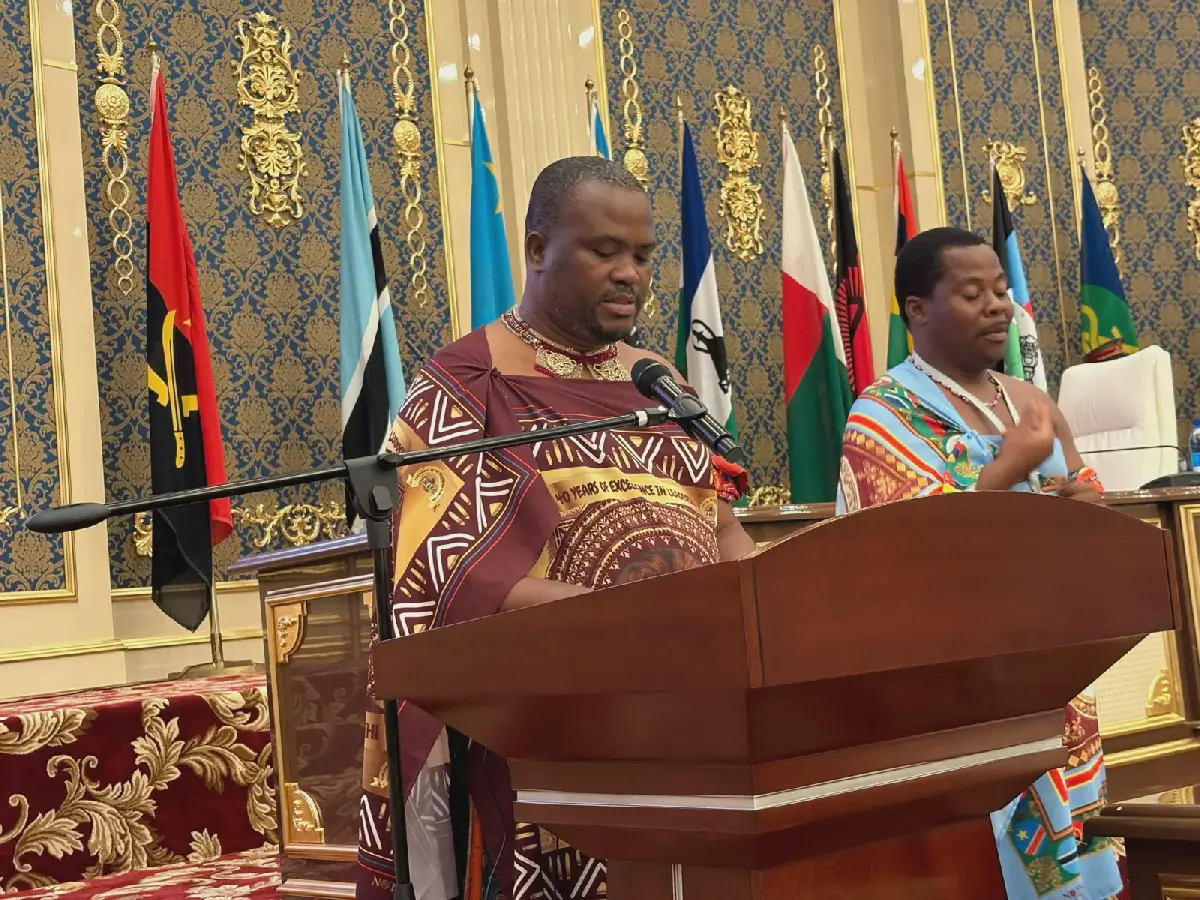
Acting Deputy Prime Minister Sikhumbuzo Dlamini has urged national institutions, Parliament, civil society, and regional partners to strengthen coordination in protecting children, with a focus on preventing child marriage. He made the call at a regional symposium on child protection in Ezulwini Palazzo, where parliamentarians, government officials, and civil society organisations gathered to examine effective ways to protect children. The symposium aimed to explore how institutions can work together to address child protection concerns.
Dlamini, also Minister for Tinkhundla Administration and Development, emphasised the importance of coordination among institutions in addressing child protection concerns. He noted that the Office of the Deputy Prime Minister coordinates mandates related to family welfare, education, disability, safety, and access to public services. This coordination is crucial in responding to child protection concerns, as a single concern may require the involvement of several institutions.
The Acting Deputy Prime Minister highlighted the need for effective referral systems to ensure that child protection concerns are addressed promptly. He urged delegates to examine referral systems in practical terms, including whether responsibility is clearly accepted when a case is referred, and whether the referring officer knows the matter has been received. He also stressed the importance of understanding the circumstances that affect access to services, such as distance, cost, and communication.
Dlamini cited several factors that affect access to services, including distance, cost, communication, disability, language, working hours, and unfamiliar procedures. He emphasised the need for institutions to design responses that people can actually use, taking into account local knowledge and circumstances. He noted that structures through which emaSwati organise community life, including tinkhundla, offer opportunities for engagement, communication, and follow-up.
The symposium brought together various stakeholders, including parliamentarians, heads of delegation, government officials, civil society organisations, young people, development partners, and members of the media. The session aimed to examine how institutions can work more effectively together to protect children, particularly in preventing child marriage. Dlamini noted that the prevention of child marriage requires a collective response from institutions and communities.
Dlamini, standing in for Deputy Prime Minister Thulisile Dladla, noted that the symposium had set out the Kingdom's position and direction on child protection. He emphasised the need for institutions to work together to address child protection concerns, particularly in rural areas where access to services may be limited. He also stressed the importance of community engagement and participation in preventing child marriage.
The Acting Deputy Prime Minister concluded by urging delegates to work together to design and implement effective responses to child protection concerns. He emphasised the need for a coordinated approach to prevent child marriage and protect children in Eswatini. The symposium provided a platform for stakeholders to share experiences and best practices in child protection, with a focus on preventing child marriage.
Key points
- The symposium aimed to explore how institutions can work together to address child protection concerns, particularly in preventing child marriage.
- Effective referral systems and coordination among institutions are crucial in responding to child protection concerns.
- Local knowledge and community engagement are essential in designing and implementing effective responses to child protection concerns.
Reporting sources
- SADC calls for stronger child protection · swazidailynews.com