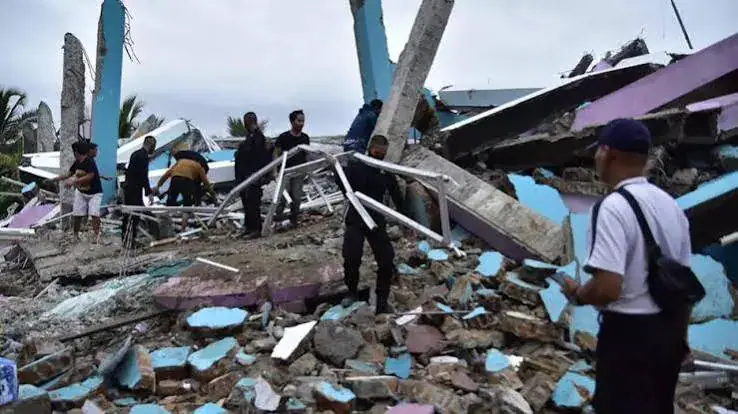
A 5.4-magnitude earthquake struck northern Maluku province in Indonesia on Monday. The quake occurred at a depth of 141 kilometers, the Indonesian Agency for Meteorology, Climatology and Geophysics reported. The agency warned of potential aftershocks following the earthquake. Indonesia is located in a seismically active region, known as the Pacific Ring of Fire.
Indonesia is prone to earthquakes and volcanic eruptions due to its location on the Pacific Ring of Fire. The country's geography is characterized by several tectonic plates that interact and cause earthquakes and volcanic activity. This region is home to over 130 active volcanoes and experiences frequent earthquakes. The Indonesian archipelago has a long history of seismic activity.
The earthquake comes as a reminder of Indonesia's vulnerability to natural disasters. In December 2004, a massive 9.1-magnitude earthquake struck off the coast of Sumatra, triggering a devastating tsunami that killed nearly 167,540 people. More recently, a 2018 earthquake in Palu caused 4,141 deaths and 705 people to go missing. A marine earthquake in Flores in August last year resulted in 135 fatalities and 1,764 injuries.
The Indonesian Agency for Meteorology, Climatology and Geophysics plays a crucial role in monitoring seismic activity and providing early warnings for potential disasters. The agency's efforts focus on mitigating the impact of earthquakes and volcanic eruptions on local communities. Indonesia has implemented various measures to improve disaster preparedness and response.
Indonesia's geographical location makes it one of the most seismically active countries in the world. The country's authorities and emergency services are working to develop strategies for disaster risk reduction and management. This includes public education campaigns and evacuation drills.
The impact of the latest earthquake is still being assessed. There are no immediate reports of damage or casualties. Local authorities are likely to conduct further assessments to determine the extent of the damage. Residents are advised to remain cautious and be prepared for potential aftershocks.
Indonesia's experience with earthquakes and volcanic eruptions has led to significant investments in disaster risk management. The government is working to strengthen building codes and emergency response systems. These efforts aim to minimize the impact of natural disasters on communities.
Key points
- The earthquake occurred at a depth of 141 kilometers, according to the Indonesian Agency for Meteorology, Climatology and Geophysics.
- Indonesia is located in a seismically active region, known as the Pacific Ring of Fire.
- A 2004 earthquake and tsunami killed nearly 167,540 people in the country.