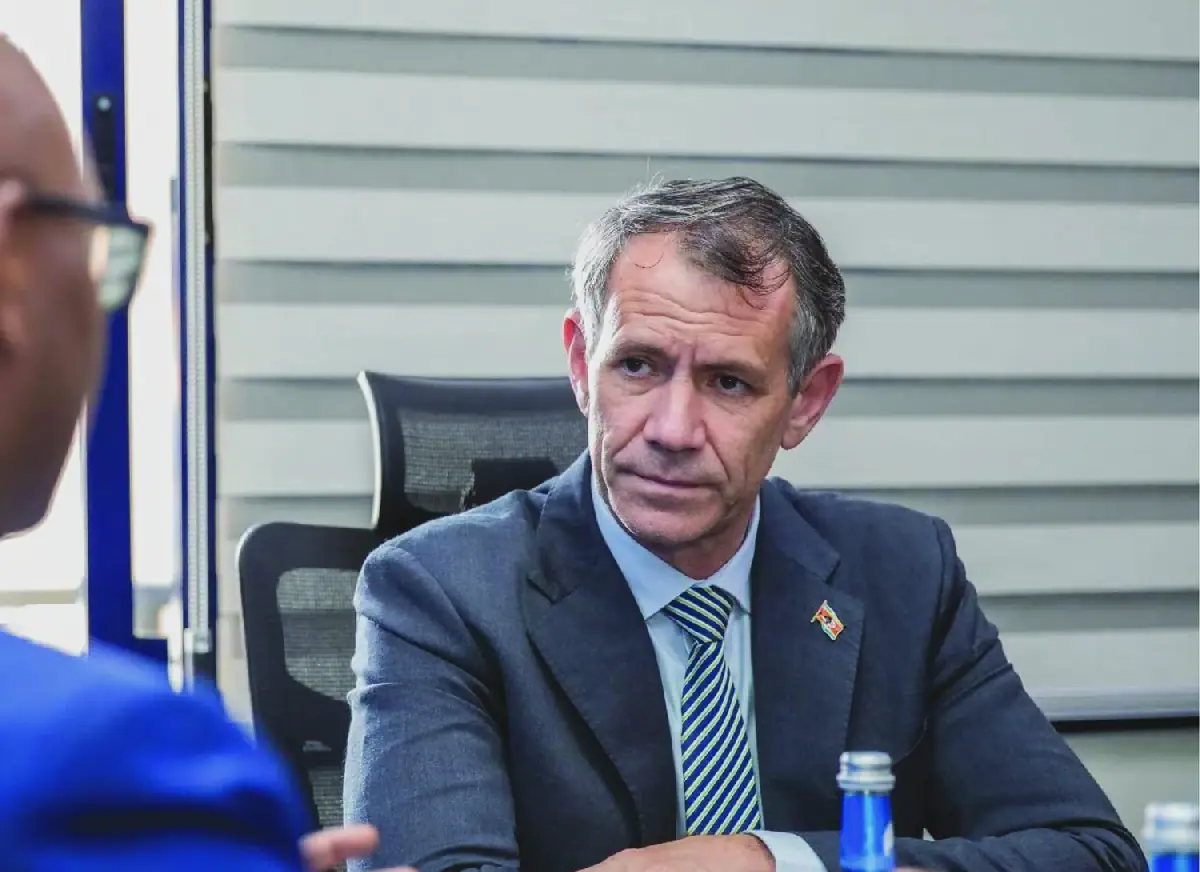
Eswatini's Finance Minister Neal Rijkenberg has expressed concerns about taxing international travel allowances, citing the complexity and potential unfairness of such a measure. Rijkenberg argues that travellers' expenses vary greatly depending on their accommodation choices, transport arrangements, and other costs while on official business. This makes it challenging to determine how much an individual has left over after travelling, which is essential for a fair taxation system.
Rijkenberg's comments were in response to businessman Walter Bennett's suggestion that government employees' international travel allowances should be taxed. Bennett argued that the money is often used for personal investments, such as building homes, rather than serving its intended purpose. He believed that taxing the allowances would help reduce unnecessary expenditure, ease pressure on public finances, and redirect funds towards essential public services.
Rijkenberg acknowledged that some individuals do manage to save money from their travel allowances, effectively making a surplus after covering their expenses. However, he stressed that determining exactly how much an individual remains with after travelling would be difficult. This difficulty would make it challenging for the government to introduce a fair taxation system.
The Finance Minister used an example to illustrate the varying expenses incurred by travellers. Some prefer to book accommodation closer to the event venue, which can be expensive and consume the entire allowance, leaving little or nothing remaining. In contrast, others adopt strategies to minimise expenditure by booking cheaper accommodation and using public transport, potentially allowing them to retain part of their travel allowance.
Rijkenberg suggested that taxing the money left over would be problematic because the government would first have to establish how much each traveller actually spent and how much remained unused. He indicated that applying a blanket taxation approach could disadvantage individuals who incur higher expenses while travelling, particularly those who choose more convenient accommodation or face expensive transport and other costs at their destinations.
Bennett had explained that international travel allowances are intended to cater for several expenses, including meals, accommodation, tips, and other costs associated with travelling. These expenses differ significantly from one traveller to another, depending on their personal choices and the cost of services in the destination country. Rijkenberg's concerns highlight the need for a more nuanced approach to managing travel allowances and expenses.
The debate on taxing travel allowances highlights the challenges of balancing the need for public finances with the complexities of individual expenses. Rijkenberg's caution against taxing travel allowances underscores the importance of considering the potential consequences of such a measure. The government's decision on this matter will likely have implications for public servants and the management of travel allowances in Eswatini.
Key points
- Eswatini's Finance Minister Neal Rijkenberg warns that taxing international travel allowances could be complicated and unfair.
- The minister cites varying expenses incurred by travellers as a major challenge in implementing a fair taxation system.
- A blanket taxation approach could disadvantage individuals who incur higher expenses while travelling.
Reporting sources
- ‘Taxing international travel allowances would be unfair’ · Swazi Observer