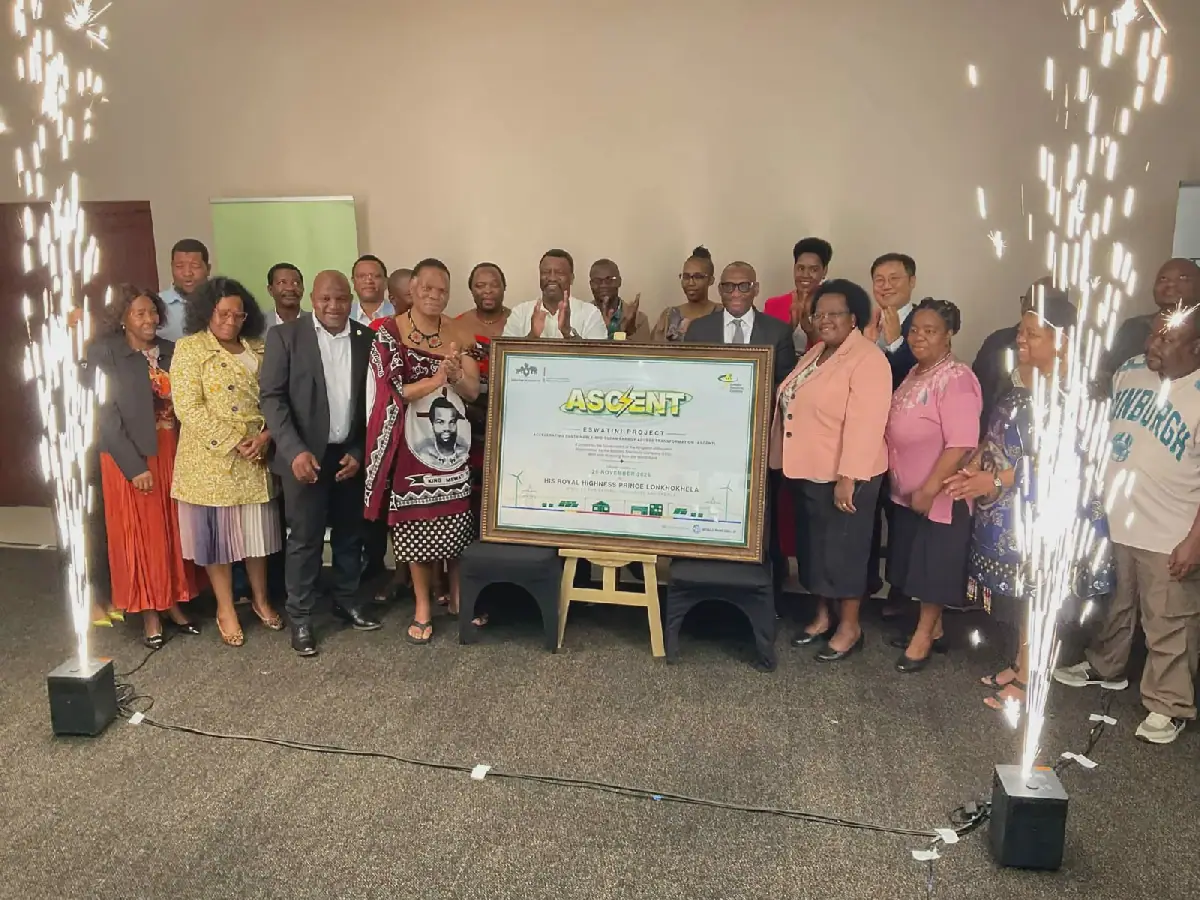
The government of Eswatini has initiated the Khanya Ngwane project, a US$100 million (approximately E1.7 billion) electricity access endeavor aimed at connecting an additional 50,000 households by 2030. Officially launched by Minister for Natural Resources and Energy, HRH Prince Lonkhokhela, the project is supported by the World Bank Group and expected to benefit around 200,000 people through expanded electricity infrastructure and improved access to sustainable energy solutions.
The Accelerating Sustainable and Clean Energy Access Transformation (ASCENT) Project, as it is formally known, seeks to address Eswatini's remaining electricity access gap, with national electricity access currently estimated at approximately 88%. The initiative will focus on strengthening and expanding electricity infrastructure, accelerating household and public facility electrification through on-grid and off-grid solutions, and improving institutional capacity and future energy planning.
The project, renamed Khanya Ngwane in SiSwati, reflects the vision of bringing light, hope, and sustainable energy access to communities across the country. According to Prince Lonkhokhela, this project is a significant milestone in the country's development journey, reaffirming the Government's commitment to translating His Majesty King Mswati III's vision of a prosperous and developed Kingdom into tangible improvements in the lives of emaSwati.
To ensure that more households benefit from the initiative, the Government has announced measures, including the expansion of the Rural Electrification Programme to accommodate qualifying households in urban areas. Prince Lonkhokhela also announced a nationwide rollout of ready boards across all four regions of the country, recognizing that electricity access challenges are not confined to rural communities.
Implementation of the first phase of the project is scheduled to commence in 2027, with 414 group schemes covering more than 15,000 households already identified across the four regions. The Eswatini Electricity Company (EEC), which will implement the project, has commenced the revision and scoping of works in the respective communities, with procurement processes for material suppliers, electrical contractors, and survey contractors underway.
During the first quarter of 2027, EEC will conduct customer education programmes to prepare beneficiaries for the electrification process. Environmental assessments and line surveys will also be undertaken, with construction works expected to begin before the end of the second quarter of 2027. The ministry will coordinate with stakeholders to ensure the project's successful implementation.
The Khanya Ngwane project also aims to support the development of clean cooking strategies and the integration of gender considerations into the energy sector. With the project's implementation, Eswatini is expected to make significant progress in closing its electricity access gap, ultimately improving the lives of its citizens.
Key points
- The project aims to connect an additional 50,000 households by 2030.
- The initiative is expected to benefit approximately 200,000 people through expanded electricity infrastructure and improved access to sustainable energy solutions.
- The project will focus on strengthening and expanding electricity infrastructure, accelerating household and public facility electrification, and improving institutional capacity and future energy planning.
Reporting sources
- E1.7bn Khanya Ngwane project targets 50 000 households by 2030 · swazidailynews.com