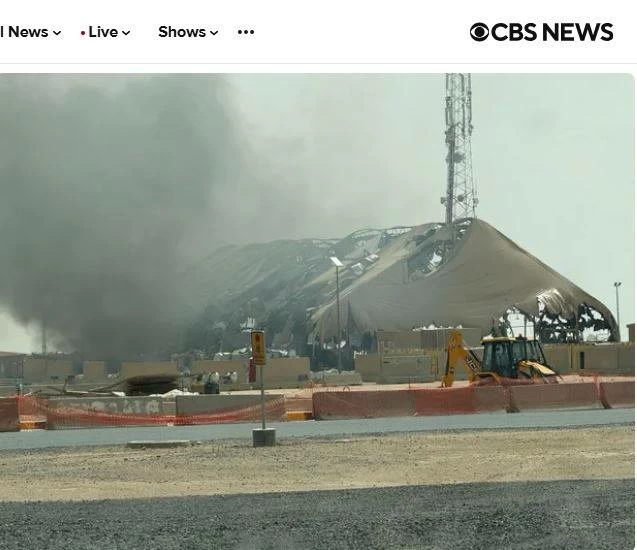
The US Congressional Budget Office has released a report detailing the estimated cost of military operations against Iran, dubbed "Operation Legendary Fury," at $38.1 billion for the Department of Defense as of August 1, 2026. This figure encompasses various expenditures, including ammunition, missiles, and equipment. The report highlights that the costs extend beyond direct spending, affecting US military readiness and stockpiles globally.
A significant portion of the costs, $21.7 billion, is attributed to ammunition and missiles. This includes $7.3 billion for offensive cruise missiles like the Tomahawk and JASSM, and $13.1 billion for defensive interceptors such as Patriot, THAAD, SM-3, and SM-6. Additionally, $1.2 billion was spent on other ammunition. The report also notes that extra flight hours cost around $10.4 billion, while damaged or lost equipment ranged from $1.9 billion to $3.3 billion.
The Congressional Budget Office warns that continued military operations could add $2 billion to $3 billion monthly to the total cost, depending on the intensity of the conflicts. The report also cautions that one of the most significant strategic repercussions is the depletion of US missile stockpiles. Since mid-2025, the US has consumed between half and two-thirds of its inventory of certain strategic interceptors, which could take at least five years to replenish.
The report highlights the economic implications of the conflict, including increased oil prices and disrupted navigation in the Strait of Hormuz and the Red Sea. Data shows that Brent crude oil rose from $64 per barrel in the last quarter of 2025 to $103 during the second quarter of 2026. The war added approximately 2.3 percentage points to the annual inflation rate during the second quarter.
Different US entities have provided varying estimates for the cost of operations. US Secretary of Defense Pete Buttigieg estimated the cost at around $37.5 billion by September, while the White House requested $42.3 billion for direct conflict-related spending as part of a supplemental funding request totaling $87.6 billion.
The Congressional Budget Office's report is based on publicly available data and methodological assumptions, as the Department of Defense did not provide detailed information. The figures do not include costs associated with rebuilding damaged bases or future healthcare for operation participants. An updated estimate from the Department of Defense, reported by CNN in mid-September, raised the cost to $45.1 billion.
The ongoing conflict has significant implications for US military readiness and finances. The depletion of missile stockpiles and increased spending on military operations are likely to have long-term effects on the US defense strategy and budget. The situation remains a critical concern for policymakers and military leaders.
Key points
- The estimated cost of US military operations against Iran is $38.1 billion.
- The conflict has significant economic implications, including increased oil prices and disrupted navigation.
- The depletion of US missile stockpiles could take at least five years to replenish.