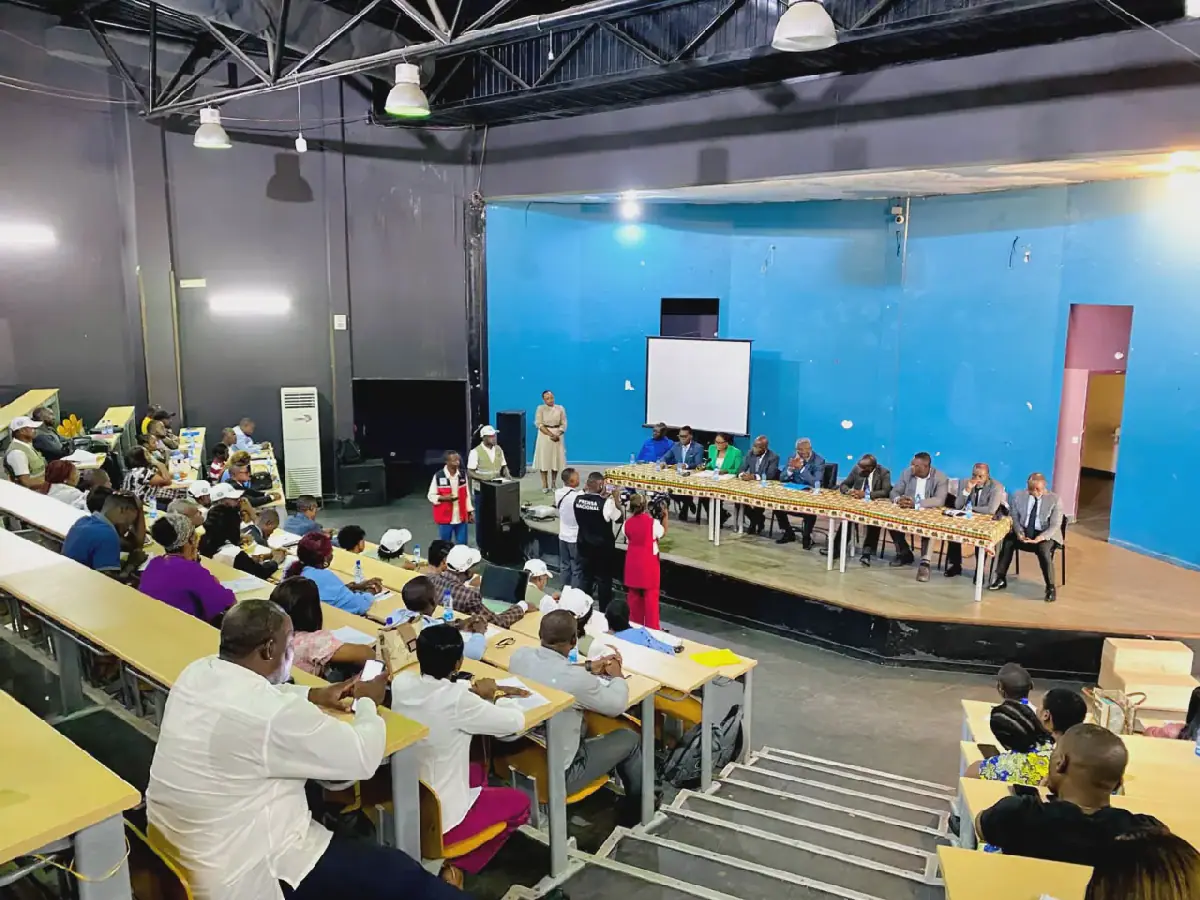
The National Institute of Statistics of Equatorial Guinea (INEGE) is leading an initiative to train technical teams in collecting data on informal cross-border trade. This effort aims to capture economic activities not reflected in traditional customs records. INEGE Director General Ricardo Nsue Ndemesogo Obono presented a report on the project, highlighting the importance of reliable data for understanding the country's external trade reality.
The training is part of a community initiative implemented in six countries of the Economic and Monetary Community of Central Africa (CEMAC), with funding from the World Bank and regional coordination by the CEMAC Commission. The project involves collaboration with the General Directorate of Customs and the General Directorate of Foreign Trade. The survey will focus on trade at land borders with Cameroon and Gabon, particularly at strategic points such as Ebibeyin, Micomiseng, Río Campo, and Kogo.
The training will equip agents with the methodological and technical knowledge needed to conduct fieldwork, identify commercial movements, and ensure data quality. Upon completion, the teams will deploy to designated border points to start collecting information. This project seeks to expand the coverage of Equatorial Guinea's trade statistics and provide more accurate tools for assessing the weight of informal trade in the national economy.
The initiative will help orient the formulation of future economic and trade policies. By gathering comprehensive data on informal cross-border trade, Equatorial Guinea aims to better understand its economic landscape. The project is a collaborative effort between INEGE, customs authorities, and trade officials to enhance the country's statistical capabilities.
Informal cross-border trade is a significant aspect of Equatorial Guinea's economy, but it often goes unrecorded in official statistics. The INEGE project aims to address this data gap by deploying trained surveyors to key border locations. This will enable the government to make more informed decisions about economic development and trade regulation.
The World Bank is providing financial support for the initiative, which is part of a broader effort to improve economic data collection in the CEMAC region. By enhancing trade statistics, Equatorial Guinea and other member countries can better assess their economic performance and develop more effective trade policies.
The success of this project will depend on the effective implementation of the training program and the quality of data collected by the survey teams. If successful, the initiative could serve as a model for other countries in the region seeking to improve their trade statistics and inform economic decision-making.
Key points
- The project aims to improve the accuracy of trade statistics in Equatorial Guinea by capturing informal cross-border trade activities.
Reporting sources
- El INEGE capacita a agentes encuestadores para medir el comercio transfronterizo e informal en Guinea Ecuatorial · AHORAEG Guinea Ecuatorial - Diario online líder de noticias