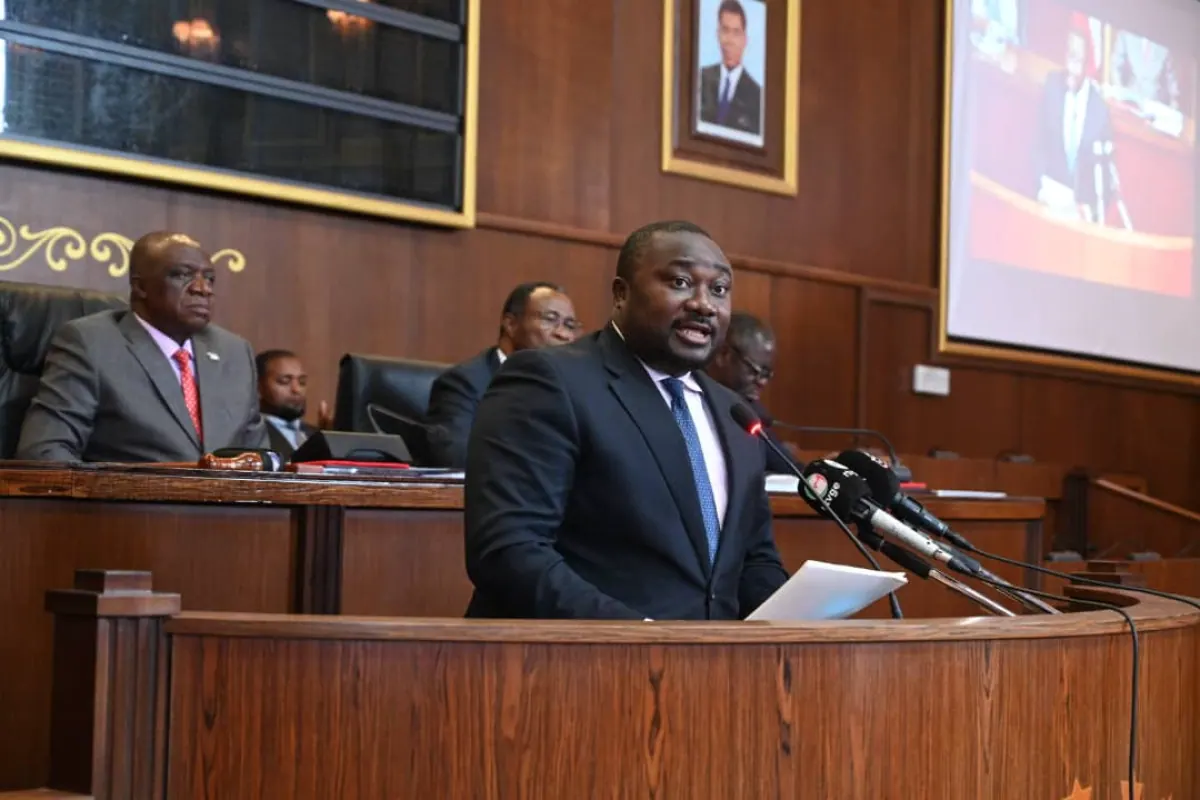
The Ministry of Agriculture in Equatorial Guinea recently appeared before lawmakers to discuss its projects in the agricultural sector. Minister Mitogo Bielo presented an update on several initiatives, including a project to support cacao farmers. The project, worth 400 million CFA francs, was not requested in 2025 as the National Institute for Agricultural Promotion (INPAGE) had sufficient funds to cover it. INPAGE used these funds to settle payments to 539 producers in the Insular Region and purchase 8,200 kilograms of cacao and 4,300 kilograms of coffee in the Continental Region.
Minister Bielo also announced the creation of a new subsidiary of the Russian company UNICONF, called Nueva Producción de Cacao, with an initial capital of 4.9 billion CFA francs. The company aims to produce 1,500 tons of cacao annually. Additionally, the ministry is working on updating the Rural Cadastre of Bioko and installing nurseries for cacao and coffee, each valued at 100 million CFA francs. The Agricultural Extension System is also being revived with a budget of 300 million CFA francs. Furthermore, nine micro-projects are being implemented to support communities in various regions, with a total allocation of 282.9 million CFA francs.
In the forestry sector, Minister Bielo highlighted several achievements, including the training of 200 forest guards and the approval of the Protected Areas Law. The ministry is also working on projects to compensate rural populations affected by elephant invasions and installing electric fences to protect crops. The promotion of Bioko Island's inscription on the World Network of Biosphere Reserves is another initiative underway. These efforts aim to conserve the country's natural resources and mitigate human-wildlife conflicts.
Regarding the rice project, Minister Bielo stated that two initiatives are being negotiated: one for large-scale rice production in Dumasi (Niefang) and another for maize, soybean, and other feed crops in Edum (Mongomo). The Chinese company Jiangxi Ganliang Industrial initially offered 83.249 billion CFA francs but later reduced its bid to 49.950 billion CFA francs. However, subsequent analysis deemed the offer unprofitable, and the government has commissioned the Food and Agriculture Organization (FAO) to conduct new feasibility studies, which are ongoing.
Despite the ministry's presentation, lawmakers expressed dissatisfaction with the information provided. They requested that each government member provide detailed updates on the execution level of each project, including allocated funds, expenditures, remaining budgets, and challenges faced. Minister Bielo requested additional time to provide this information, which will be presented on the following Monday.
The Ministry of Agriculture's presentation to lawmakers highlights the government's efforts to develop the agricultural sector in Equatorial Guinea. The projects outlined aim to improve cacao production, promote sustainable forestry practices, and increase rice production. However, the lawmakers' concerns about the lack of detailed information on project execution and funding allocation underscore the need for greater transparency and accountability in the implementation of these initiatives.
The agricultural sector plays a crucial role in Equatorial Guinea's economy, and the government's investments in this area are expected to have a positive impact on the country's food security and economic growth. The success of these projects will depend on effective implementation, monitoring, and evaluation, as well as collaboration between government agencies, private sector stakeholders, and local communities.
Key points
- The Ministry of Agriculture in Equatorial Guinea has outlined several projects to support cacao farmers, promote sustainable forestry practices, and increase rice production.
- The projects have a combined budget of millions of CFA francs and aim to improve food security and economic growth in the country.
- Lawmakers have requested more detailed information on project execution and funding allocation, highlighting the need for greater transparency and accountability.