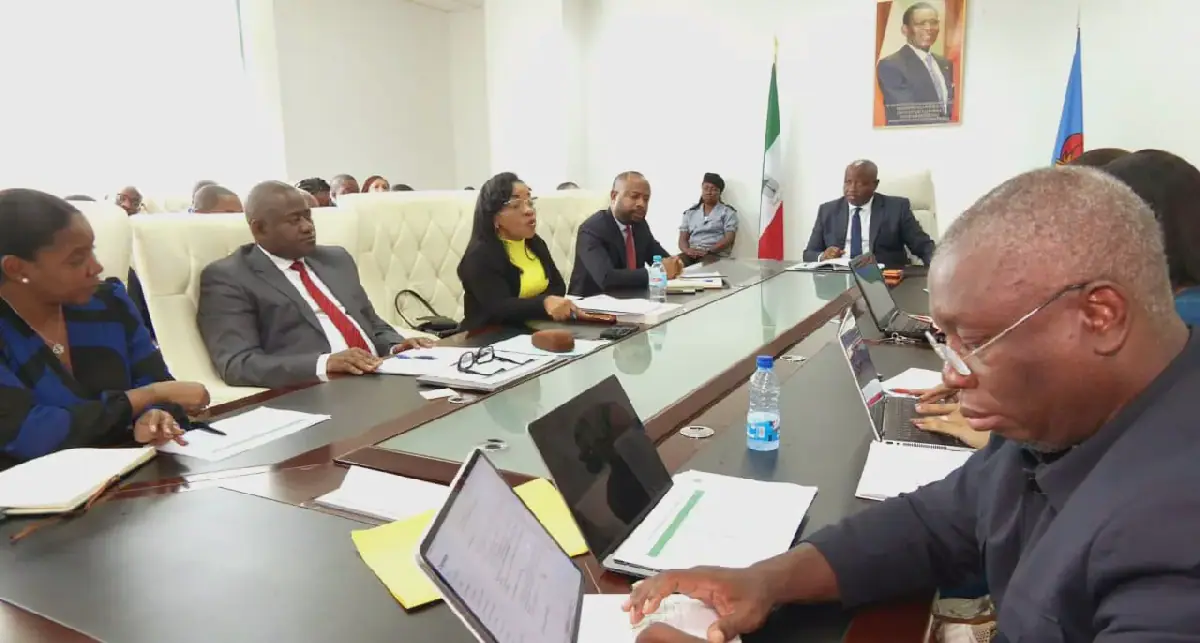
The government of Equatorial Guinea has convened a meeting to address the mounting debt of public entities to the national electricity company, SEGESA. This was the second such gathering this year, with discussions centered on the debt accrued and the scheduling of payments for electricity consumption. The meeting was informed that some entities have settled their dues, while others remain in arrears. The absence of certain key officials from the meetings aimed at finding solutions to this problem was also highlighted.
Participants had the opportunity to present their difficulties, offer suggestions, and clarify doubts regarding their financial commitments. In response to the situation, the Prime Minister warned that the government might deduct subsidies directly from entities that fail to meet their obligations to SEGESA. To facilitate monitoring, it was recommended that clients be classified based on their payment status and solvency, promoting agreements to regularize debts. Additionally, SEGESA was urged to consider mechanisms for compensating for damages caused by electricity supply interruptions.
The meeting also addressed the issue of tax compliance among public entities. According to data from the Ministry of Finance, only a minority of entities regularly pay their taxes, prompting the government to demand greater fiscal responsibility. The Prime Minister issued a clear warning: from January 1, 2027, no payments will be made to entities that have not organized and regularized their accounting, fiscal obligations, and all legally required documentation. This move aims to enforce stricter financial discipline among public entities.
The social obligations of public entities were another key topic of discussion. The government requested that the National Social Security Institute (INSESO) provide a list of entities that have outstanding contributions for their employees. The situation of workers whose contracts have not been properly regularized was also examined. This focus on social obligations underscores the government's effort to ensure that public entities adhere to labor laws and regulations.
Restructuring of public entities formed the third major axis of the meeting. The government emphasized that the measures adopted in this process are mandatory and expressed concern over actions diverging from established guidelines. The Ministry of Finance indicated that the new approach of the restructuring committee seeks fiscal recovery and the sustainability of these entities. The Prime Minister stressed that public entities must assume their financial responsibilities, fulfill their legal obligations, and implement restructuring measures.
To move forward, parties have been given one and a half weeks to reach concrete agreements. A third meeting will subsequently be held to evaluate the results and make definitive decisions in cases where solutions have not been achieved. This timeline suggests a determined effort by the government to resolve the financial irregularities and ensure compliance among public entities. The government's resolve to enforce these measures will be critical in determining the success of this initiative.
The government's initiative reflects its broader strategy to enhance transparency and accountability in the management of public entities. By enforcing stricter controls on financial management, tax compliance, and social obligations, the administration aims to improve the overall governance and efficiency of these entities. The impact of these measures on the country's economic and social landscape will be closely watched in the coming months.
Key points
- The government of Equatorial Guinea is tightening its control over public entities to address accumulated debt, improve tax compliance, and enforce social obligations.