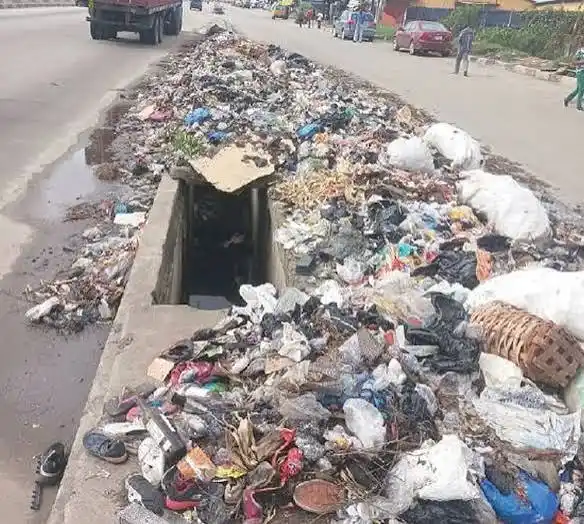
The Lagos State government's declaration of an emergency on waste disposal last month appears to have had little impact, as refuse dumps continue to overflow in streets and compounds across the state. A visit to areas such as Agege, Dopemu, Alimosho, Ikotun, Surulere, and Bariga revealed a dire situation, with heaps of rotting waste emitting a foul odor and attracting rodents. The situation has raised concerns about the risk of an epidemic breaking out in the densely populated city.
Human rights lawyer Barrister Festus Olalekan Festus Ojo has described the collapse of Lagos State's waste management system as a constitutional emergency. According to Ojo, the heaps of decomposing waste create breeding grounds for diseases such as cholera, typhoid, lassa fever, and malaria, which could trigger an epidemic of catastrophic proportions. He noted that the Lagos State Waste Management Authority's failure to manage waste effectively represents a fundamental dereliction of the state's constitutional obligation to protect the security and welfare of its citizens.
Ojo has called on Governor Babajide Sanwo-Olu to declare an immediate state of environmental emergency and take urgent action to address the waste management crisis. This includes deploying emergency waste evacuation resources, holding the leadership of the Lagos State Waste Management Authority accountable, and engaging private waste management contractors to supplement government capacity. Ojo also suggested that residents could seek legal redress, citing the landmark decision in Gbemre v. Shell Petroleum Development Company, which established that environmental degradation threatening human life violates the constitutional right to life.
The waste management crisis in Lagos has significant health implications, with experts warning of the risk of water-borne and food-borne diseases such as cholera, typhoid, and diarrhea. The situation can also lead to rodent and fly-borne diseases like leptospirosis, lassa fever, and plague, as well as respiratory issues like asthma and bronchitis. Dr. Bolaji O. Akinyemi, a health expert, has emphasized the need for a transparent and measurable waste management system, which would enable citizens to regularly assess government performance.
Residents of Lagos have expressed frustration and concern about the waste management situation, with many calling for urgent action to address the crisis. The mounting heaps of refuse across the city have created breeding grounds for rodents, flies, and mosquitoes, blocked drainage channels, and increased the risk of disease outbreaks, particularly during the rains. The situation has also led to air pollution, with decomposing waste releasing bad odors and harmful gases.
The Lagos State government's inaction has been criticized by civil society organizations and environmental law practitioners, who have called for a comprehensive legal response to the crisis. Under the Fundamental Rights (Enforcement Procedure) Rules 2009, any Lagos resident can file an application at the Federal High Court or Lagos State High Court seeking enforcement of their constitutional right to life, which includes the right to a clean and healthy environment.
The African Charter on Human and Peoples' Rights, which has been domesticated into Nigerian law, guarantees the right of all peoples to a satisfactory environment favorable to their development. Residents of Lagos who are affected by the waste management crisis have a directly actionable claim against the Lagos State Government under the Charter. Civil society organizations with environmental and public health mandates can also file representative actions on behalf of affected communities.
Key points
- The Lagos State government's failure to manage waste effectively represents a constitutional emergency, with significant health implications for residents.
- The waste management crisis in Lagos has created breeding grounds for diseases such as cholera, typhoid, lassa fever, and malaria.
- Residents of Lagos can seek legal redress for the government's failure to manage waste effectively, citing the constitutional right to life and the right to a clean and healthy environment.