Ghana's premier anti-graft investigator, the Economic and Organised Crime Office (EOCO), has spent much of 2026 answering questions about its own conduct as well as the corruption cases it is meant to be probing. Over roughly three months, EOCO has moved from detaining a former government official pulled off a flight at Kotoka International Airport to attempting to arrest a sitting Member of Parliament at the doors of an Accra High Court.
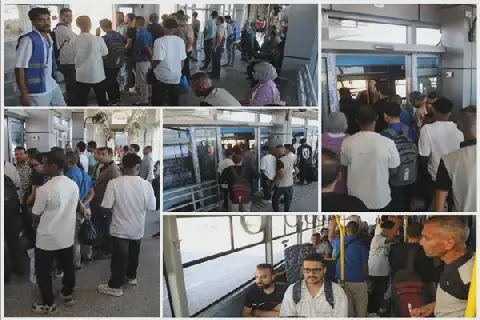
The scrutiny trail begins in June 2026 with the arrest of Dennis 'Miracles' Aboagye, the former Executive Secretary of the Inter-Ministerial Coordinating Committee on Decentralisation (IMCCoD). Aboagye was detained by EOCO over alleged financial and procurement irregularities involving roughly GH¢55 million. According to an EOCO statement, he was arrested at the airport by a Ghana Immigration Service officer and handed over to EOCO after being placed on a Stop Order.
Aboagye told GhanaWeb he was shocked to learn he had been placed on the travel stop list, insisting he had never tried to evade investigators and had always honoured invitations for questioning. He was later granted GH¢50 million bail with three sureties but remained in custody for more than 48 hours because he could not immediately satisfy the bail conditions, a delay that drew supporters to EOCO's offices to demand his release.
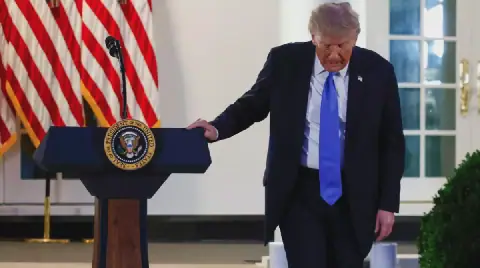
The most consequential episode, however, unfolded on 23 September 2026, when EOCO officers attempted to arrest Manhyia South MP Nana Agyei Baffour Awuah at the precincts of the Accra High Court, where he had appeared as a lawyer representing a client. Video footage from the scene showed an officer trying to stop him as he left the court premises; Baffour Awuah has said he was told he was needed at EOCO and that officers attempted to take him into custody as he was heading to Parliament.
EOCO later said the attempted arrest stemmed from an ongoing investigation and that it had invited the MP twice in February 2026, invitations it says he failed to honour. The agency said its officers ultimately did not complete the arrest after assessing that pressing ahead at the courthouse could create a public-safety risk. The standoff prompted an unusually high-profile show of political support, with senior figures from the New Patriotic Party appearing at court to back the MP.
For ordinary Ghanaians, the string of incidents raises a basic question about how the country's anti-corruption enforcement actually works in practice: whether the powers EOCO uses to detain, freeze accounts and pursue suspects are being applied consistently and lawfully, regardless of who the target is — a former civil servant, a business executive, or a sitting Member of Parliament.
EOCO has said its review of video evidence from the Baffour Awuah incident is active, but has not indicated when it will be completed or what action, if any, will follow. The broader immunity standoff between the agency and the MP remains unresolved, and Parliament is preparing to debate accountability failures more broadly, though sources do not specify an exact date for that debate.
Key points
- EOCO's handling of arrests and investigations has raised questions over its methods and accountability.
- The agency's attempt to arrest a sitting MP has sparked a dispute over parliamentary immunity.
- The incidents have highlighted practical problems with EOCO's use of bail conditions and detention procedures.