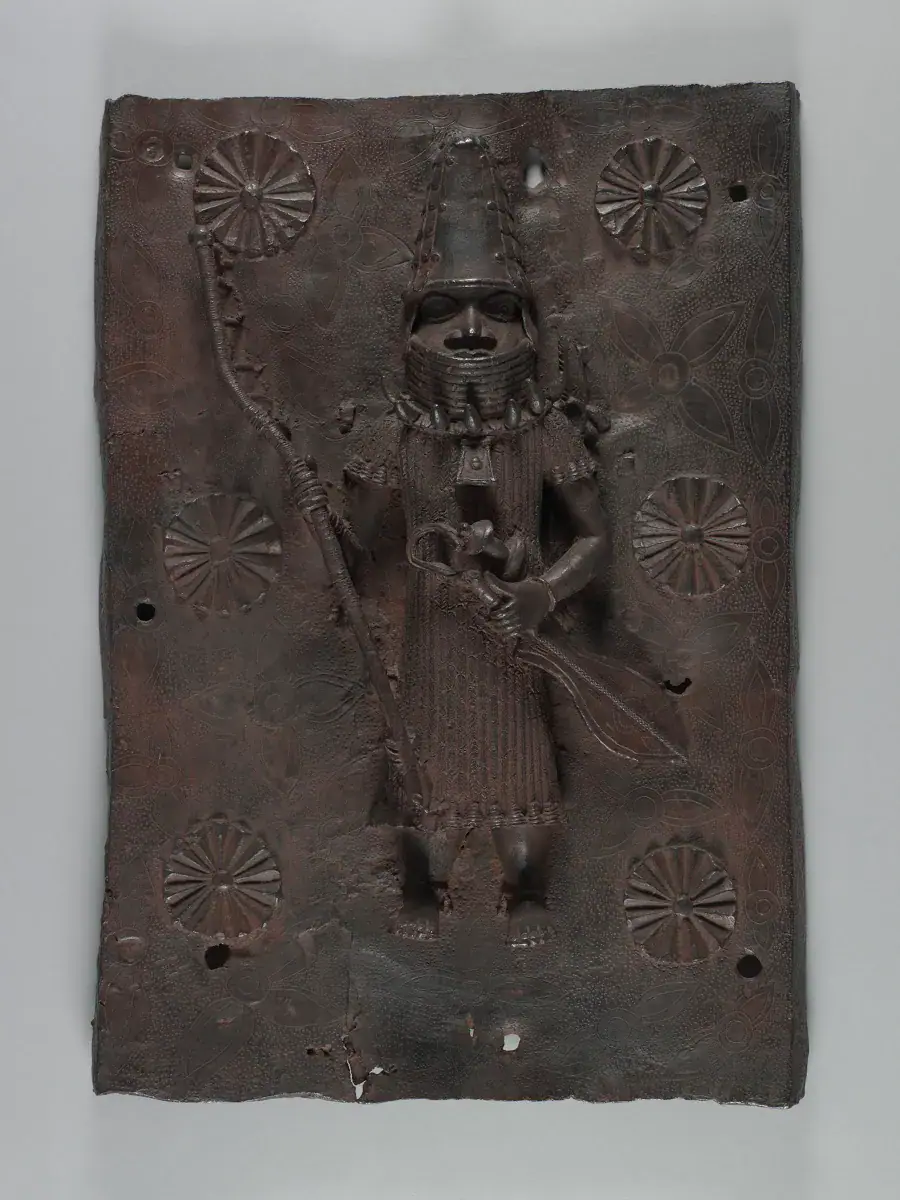
Oba Ozolua, also known as Ozolua n'Ibaromi, or "Ozolua the Conqueror", returned from exile to inherit a kingdom in turmoil. The chiefs of Benin City had governed without a monarch for approximately three years after the death of Oba Olua. Ozolua's coronation did not immediately end the struggle for authority, with several powerful figures opposing his rule. According to historian Jacob Egharevba, Ozolua was captured by Egbaen of Iwu and had to grant titles to the chiefs before they came to his aid.
Ozolua eventually escaped captivity, assembled reinforcements, and defeated Egbaen, who was subsequently beheaded. Another account of his early reign concerns Eyowo, whose betrayal of her husband helped Ozolua defeat a rival ruler, Elekidi of Ogbelaka. Elekidi was a powerful warrior and military commander who had exercised authority during the interregnum. Ozolua went to war against Elekidi and defeated him through Eyowo's betrayal.
Eyowo's role in Ozolua's victory was significant, but her actions were not without consequence. Ozolua married Eyowo after her husband's defeat but ordered her execution a few weeks later, fearing she might betray him as she had betrayed her previous husband. The circumstances surrounding her execution are not well documented, with no reliable evidence of her personal motives or family background.
The opposition to Ozolua's rule was not limited to Elekidi and Egbaen. Another challenger was Ise of Utekon, a sword-bearer who reportedly challenged Ozolua over his intention to attack Ise's native community. The events of Ozolua's early reign are preserved primarily in traditions collected and published long after his lifetime, providing a glimpse into the opposition he faced and how his reign was remembered.
The political situation in Benin after Ozolua's coronation was complex, with several influential figures having exercised authority during the interregnum. Among them were Elekidi of Ogbelaka and a woman named Enae, associated with authority over Ogbe, the palace quarter. Peter M. Roese and Dmitri M. Bondarenko identify Elekidi as the strongest of the appointed rulers during that period.
Robert Arthur Sargent interprets Ozolua's reign as a period in which the position of the monarch strengthened in relation to competing chiefly institutions. He associates the reign with attempts to reduce the influence of the Uzama Nihinron over royal succession and a longer-term shift in political authority towards the Eghaevbo, the town and palace chiefs.
The legacy of Ozolua's reign is complex, with traditions preserving both his military conquests and the challenges he faced in securing his kingship. Despite the opposition, Ozolua was able to consolidate his power and establish a stronger monarchy, paving the way for future rulers of Benin Kingdom.
Key points
- Ozolua faced opposition from powerful chiefs and nobles, including Elekidi of Ogbelaka and a royal sword-bearer.
- The opposition was eventually defeated, but not before Ozolua had to grant concessions and rely on the betrayal of others to secure his rule.
- Ozolua's reign marked a significant shift in the balance of power in Benin Kingdom, with the monarch's position strengthening in relation to competing chiefly institutions.