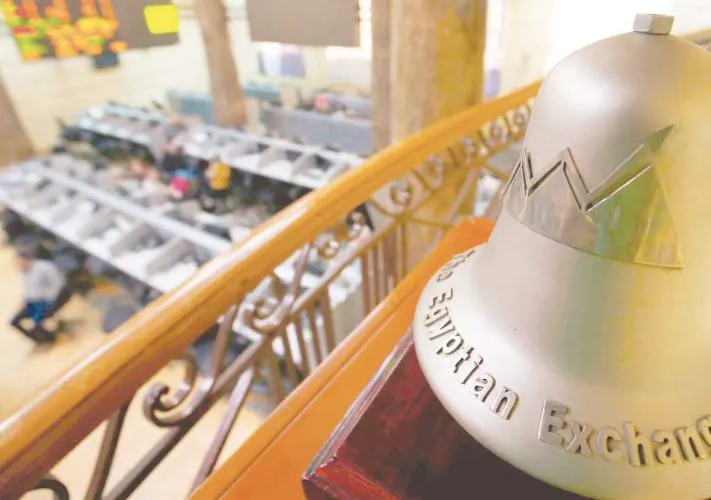
The Egyptian stock market witnessed a collective decline in its indices at the start of trading on Thursday, September 24, 2026. The main index, EGX30, fell by 0.81%, closing at 53,785 points. This decline reflects a challenging start to the day for the Egyptian stock market. Market analysts and investors are closely monitoring the situation to understand the underlying factors contributing to this downturn.
In addition to the EGX30, other indices also experienced declines. The EGX70, which tracks small and medium-sized stocks, dropped by 0.93%, reaching 20,035 points. Similarly, the EGX100 index fell by 0.99%, closing at 26,422 points. These declines across various indices indicate a broad-based weakness in the market. The overall market sentiment appears to be cautious, with investors exercising restraint in their trading activities.
The market capitalization of listed stocks stood at approximately 4.262 trillion Egyptian pounds at the end of trading. The total value of transactions for the day was around 1.7 billion pounds. These figures provide insight into the scale of trading activity and the current market valuation. Understanding these metrics is crucial for assessing the market's performance and identifying trends.
During the trading session, 36 stocks rose, while 141 declined, and 40 remained unchanged. This disparity between gainers and losers highlights the varied performance of individual stocks within the market. Some sectors and companies managed to buck the overall trend, but the majority of stocks were affected by the downward movement in the indices.
The Egyptian stock market's performance is closely watched by investors, analysts, and economic observers. This decline may be attributed to various factors, including economic conditions, political developments, and global market trends. As the market continues to evolve, participants are seeking clarity on the drivers behind these movements and potential implications for future market performance.
Recent news and developments in the Egyptian economy and business landscape may have influenced investor sentiment. For instance, discussions between government officials and international partners, such as the Italian company Eni, regarding energy exploration and development projects, could impact market perceptions. Similarly, announcements related to investments, infrastructure projects, and economic policies may shape investor confidence and market direction.
As the Egyptian stock market continues to navigate its current challenges, market participants are focusing on key areas, including economic indicators, corporate earnings, and policy developments. The interplay between these factors will likely influence market trends and investor decisions in the coming days and weeks. Key factors, such as the overall economic outlook and company-specific performance, will be critical in determining the market's future trajectory.
Key points
- The Egyptian stock market experienced a collective decline in indices at the start of trading.
- The EGX30 index fell by 0.81%, closing at 53,785 points.
- The market capitalization of listed stocks stood at approximately 4.262 trillion Egyptian pounds.