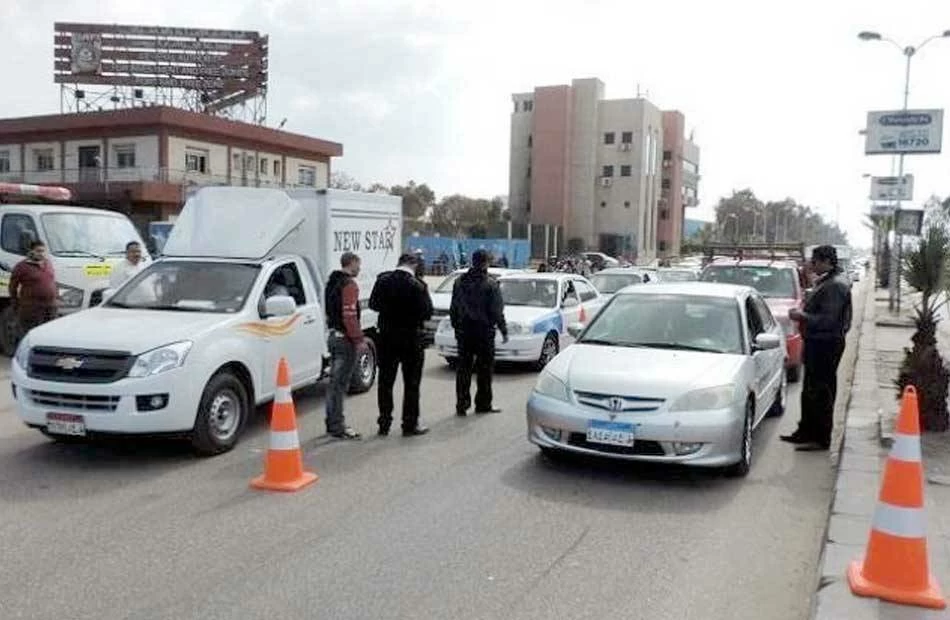
Egyptian President Abdel Fattah al-Sisi has issued new presidential directives aimed at reforming the private vehicle licensing process. The directives, given to the Interior Ministry, emphasize the need to improve the quality of services provided to citizens, rationalize vehicle licensing costs, and ensure that citizens are treated with courtesy and respect. This move comes as a response to the significant public interest in vehicle licensing and renewal procedures, which impact millions of citizens.
The vehicle licensing and renewal procedures in Egypt involve numerous requirements and steps, leading to varied costs for citizens. The total cost of renewing a car license for three years may range from LE4,000 to LE6,000 or more, depending on the vehicle category and engine displacement. Additional costs apply for inspection, insurance, documentation, the electronic sticker, and other required procedures. These expenses can be substantial, highlighting the need for cost rationalization as emphasized in President Sisi's directives.
The renewal tax amount for vehicles varies according to the vehicle's engine displacement. For cars with an engine capacity between 1,030 cc and 1,330 cc, the tax is approximately LE225. For cars with an engine capacity between 1,330 cc and 1,630 cc, the tax reaches approximately LE750. It stands at about LE3,000 for cars with an engine capacity between 1,630 cc and 2,030 cc. For vehicles with an engine capacity exceeding 2,030 cc, the tax is calculated at a rate of 2.5 percent of the vehicle's value.
In addition to the tax, the cost of three-year renewal includes insurance fees. Figures indicate approximately LE3,390 for the tax and LE190 for the insurance. These costs are part of the broader efforts to ensure that vehicles on the road are compliant with safety and road-worthy standards. The requirements for car licensing in 2026 include payment of prescribed taxes and fees, civil liability insurance, and compliance with safety standards.
Other key requirements for car licensing include installing a GPS device, being at least 18 years old (or 21 years old for professional-use licenses), and passing a medical examination at centers accredited by the General Directorate of Traffic. Applicants must also possess an educational certificate or a literacy certificate, complete a safe driving fundamentals course, and undergo a drug screening test. Furthermore, applicants must not have certain criminal convictions.
The application process for vehicle licensing involves several documents and equipment. Applicants must submit four 4×6 personal photos, two medical certificates, and two copies of the national ID card. Vehicles must be equipped with a reflective warning triangle, a first-aid kit, and fire extinguishers. These requirements aim to ensure road safety and compliance with regulations.
The directives issued by President Sisi are expected to bring about significant changes in the vehicle licensing process, making it more efficient and citizen-friendly. The Interior Ministry will need to implement these changes while ensuring that the new procedures are communicated effectively to the public. The reforms aim to enhance the overall experience for vehicle owners in Egypt.
Key points
- President Sisi's directives focus on improving service quality, rationalizing costs, and enhancing citizen courtesy in vehicle licensing.
- Vehicle licensing costs in Egypt vary based on engine capacity and license duration, with total renewal costs ranging from LE4,000 to LE6,000 or more.
- New car licensing requirements include GPS installation, medical examinations, and specific documentation.