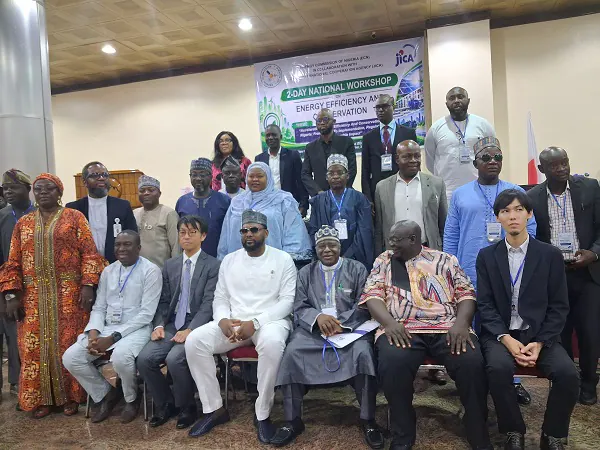
The Energy Commission of Nigeria (ECN) and the Japan International Cooperation Agency (JICA) have urged the implementation of stronger policies, regulations, and enforcement mechanisms to enhance energy efficiency and conservation in Nigeria. This call was made during a two-day national workshop in Abuja, themed “Accelerating Energy Efficiency and Conservation in Nigeria: Bridging Policy, Regulation and Implementation for Measurable Impact.” The workshop aimed to bring together policymakers, regulators, and industry stakeholders to develop actionable plans.
According to ECN Director-General, Dr. Mustapha Abdullahi, energy efficiency is a vital aspect that reduces the need for new power generation capacity while optimizing available electricity. He cited a recent industrial energy survey conducted with the National Bureau of Statistics, which revealed that industrial energy expenditure in Nigeria amounts to trillions of naira annually. A significant portion of this expenditure is spent on self-generated electricity, particularly diesel-powered generation, due to inefficiencies such as oversized captive generators and poorly maintained equipment.
Dr. Abdullahi emphasized that addressing these inefficiencies can lead to substantial economic benefits. He noted that every inefficiency in the energy chain results in economic losses that could be mitigated through coordinated policy, regulation, and implementation. The ECN boss highlighted that the workshop was designed to develop specific actions across various sectors, including the built environment, transportation, human capacity development, industry, standards, and enforcement. He stressed that energy efficiency policies require clear standards, effective enforcement, and appropriate financing mechanisms to have a meaningful impact.
The Minister of Innovation, Science and Technology, who chaired the opening ceremony, underscored that Nigeria’s growing energy needs cannot be met solely by increasing power generation and expanding infrastructure. The minister emphasized the importance of energy efficiency and conservation as practical pathways to reducing waste, lowering operating costs, improving industrial competitiveness, and strengthening energy security. He also highlighted the potential of emerging technologies, such as smart energy-management systems and energy storage, to transform energy management in Nigeria.
Keynote speaker and former ECN Director-General, Emeritus Professor Abubakar Sambo, advocated for a shift in focus from solely increasing electricity supply to prioritizing energy efficiency as a “first fuel.” He identified a legislative gap in Nigeria’s energy efficiency regulatory framework, noting the absence of a standalone, legally binding Energy Efficiency and Conservation Act. Sambo proposed establishing an EE&C Legislative Task Force and a National Energy Efficiency Fund (NEEF) to provide low-interest financing for industrial energy-efficiency retrofits.
Professor Sambo further suggested that the Nigerian Electricity Regulatory Commission (NERC) should require electricity distribution companies (DisCos) to allocate a percentage of their annual operational budgets to demand-side management programmes. He also called for stronger enforcement of Minimum Energy Performance Standards (MEPS) and the establishment of a National Energy Efficiency Testing Laboratory. Sambo emphasized that energy efficiency could provide significant additional capacity without the capital costs of building new power plants.
Chief Representative of the JICA Nigeria Office, Mr. Ishigame Keiji, highlighted the imperative of improving energy efficiency in Nigeria due to rapid population growth, urbanization, and industrialization. He stressed the need for smarter energy solutions that enhance energy productivity while supporting sustainable economic development. Keiji noted that Nigeria can learn from Japan’s experience in improving energy efficiency through energy management systems, efficient technologies, and effective regulatory frameworks.
Key points
- The ECN and JICA are pushing for stronger policies and regulations to enhance energy efficiency and conservation in Nigeria.
- Energy efficiency can provide significant additional capacity without the capital costs of building new power plants.
- Nigeria needs a standalone, legally binding Energy Efficiency and Conservation Act to support its energy efficiency goals.