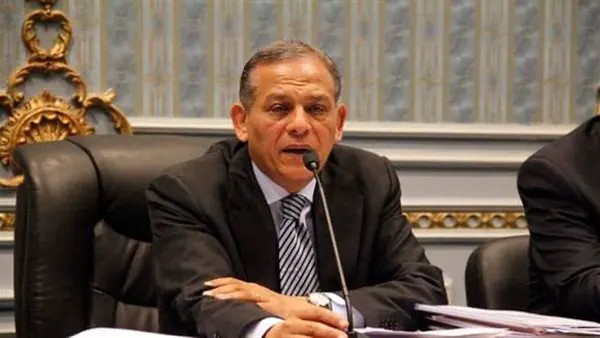
Egypt's security and stability depend heavily on its access to the Nile River, with Mohamed Anwar El-Sadat, deputy head of the National Council for Human Rights, emphasizing that the country's water security is a human rights and societal security issue. Water is essential for life, health, food, work, and stability, and any significant disruption to its availability threatens not only a natural resource but also the lives of millions of citizens and their ability to meet basic needs.
El-Sadat highlighted that the issue of the Grand Ethiopian Renaissance Dam (GERD) on the Nile River raises fundamental principles in international human rights law, including that development should not cause disproportionate harm to people outside the state's borders. He stressed that managing shared resources must be based on fairness, responsibility, and transparency, not just one party's decision-making power.
The danger, according to El-Sadat, lies not only in the volume of water but also in the absence of predictable rules during droughts and exceptional conditions. Therefore, an agreement on filling and operating the dam, exchanging data, early warning mechanisms, and handling critical water situations is crucial to mitigate the impacts on vulnerable communities.
El-Sadat emphasized that water justice does not mean depriving a country of development but ensuring that development in one country does not threaten the basics of life in another. He believes cooperation should be the guiding principle for managing the Nile River, stressing that Egypt's water security cannot tolerate unilateral management.
The GERD has been a contentious issue among Nile Basin countries, particularly Egypt, Sudan, and Ethiopia, with concerns over the dam's impact on water flow and power generation. El-Sadat's statements underscore Egypt's concerns about the dam's potential effects on its population and economy.
Egypt has been advocating for a binding agreement on the dam's filling and operation, citing concerns over the potential impacts on its water supply. The country relies heavily on the Nile for its agriculture, industry, and drinking water, making the issue of the GERD a critical one for its national security.
The international community has been closely watching the developments surrounding the GERD, with the African Union and other regional organizations playing a role in facilitating negotiations between the concerned parties. A resolution to the dispute is crucial to ensuring the stability and security of the region.
Key points
- Egypt's water security is a human rights issue.
- The GERD's impact on water flow and power generation is a concern for Nile Basin countries.
- Egypt advocates for a binding agreement on the dam's filling and operation.