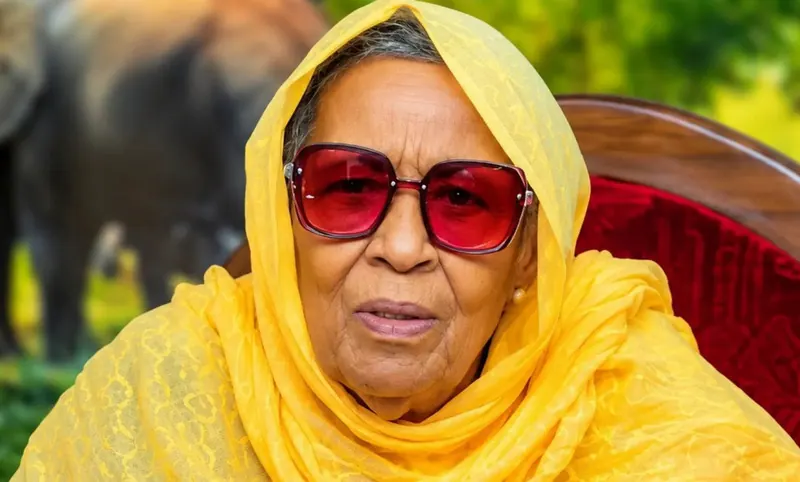
Fatma Karume, the 97-year-old widow of Zanzibar's first President, Sheikh Abeid Amani Karume, has died, leaving behind a legacy of unity and women's rights advocacy. Her death was announced on September 21, 2026, by Zanzibar's Second Vice President, Hemed Suleiman Abdulla. Karume's name will be remembered for her role in Tanzania's political history and her outspoken defence of the Union between Zanzibar and Tanganyika. She was a strong advocate for women's participation in public life, including their right to vote and hold leadership positions.
Karume was a staunch defender of the Union established in 1964 between Tanganyika and Zanzibar. She believed that the Union was not just a political arrangement but a vital bond that created opportunities for Tanzanians to live, travel, work, and learn from one another. In a recent interview with the Tanzania Standard Newspapers, Karume rejected arguments that the Union had undermined Zanzibar, citing the absence of evidence that it had harmed Zanzibaris. Instead, she argued that the Union had opened up opportunities and strengthened social, political, and economic connections between Zanzibar and the Mainland.
Karume's conviction about the Union was rooted in her personal connection to its history. As the wife of Abeid Amani Karume, one of the Union's founding figures, she had witnessed the importance attached to it by the generation that established it. She recalled that the founders, Mwalimu Julius Nyerere and Abeid Amani Karume, were motivated by the wider interests of the people, not personal ambitions. Karume also shared a story about how Mwalimu Nyerere had suggested that her husband become the first President of the Union, but he declined, urging Nyerere to take the position instead.
Karume acknowledged that disagreements had emerged over the years, particularly regarding the relationship between Zanzibar and the Mainland. However, she argued that such differences should not undermine the foundations of the Union. She attributed some of the more divisive debates to developments following the deaths of Karume and Nyerere and the return of multiparty democracy. Despite this, Karume maintained that the principles upon which the Union was founded – unity, freedom, love, peace, stability, and dialogue – should continue to guide Tanzania.
Karume also advocated for women's rights and their full participation in national affairs. She stood for women's right to vote and hold leadership positions at a time when women's political participation was a critical issue in Tanzania's development. Her legacy serves as a reminder of the importance of women's participation in shaping the country's future. Karume's life was closely connected to two important national conversations: the place of the Union in Tanzania's history and the role of women in shaping its future.
In her interview, Karume called for unnecessary barriers affecting citizens and traders, including non-tariff barriers at entry points, to be reduced. She argued that leaders on both sides of the Union remained committed to strengthening it. Karume's message was clear: the survival of the Union depended not only on constitutional arrangements or political leaders but also on Tanzanians' willingness to protect the values of peace, unity, mutual respect, and dialogue.
Karume's death marks the end of a chapter in the living memory of the Union's founding generation. However, the questions she spoke about – unity, dialogue, equality, women's participation, and the future of the Union – remain part of Tanzania's continuing national conversation. Her legacy will continue to inspire Tanzanians to work towards a more united and equitable society.
Key points
- Fatma Karume, the widow of Zanzibar's first President, has died at the age of 97.
- Karume was a strong advocate for the Union between Zanzibar and Tanganyika and women's rights.
- Her legacy will continue to inspire Tanzanians to work towards a more united and equitable society.