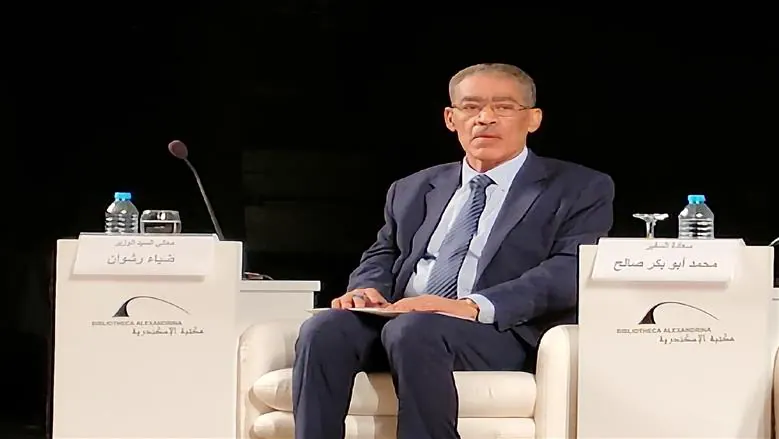
Egyptian Minister of State for Information, Dr. Diaa Rashwan, has emphasized that Egypt is a historical model for a state-nation, where the Egyptian personality has been able to absorb multiple influences from different peoples and civilizations over thousands of years while maintaining its cultural specificity. This was stated during his participation in a scientific session discussing the risks facing national identity, as part of the "National Identity: Rooted Roots and Renewed Vision" conference, held at the Bibliotheca Alexandrina from September 21 to 23, 2026.
Rashwan explained that culture, from an anthropological perspective, is not limited to knowledge, reading, and learning, but rather expresses a "way of life," including thought patterns, values, customs, traditions, and social norms. He added that each society has a cultural pattern that takes shape over long periods, emphasizing that identity cannot be separated from culture, as it expresses a collective feeling of belonging to a common way of life.
The Minister of State for Information pointed out that the Egyptian identity is closely linked to culture and way of life, stressing the importance of understanding identity through the connection between social sciences, anthropology, political science, history, and geography. He also highlighted the need to simplify this concept for young generations. Rashwan's statements came as part of a discussion on the challenges facing national identity, particularly in light of the impact of the virtual world on the feeling of belonging.
Rashwan warned of the dangers that national identity may face, explaining that influencing the "way of life" can appear in various aspects of daily life, such as dress patterns, food, home design, and social celebrations. He also touched on the impact of social media on national identity, cautioning that the use of these platforms does not necessarily mean abandoning one's cultural personality.
The Minister of State for Information stressed that the existence of hope is a fundamental element in enhancing belonging, pointing out that some young people may find in the digital world a space to escape from the pressures of reality, especially in light of difficult economic and social conditions. He emphasized the importance of enhancing young people's ability to see their future within their society, providing real opportunities to help them achieve their ambitions.
Rashwan discussed the concept of identity, addressing the impact of some conservative groups and currents, explaining that the debate should not be limited to groups with a religious character, but rather includes any group that tries to reduce the identity of society to one criterion and eliminate its cultural diversity. He also clarified that national identity does not necessarily coincide with religious identity, citing differences in lifestyles, customs, traditions, and local cultures among communities that may share the same religion.
The "National Identity: Rooted Roots and Renewed Vision" conference continues at the Bibliotheca Alexandrina until September 23, 2026, with the participation of several officials, thinkers, researchers, and academics to discuss the reality of Egyptian identity and the challenges it faces. The conference aims to explore the complexities of national identity and its relationship with culture, history, and society.
Key points
- Egypt is a historical model for embracing diversity, with the Egyptian personality able to absorb multiple influences while maintaining its cultural specificity.