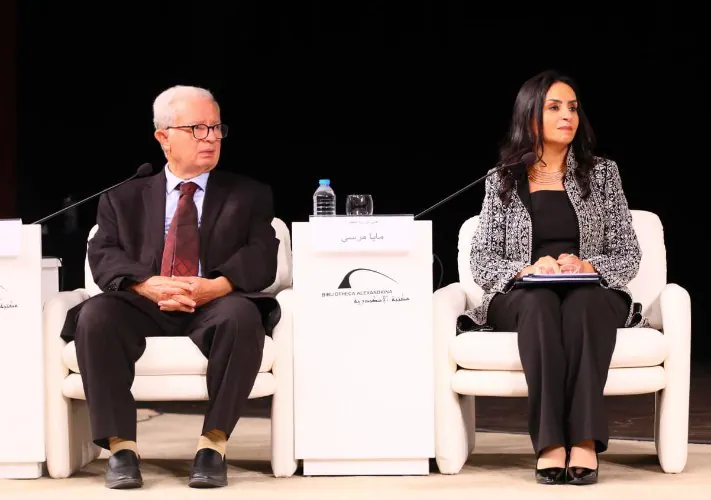
Dr. Maya Morsi, the Egyptian Minister of Social Solidarity, recently participated in the opening of the "National Identity: Rooted in the Past, Renewed for the Future" conference, held at the Bibliotheca Alexandrina from September 21 to 23, 2026. The conference was organized in collaboration with the Ministry of Higher Education and Scientific Research, the Ministry of Youth and Sports, the Ministry of Culture, and the Alexandria Governorate. The event brought together a diverse group of ministers, parliamentarians, university presidents, and experts to discuss the importance of national identity.
During the conference, Dr. Morsi emphasized that national identity is not a static concept, but rather a dynamic and evolving entity that interacts with the challenges of the present and adapts to the changes in society. She stressed that the identity of a nation is not solely defined by its borders, but by the values, culture, and history that its citizens share. Dr. Morsi also highlighted the importance of engaging in a constructive dialogue about national identity, one that brings together intellectuals, policymakers, and civil society organizations.
The Minister of Social Solidarity noted that the current era poses several challenges to defining national identity, including rapid technological advancements and geopolitical pressures. These challenges have sparked ongoing debates about the concept of nationhood and the determinants of belonging. Dr. Morsi proposed several key messages regarding national identity, emphasizing that it is shaped daily within families, schools, universities, media, art, and the streets.
Dr. Morsi also underscored the significance of understanding one's roots, knowing one's era, and forging a path to the future without losing one's identity. She emphasized that national identity is not inherited, but rather built, preserved, and renewed, with each generation playing a crucial role in this process. The Minister added that a clear sense of national identity enables citizens to participate in the development of their society and assume their responsibilities.
The Minister highlighted the interconnectedness of national identity with issues of social security, social cohesion, human development, and sustainable development. She emphasized the vital role of Egyptian women in preserving national identity and passing on values, culture, and customs to future generations. Dr. Morsi also stressed that citizenship is not merely a matter of identification, but a relationship, a responsibility, and a form of participation.
Dr. Morsi discussed the role of her ministry in promoting national identity, particularly through initiatives such as the "I am Talented" program, which aims to discover and nurture the talents of children. The program provides a platform for children to express themselves, develop their skills, and build their confidence. The Minister also highlighted the importance of family support and empowerment in building a strong national identity.
In her concluding remarks, Dr. Morsi emphasized that a strong nation is not afraid of change, and a confident national identity is not afraid of openness. She stressed the need to strike a balance between preserving Egypt's history and culture and embracing the future, and between engaging with the world and maintaining national specificity. The conference continues to explore various aspects of Egyptian national identity and the challenges it faces.
Key points
- Dr. Maya Morsi emphasizes the dynamic nature of national identity and its significance in building a cohesive society.
- The Egyptian Minister of Social Solidarity highlights the importance of engaging in constructive dialogue about national identity.
- Dr. Morsi stresses the vital role of Egyptian women in preserving national identity and passing on values to future generations.