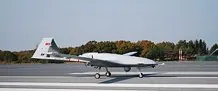
The global landscape of drone technology has witnessed significant advancements, with Türkiye emerging as a leading player. The country's drone manufacturing industry dates back to the 1990s, but it wasn't until the 2010s that it made a technical breakthrough. The Bayraktar TB2 drone system, which made its maiden flight in 2014, has been widely used in various conflicts, including the war in Ukraine. Its effectiveness has made it a sought-after technology for nations looking to modernize their military industries.
The cost-effectiveness of Turkish drones is a major factor in their popularity. A three-drone system, including a ground unit, costs approximately $6 million, which is comparable to the price of a single used fighter jet. In contrast, a new F-16 fighter jet costs between $80-150 million, while a used one still costs tens of millions, not to mention the additional maintenance costs. The TB2 drone's low maintenance costs, ease of use, and minimal logistical challenges make it an attractive option for African nations.
The Bayraktar TB2 has been used in numerous conflicts across different continents, showcasing its capabilities. In Libya, Türkiye used the TB2 drones against Marshal Khalifa Hafter, who used Chinese Wing Loong drones. The TB2 drones played a significant role in the war in 2020, aiding the government of National Accord. Similarly, Azerbaijan used TB2 drones in the war against Armenia in mountainous Karabakh, achieving significant results. The Ukrainians also effectively used TB2 drones in the early stages of the war against Russia.
The success of Turkish drones has led to a surge in exports, with at least 35 countries worldwide purchasing them. Africa is the fastest-growing market for Turkish drones, with countries such as Libya, Ethiopia, Tunisia, Morocco, Angola, and Nigeria among the customers. In 2024, Türkiye's defense and aerospace exports totaled $7.1 billion, with exports to African countries growing by 103% during the same period.
The list of African countries purchasing Turkish drones spans the entire spectrum of wealth, from poorer Sahelian military-led states to more prosperous nations. Morocco, for instance, purchased 13 TB2 drones in 2021 and is now transitioning from being just a buyer to a production partner. Baykar, the Turkish manufacturer, is building a factory in Morocco for TB2 and Akinci drones, which began construction in 2024.
Türkiye's defense exports have seen significant growth, rising to $7.15 billion in 2024 and further to $10.05 billion in 2025. Baykar alone generated nearly $2 billion in export revenue in 2022. The company's success has contributed to Türkiye's goal of increasing its defense and aerospace exports.
The impact of Turkish drones on African nations' military capabilities is substantial. With the ability to purchase affordable and effective drone technology, African states can now acquire strike capabilities that were previously unaffordable. This shift in the balance of military power could have far-reaching consequences, both internally and regionally.
Key points
- Turkish drones offer African nations a cost-effective alternative to expensive fighter jets.
- The Bayraktar TB2 drone system has been widely used in various conflicts, showcasing its effectiveness.
- Africa is the fastest-growing market for Turkish drones, with exports growing by 103% in 2024.