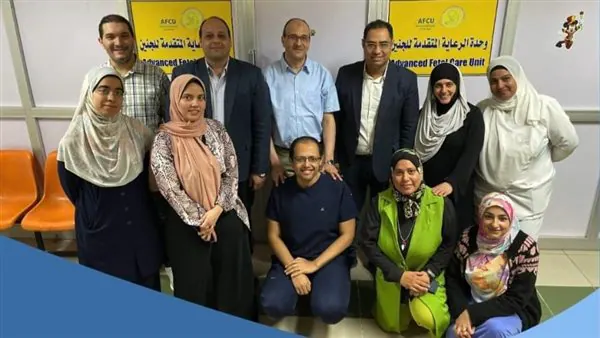
A medical team at Asyut University's Women's Health Hospital successfully treated a fetus with severe anemia through four intrauterine blood transfusions. The team, led by Dr. Mohamed Jamal Fakri, performed the transfusions over three weeks. The fetus was diagnosed with severe anemia, with a hemoglobin level of 2.7 gm/dl, which posed a significant threat to its life. The medical team, under the supervision of Dr. Ahmed Ibrahim and Dr. Mohamed Fath, took immediate action to prepare the mother for the transfusions.
The process of preparing the blood for transfusion involved several precise stages, including selecting the suitable blood type, separating and filtering the blood, and exposing it to radiation. The team used a Doppler ultrasound to diagnose the anemia and monitor the fetus's condition before and after each transfusion. The transfusions were performed every five days, with the fetus showing significant improvement after each procedure. The medical team also administered steroids and magnesium sulfate to help the fetus's lungs and brain develop.
After the fourth transfusion, the fetus's hemoglobin level increased to 9.7 gm/dl, and the fluid accumulation under the skin disappeared. The fetus's heart function also improved significantly. The mother received close medical monitoring throughout her pregnancy and gave birth at the hospital. The newborn's hemoglobin level was 9.5 gm/dl, and it was kept under medical observation.
The medical team that performed the transfusions included Dr. Mohamed Ayman, Dr. Mohamed Hosny, and Dr. Mostafa Askalany. The nursing team, led by Asst. Prof. Saadia Jars, provided essential support during the procedure. The blood used in the transfusions was prepared by the hospital's blood bank team, under the supervision of Prof. Dr. Eman Nasr El-Din.
Intrauterine blood transfusion is a complex and delicate procedure that requires high skill and expertise in using ultrasound technology. The procedure involves inserting a fine needle through the mother's abdominal wall and guiding it to the umbilical cord using ultrasound. The transfused blood is carefully calculated to match the fetus's condition and heart function.
This case highlights the specialized services provided by the Fetal Medicine Unit at Asyut University's Women's Health Hospital. The unit, one of the first in Egypt's Upper Region, has been performing intrauterine blood transfusions over the past two years. The hospital continues to develop its medical services, keeping pace with the latest global technologies in fetal medicine.
The successful treatment of the fetus with severe anemia demonstrates the hospital's commitment to providing advanced medical care to mothers and fetuses. The medical team's expertise and dedication played a crucial role in saving the fetus's life. The case showcases the importance of specialized medical services and the need for continued advancements in fetal medicine.
Key points
- A medical team at Asyut University's Women's Health Hospital performed four intrauterine blood transfusions to save a fetus with severe anemia.
- The fetus's hemoglobin level increased from 2.7 gm/dl to 9.7 gm/dl after the transfusions.
- The hospital's Fetal Medicine Unit has been providing specialized services, including intrauterine blood transfusions, for the past two years.