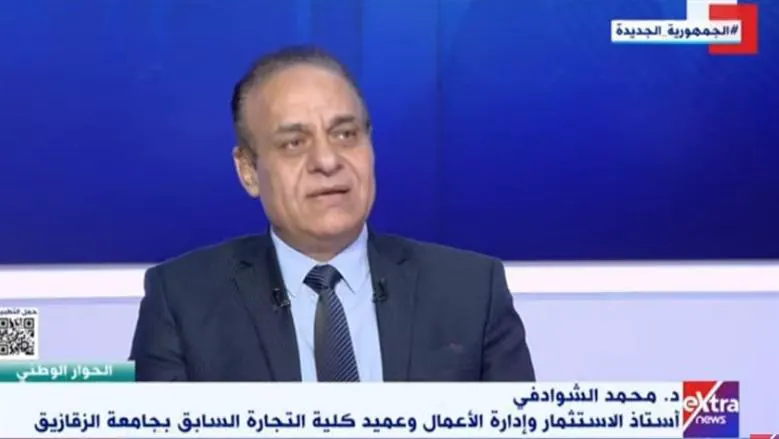
Egyptian economist Dr. Mohamed El-Shawadfi believes that the current indicators suggest the Central Bank of Egypt will keep interest rates unchanged. He notes that although the US Federal Reserve's recent interest rate hike may prompt central banks in emerging economies to adjust their rates, the Egyptian Central Bank has the necessary tools and information to make an informed decision. El-Shawadfi thinks that the bank will likely maintain its current interest rates while keeping the option of a limited rate hike open if circumstances change.
El-Shawadfi explains that the Central Bank of Egypt has been adopting a cautious approach since the liberalization of the exchange rate. This approach involves being prepared to make adjustments to maintain internal stability and market equilibrium. He suggests that a rate hike, if implemented, would likely be limited to 50 basis points. This potential increase would be a precautionary measure to mitigate the effects of inflation and maintain the attractiveness of Egyptian assets.
The economist highlights that raising interest rates can have both positive and negative impacts on the economy. On one hand, it can increase the attractiveness of the Egyptian pound and support domestic assets. On the other hand, it can lead to higher inflation and affect the market, particularly with concerns about the outflow of hot money. El-Shawadfi emphasizes that the priority for the Egyptian economy should be to increase production, utilize underemployed assets, and maintain domestic economic stability.
El-Shawadfi also notes that a scenario of lowering interest rates is unlikely in the current circumstances. He believes that the Central Bank will focus on maintaining economic stability and supporting domestic activity. The economist thinks that keeping interest rates steady or lowering them in suitable conditions would be essential for promoting economic growth.
The potential impact of interest rate hikes on lending and the private sector is also a concern. El-Shawadfi explains that higher interest rates can increase the cost of borrowing, which may limit consumption expansion. However, it can also support the demand for the Egyptian pound and increase the attractiveness of domestic assets. He notes that higher borrowing costs can affect the private sector, which relies on bank financing.
El-Shawadfi discusses the potential effects of interest rate hikes on investment and production. He suggests that higher interest rates can lead to a shift in liquidity from the stock market and equities to bank deposits. While this may support savings in banks, it also carries risks for investment and production activities. The economist emphasizes the importance of careful consideration when making decisions about interest rates.
In conclusion, Dr. Mohamed El-Shawadfi believes that the Central Bank of Egypt will likely maintain its current interest rates. He notes that the bank has the necessary tools and information to make an informed decision and that a cautious approach has been adopted since the liberalization of the exchange rate. El-Shawadfi emphasizes the importance of prioritizing domestic economic stability and promoting economic growth.
Key points
- The Central Bank of Egypt is likely to keep interest rates unchanged.
- A rate hike, if implemented, would likely be limited to 50 basis points.
- The priority for the Egyptian economy should be to increase production and maintain domestic economic stability.