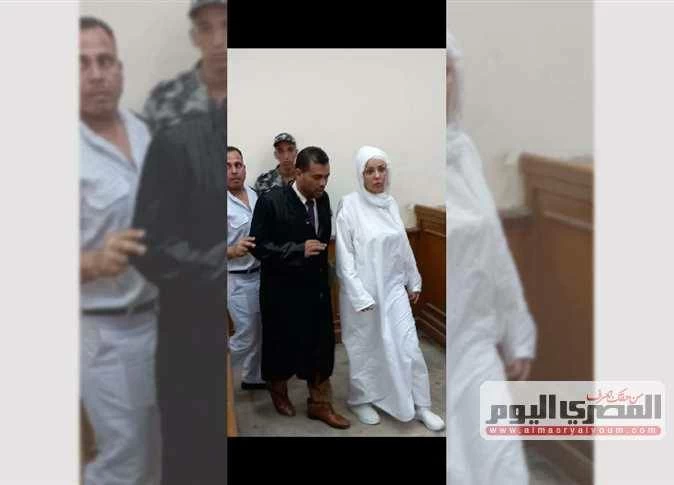
In a recent verdict, Egypt's Court of Cassation accepted the appeal of a Tunisian flight attendant, Amira bint Hamad, and reduced her sentence from 15 years to 7 years in prison for killing her young daughter, Tara. The case drew significant attention due to the nature of the crime and the arguments presented by the defense team. According to the court's findings, the flight attendant was convicted of strangling her daughter while she slept using a fabric tie.
The defense team argued that their client was suffering from severe psychological distress and mental impairment at the time of the crime, which diminished her ability to fully comprehend her actions. They pointed to previous instances where the flight attendant had exhibited erratic behavior and claimed that she was under the influence of supernatural beliefs. The defense also questioned the initial medical reports from Abbasiya Hospital, suggesting that they were flawed.
The prosecution, on the other hand, maintained that the flight attendant's actions were premeditated and deliberate. They cited witness testimonies and medical reports that confirmed the presence of clear strangulation marks on the child's neck. The prosecution argued that the accused, a former flight attendant for an Emirati airline, had transformed from a source of safety for her child into a direct threat.
The case has been closely followed due to its complex nature, involving issues of mental health, criminal intent, and the reliability of medical assessments. The Court of Cassation's decision to reduce the sentence took into account the defense's arguments regarding the accused's mental state at the time of the crime. The court's verdict is now final and cannot be appealed further.
The incident occurred in Cairo's New Cairo district, where the flight attendant resided. According to her testimony, she was prompted by a mysterious phone call that urged her to take her daughter with her to meet her husband in the "sky." This, she claimed, led her to strangle her daughter before attempting to end her own life. The case has sparked debates about mental health support and the judicial system's handling of similar cases.
The defense team highlighted a similar case in Sharqia governorate, where a woman named Hanaa Mohamed Hassan was acquitted of killing her son after being evaluated by a five-member committee of psychiatric experts from outside Abbasiya Hospital. They argued that a similar evaluation should have been conducted in their client's case, given the discrepancies in the medical reports.
The flight attendant's case underscores the challenges faced by the Egyptian judicial system in balancing the severity of crimes with the complexities of mental health. The reduction in sentence reflects the court's consideration of the accused's psychological state and the unusual circumstances surrounding the crime. The case will likely continue to be referenced in discussions about mental health, criminal responsibility, and judicial procedures in Egypt.
Key points
- The Court of Cassation reduced the sentence of Tunisian flight attendant Amira bint Hamad from 15 years to 7 years for killing her young daughter.
- The defense argued that the accused was suffering from severe psychological distress and mental impairment at the time of the crime.
- The case highlights the challenges faced by the Egyptian judicial system in handling crimes involving mental health complexities.