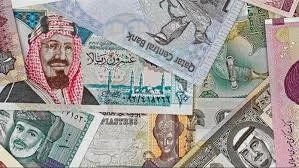
On Tuesday, 29 September 2026, the Egyptian banking sector observed a slight increase in the values of Arab currencies. The Saudi Riyal, in particular, saw a rise of two piastres. This development has prompted an examination of the current exchange rates of various currencies against the Egyptian Pound. According to reports, this minor surge is noteworthy for individuals and businesses involved in foreign transactions.
In benk مصر, the Saudi Riyal was traded at 13.83 Egyptian Pounds for buying and 13.89 Pounds for selling. Similarly, in the National Bank of Egypt, also known as البنك الأهلي, the Saudi Riyal was valued at 13.83 Pounds for purchase and 13.89 Pounds for sale. These rates indicate a uniform pricing strategy between the two major banks.
The Kuwaiti Dinar also experienced fluctuations in its exchange rate. At بنك مصر, the Dinar was valued at 165.30 Pounds for buying and 169.67 Pounds for selling. Conversely, in البنك الأهلي, the Kuwaiti Dinar was traded at 164.41 Pounds for purchase and 169.60 Pounds for sale. These variations highlight the distinct pricing mechanisms employed by different financial institutions.
Another Arab currency, the UAE Dirham, demonstrated stability in its exchange rates. In بنك مصر, the Dirham was valued at 14.16 Pounds for buying and 14.20 Pounds for selling. The National Bank of Egypt also listed the Dirham at 14.16 Pounds for purchase and 14.20 Pounds for sale. This consistency suggests a synchronized approach to currency valuation.
The dynamics of currency exchange rates play a crucial role in Egypt's economic landscape. Fluctuations in the values of Arab currencies, such as the Saudi Riyal and Kuwaiti Dinar, can impact trade and investment flows between Egypt and these countries. As such, monitoring these rates is essential for stakeholders to make informed decisions.
The recent increase in Arab currency values may be attributed to various market and economic factors. These could include shifts in global commodity prices, changes in foreign exchange reserves, or alterations in monetary policies. A comprehensive analysis of these factors is necessary to understand the underlying causes of the observed trends.
As the Egyptian economy continues to navigate the complexities of the global financial landscape, the exchange rates of Arab currencies will remain a focal point of interest. Stakeholders, including policymakers, businesses, and individuals, must stay informed about these developments to adapt their strategies accordingly.
Key points
- The Saudi Riyal saw a two-piastre increase in value against the Egyptian Pound on Tuesday, 29 September 2026.
- Exchange rates for Arab currencies varied slightly between major Egyptian banks, including بنك مصر and البنك الأهلي.
- The UAE Dirham demonstrated stability in its exchange rates across different banks, with consistent buying and selling prices.