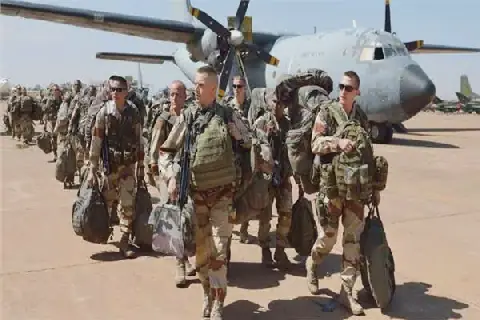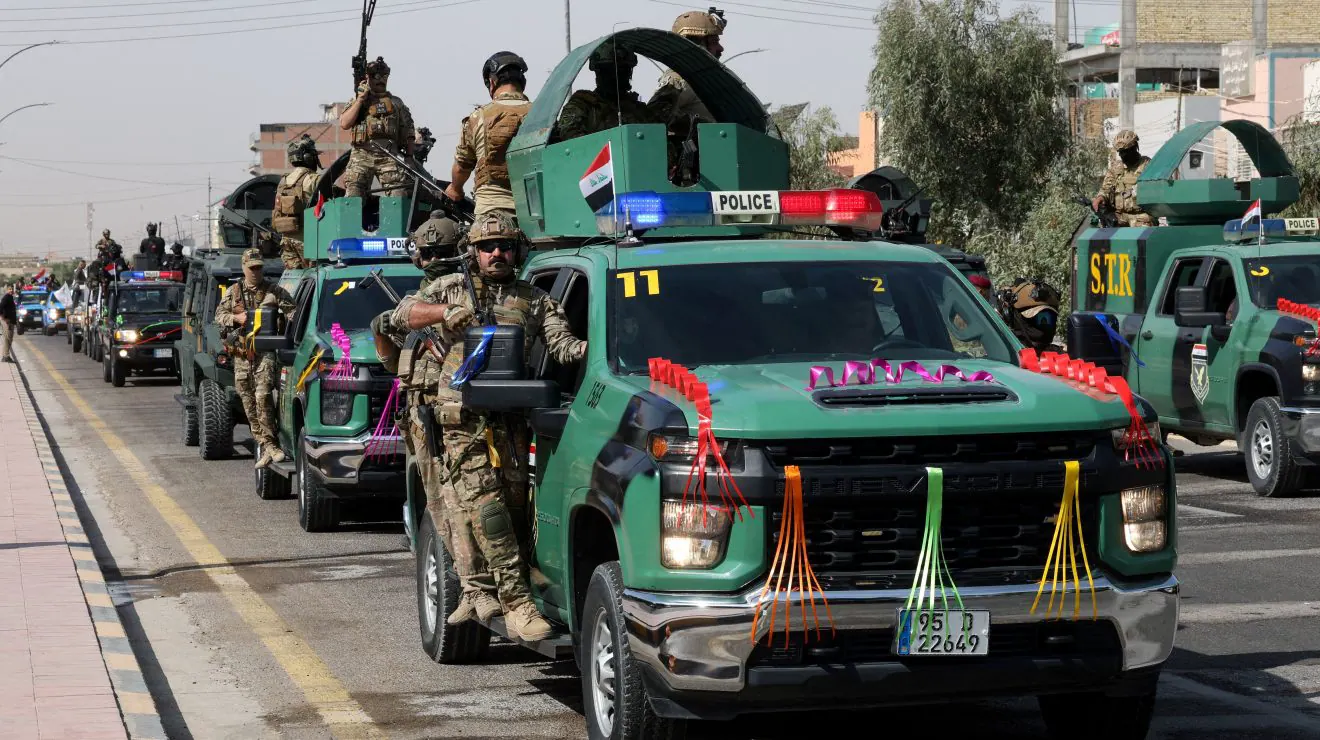
The United States has completed its withdrawal of forces from their remaining bases in Iraq, a move that has raised concerns about a potential security vacuum and the resurgence of the Islamic State group. The withdrawal, which was agreed upon in 2024 under President Joe Biden and carried out by the administration of former President Donald Trump, marks a significant shift in the country's security landscape. The US forces had been providing critical support to Iraqi security forces, including intelligence on Islamic State movements, aerial surveillance, and reconnaissance. The withdrawal has been celebrated as a victory by Tehran and its allies, who have been seeking to expand their influence in the region.
The US invasion of Iraq in 2003 led to the toppling of dictator Saddam Hussein, but also triggered upheaval and chaos, culminating in the rise of Islamic State. The US-led coalition has been fighting a counterinsurgency campaign in Iraq for over 20 years, resulting in the deaths of 4,500 American forces. While the departure of US forces is broadly popular among Iraqis, some worry that the country's security forces, which have been trained and funded by the US, are still not equipped to protect the country. The US withdrawal has also raised concerns about the potential for Iranian-backed militias to expand their role in shaping state policies and consolidating their presence within key institutions.
Iraqi security officials, both in the federal government and the semi-autonomous northern Kurdish region, have expressed concerns that the US pullout could give new life to Islamic State fighters. Despite the defeat of their self-proclaimed caliphate nearly a decade ago, the militants are believed to retain a sleeper cell network. The US troops had been providing critical support to Iraqi security forces, and their withdrawal has raised questions about whether Iraq's security institutions have prepared a viable Plan B for the post-coalition phase. The concerns have been echoed by Iraqi analysts, who warn that security vacuums can be extremely dangerous.
The withdrawal of US forces from Iraq has been hailed as a triumph for Iran's "axis of resistance" of allied armed groups across the region. Iran has been seeking to expand its influence in the region and has cast the US withdrawal as a victory for its proxies. However, some analysts have expressed concerns that the absence of a Western military presence could embolden Iranian-backed militias and give them more room to maneuver. The situation has raised concerns about the potential for increased instability in the region.
The US withdrawal from Iraq has also raised questions about the country's ability to protect itself from external threats. The US forces had been providing critical support to Iraqi security forces, and their withdrawal has created a void that needs to be filled. Iraqi analysts have warned that the country's security forces still have a long way to go before they can protect the country without external support. The concerns have been echoed by retired Iraqi Army General Mohammed al-Jubouri, who led a brigade during the war against Islamic State.
The conflict with Iran has also had a significant impact on US forces in Iraq. In this year's conflict, 7 of the 18 US service members listed as killed were in Iraq, with the last an army sergeant who died during the controlled detonation of a drone at a base near Erbil in July. The US forces had been engaged in a parallel war in Afghanistan, which ended with an abrupt US withdrawal in 2021. The US military has been seeking to reduce its presence in the region, but the withdrawal from Iraq has raised concerns about the potential for increased instability.
The withdrawal of US forces from Iraq marks a significant shift in the country's security landscape. While the departure of US forces is broadly popular among Iraqis, some worry that the country's security forces are still not equipped to protect the country. The situation has raised concerns about the potential for increased instability in the region and the resurgence of Islamic State. The Iraqi government will need to work closely with its security forces to ensure that the country remains stable and secure in the post-coalition phase.
Key points
- The US withdrawal from Iraq has raised concerns about a potential security vacuum and the resurgence of Islamic State.
- Iranian-backed militias may feel empowered in the absence of a Western military presence.
- The Iraqi government will need to work closely with its security forces to ensure that the country remains stable and secure in the post-coalition phase.