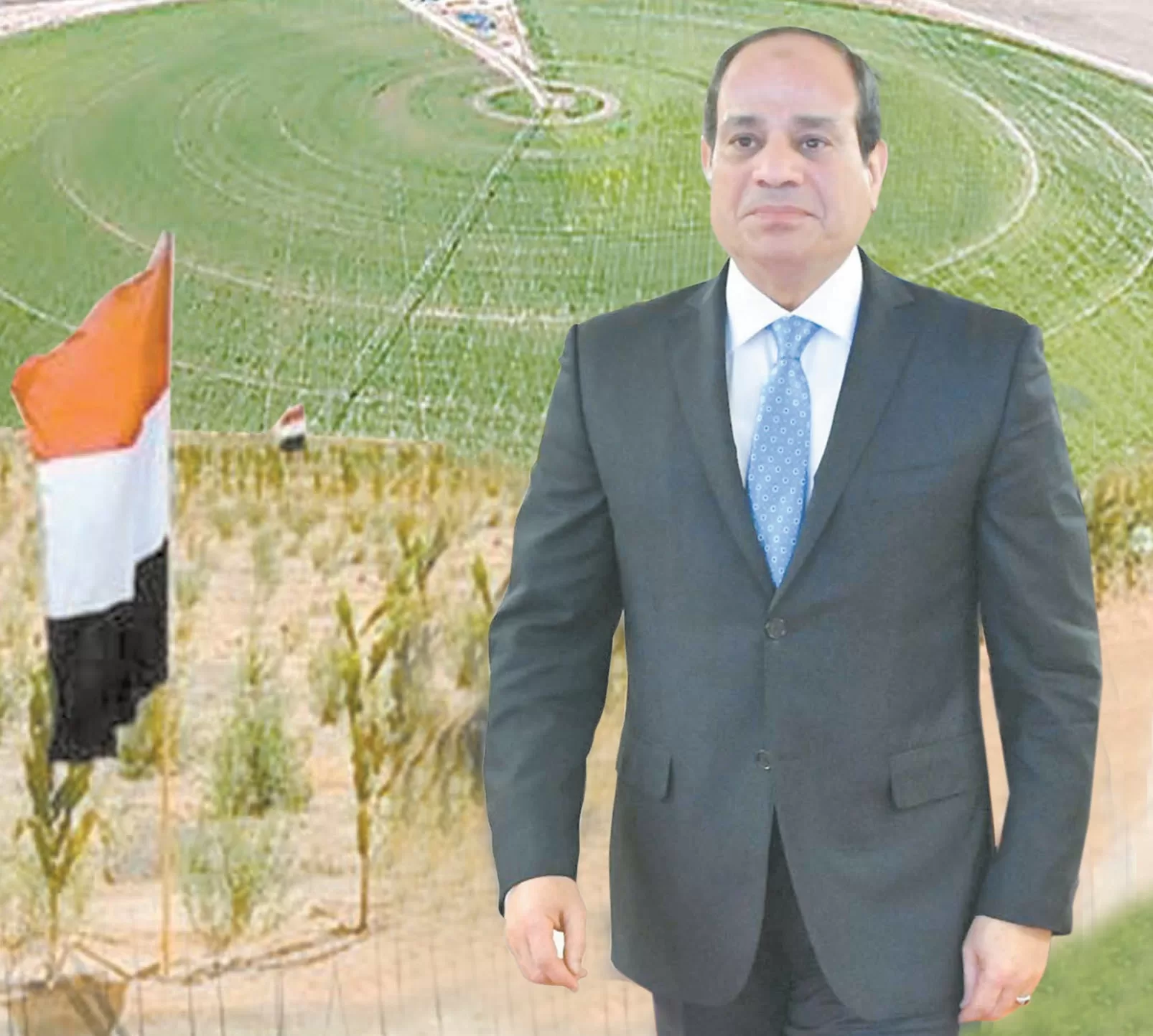
Egypt's agricultural sector has entered a new phase of development, shifting from simply increasing cultivated areas to maximizing economic and productive returns from each feddan and every cubic meter of water. This development comes as part of the state's efforts to expand reclaimed land, increase local production of strategic crops, and modernize irrigation systems. Since President Abdel Fattah El-Sisi took office, he has prioritized the agricultural sector to ensure food security for Egyptians.
The state has been working on multiple fronts to achieve this goal, including horizontal expansion projects in the New Delta, Toshka, Sinai, and Future Egypt. Additionally, efforts have been made to increase productivity of old and new lands, improve water resource efficiency, and develop high-yielding crop varieties that are more resistant to drought and salinity. The use of artificial intelligence, remote sensing, and digital agriculture in crop management has also been emphasized.
Water management has become increasingly important due to limited resources and growing needs, prompting the state to expand modern irrigation systems and reuse treated agricultural wastewater. This approach aims to provide additional water sources for agricultural expansion while achieving higher productivity per unit of water. The agricultural policy has also focused on improving crop composition, linking crop selection to economic returns, market needs, and water resources.
The strategy aims to balance the provision of strategic goods, reduce import bills, and expand export crops that can increase foreign exchange earnings. Egypt's sustainable agricultural development strategy for 2030 targets increasing self-sufficiency in several key commodities, including wheat, red meat, oils, and sugar. The plan also involves supporting animal, poultry, and fish production, as well as developing storage, supply chains, and agricultural processing.
The new approach does not only focus on production within the field but also on maximizing the value added of agricultural products through expansion in sorting, packaging, refrigeration, and processing. This approach aims to reduce waste, increase farmers' returns, and enhance the competitiveness of Egyptian exports. Cooperatives, scientific research, extension services, and technology play a crucial role in transferring modern production tools to small-scale farmers and linking them to markets.
As of 2025, Egypt's total cultivated area has reached approximately 10.5 million feddans, up from around 5.6 million feddans in the 1960s. The state aims to continue horizontal expansion through various projects, while also increasing productivity of existing and new lands. With limited water resources, Egypt is forced to reassess its agricultural production methods, with a focus on modern irrigation systems and reuse of treated water.
The Egyptian government's efforts have resulted in a significant increase in agricultural exports, with exports exceeding $11.5 billion. The sector's growth is expected to continue, driven by the state's commitment to modernizing irrigation systems, expanding reclaimed land, and increasing productivity.
Key points
- Egypt's agricultural sector has seen significant growth under President Abdel Fattah El-Sisi.
- The state aims to continue horizontal expansion through various projects, while also increasing productivity of existing and new lands.
- Egypt's total cultivated area has reached approximately 10.5 million feddans as of 2025.