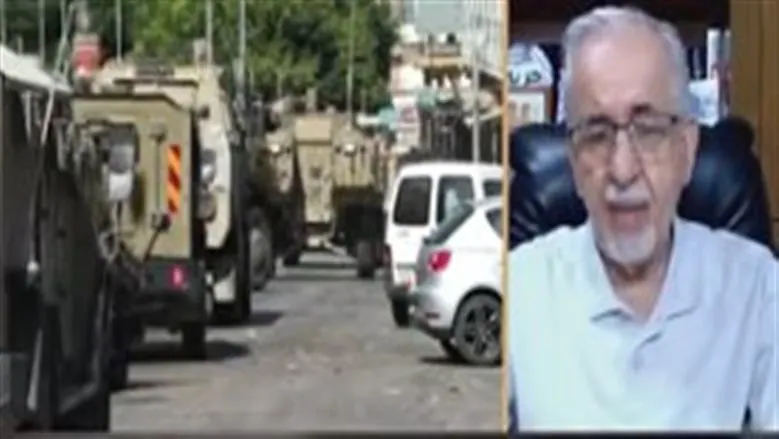
Dr. Soheil Diab, a professor of political science, has provided an analysis of the recent escalation in the West Bank. He suggests that the situation should be viewed from three interconnected perspectives. According to Dr. Diab, the ruling coalition in Israel, with the upcoming Israeli elections in mind, is escalating tensions in the West Bank to appeal to the extreme right, which significantly influences the elections.
Dr. Diab further explains that Israel perceives the West Bank as its backyard, where it can act with relative impunity compared to other fronts such as Iran, Lebanon, Syria, or the Gaza Strip. The extreme right views the West Bank as a critical area, and attacks on Palestinians are seen as a key factor in regaining influence in the future government. This perspective is crucial in understanding the motivations behind the recent escalation.
Another aspect of the situation, according to Dr. Diab, is the internal conflict within the ruling coalition between the secular right and the religious right. Certain factions within the government view the West Bank issue through an ideological lens. The religious right aims to impose a Jewish narrative not only on the Palestinian people but also on the secular Israeli current, both within and outside the ruling coalition.
Dr. Diab also highlights a conflict between the military and political wings of the Israeli government. The political wing prioritizes long-term ideological goals in the West Bank, while the military wing views the situation as a security and military issue. This internal divide adds complexity to the situation and suggests that there are varied strategies at play.
The ongoing escalation has resulted in significant concern and condemnation from various quarters. Egypt has officially expressed its disapproval of the Israeli escalation in the West Bank and the incursions by settlers into the Al-Aqsa Mosque. Such actions are seen as provocative and potentially destabilizing to the region.
The international community has been closely monitoring the situation, with the United Nations holding numerous meetings to discuss global crises, including the situation in the West Bank. The involvement of international actors indicates the global interest in finding a resolution to the conflict and mitigating its impact on the region and beyond.
The situation in the West Bank remains volatile, with continued reports of clashes between Palestinian resistance fighters and Israeli forces. The actions of settlers and the Israeli military have contributed to the tensions, which seem to be escalating in the context of Israeli political dynamics and internal power struggles.
Key points
- The escalation in the West Bank is linked to Israeli elections and internal coalition struggles.
- Egypt has condemned the Israeli escalation in the West Bank.
- The situation involves complex internal conflicts within Israel between the secular and religious right.