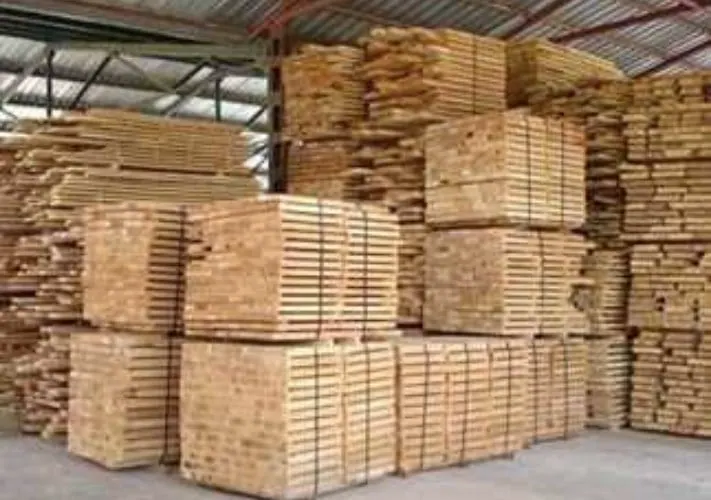
Egypt's wood market is experiencing fluctuating prices as of Wednesday, September 30, 2026. The prices vary depending on several factors, including the type of wood, dimensions, quality, and required quantities. This variation results in price differences among suppliers and distribution outlets. Market participants, including traders and consumers, are keenly following these price movements to make informed purchasing decisions.
The prices of specific types of wood have been reported as follows: the Turkish parquet wood, class 31, is priced at around 548 Egyptian pounds per meter. Meanwhile, the Turkish parquet wood, class 32, costs approximately 561 Egyptian pounds per meter. These prices reflect the ongoing market dynamics and are crucial for stakeholders in the wood industry.
In addition to the parquet wood prices, other types of wood have also recorded notable prices. The "Arro" plywood board, measuring 2.40 x 1.22 meters with a thickness of 18 millimeters, is priced at 1560 Egyptian pounds per board. This information provides valuable insights into the current market rates for various wood products.
The Swedish wood, commercially known as "Mouski," is currently priced between 18,000 and 20,000 Egyptian pounds per meter. This range reflects the variability in prices based on quality and other market factors. The Swedish wood is highly regarded for its quality and durability, making it a popular choice among consumers.
The Romanian beech wood, specifically the "Massif" type, is priced between 31,000 and 34,000 Egyptian pounds per meter in the local market. This type of wood is renowned for its high quality and is widely used in the production of high-end furniture. Its durability and long lifespan make it a preferred choice for luxury furniture manufacturers.
The Egyptian wood industry has shown significant growth in exports. In 2025, the country's exports of wood and furniture reached approximately 428 million dollars, marking a 23% increase compared to 2024. This growth is attributed to the expansion of the industry, improvements in production, and increased presence in international markets.
The wood industry's growth is expected to continue, driven by both domestic and international demand. The varying prices of different types of wood reflect the complex dynamics of the market, influenced by factors such as quality, availability, and global market trends. As the industry continues to evolve, market participants will need to stay informed about price movements and market developments.
Key points
- Egypt's wood exports grew by 23% in 2025, reaching $428 million.
- Prices of wood in Egypt vary based on type, quality, and dimensions.
- Romanian beech wood is highly valued for its durability and used in luxury furniture production.