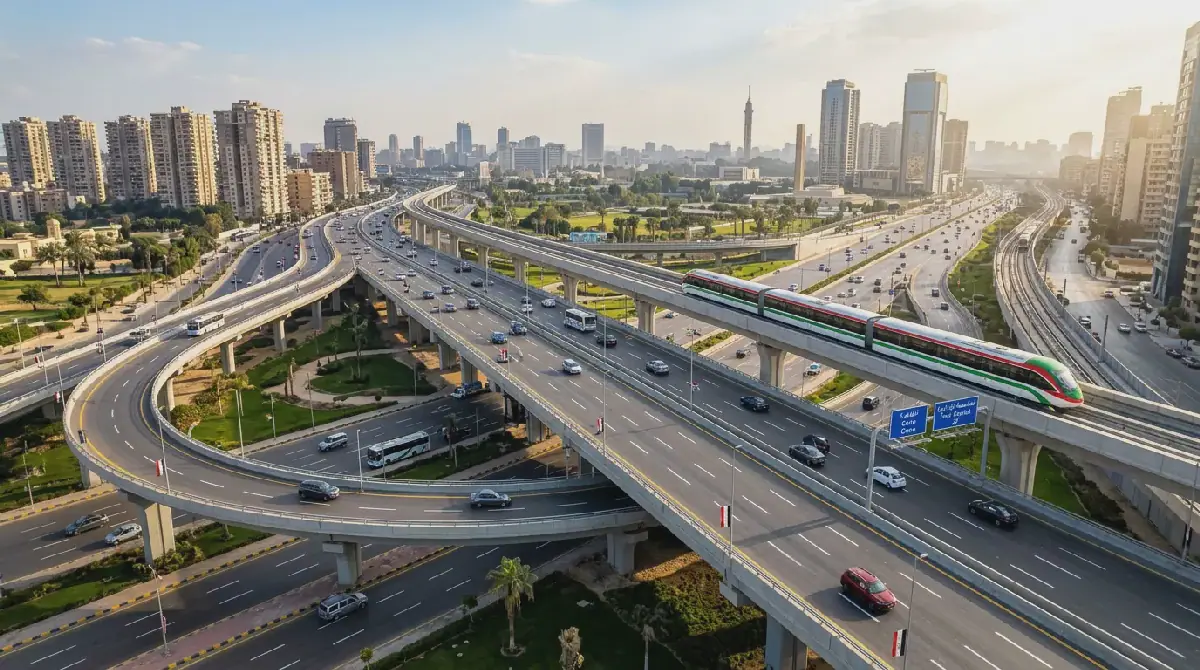
Egypt has witnessed significant expansion in its road and transportation network in recent years as part of the state's infrastructure development plan. The goal is to facilitate the movement of citizens and goods, reduce transportation costs, and support investment and economic activity. Road projects are no longer just construction works but a key part of economic and urban development, directly impacting travel time, fuel consumption, and car maintenance costs.
The development of Egypt's road network has led to a substantial improvement in the country's ranking in global road quality indices. According to experts, Egypt has advanced by nearly 90 positions in these rankings, thanks to increased investments in new roads, development of existing networks, and implementation of projects to improve connectivity between cities, governorates, industrial zones, and ports. This progress enhances the state's competitiveness, efficiency of movement, and reduces travel time and fuel consumption.
The impact of road development on citizens' lives has been significant. Experts argue that the benefits of road projects should be evaluated considering the potential losses that would have occurred if these projects had not been implemented. Traffic congestion results in wasted work hours, increased fuel consumption, higher car operating costs, and environmental damage from emissions. New roads and axes have improved connectivity between urban areas, facilitated access to new cities and industrial zones, and reduced travel time on many routes.
Despite the progress made, traffic congestion persists in some areas, which does not negate the positive impact of development but indicates other challenges related to traffic density, road design, driver behavior, and incomplete public transportation projects. Experts stress that creating and expanding roads is part of the solution but not enough to eliminate traffic congestion, especially in densely populated areas. They call for integrated solutions, including developing traffic planning within crowded residential areas and improving service distribution.
The expansion of public transportation is crucial for reducing reliance on private cars and maximizing the use of the existing road network. Experts emphasize that the success of public transportation systems depends on their ability to provide a convenient, safe, and punctual service at an affordable cost. Integrating different modes of transportation, such as metro, bus rapid transit, monorail, and trains, is essential in planning the transportation system, enabling citizens to complete their journeys easily without relying on private cars.
The implementation of a comprehensive ticketing system using a unified card that allows citizens to use various modes of transportation at an affordable cost, with discounts for transfers between different modes, is also seen as vital. The cost of travel is a decisive factor in citizens' decisions to use public or private transportation. Therefore, pricing policies should consider the economic and social impact of the entire transportation system, not just the operating costs of each mode.
Maintaining the new road network is as important as its development, given the significant investments in infrastructure projects. Experts stress the need to apply axle load regulations to prevent damage from overweight trucks, enforce effective monitoring to prevent overloading, and implement regular and preventive maintenance programs. Using intelligent systems to monitor traffic, redistribute density across different axes, and continuously monitor road conditions is also crucial.
Key points
- Egypt has made significant progress in developing its road network, improving road quality indices.
- Traffic congestion persists due to various challenges, including traffic density and incomplete public transportation projects.
- Expansion of public transportation and maintenance of the road network are essential for sustainable traffic flow.