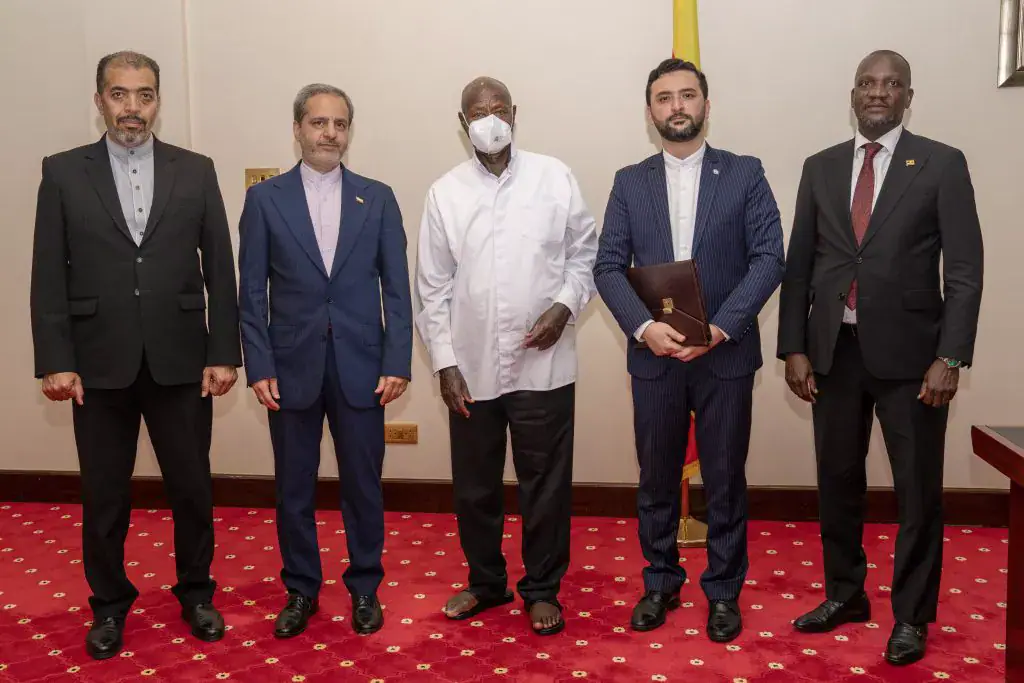
On October 26, 2026, President Yoweri Kaguta Museveni met with outgoing Iranian Ambassador to Uganda, H.E Majid Saffar, at State House, Entebbe. The meeting centered on strengthening bilateral cooperation in agriculture, healthcare, and education. President Museveni emphasized the potential for investment in Uganda's agricultural sector, particularly in processing products like cocoa, coffee, and pineapples. This approach, he noted, would create jobs, expand trade, and increase earnings from agricultural exports.
President Museveni's remarks were in response to H.E Saffar's disclosure that Iranian investors were interested in establishing agricultural farms in Uganda. Instead, the President suggested that Iranian investors should consider building factories in Uganda to process agricultural products from local farmers. This model would enable Ugandan farmers to supply raw materials while foreign investors establish industries to process them into higher-value products for local consumption and export.
H.E Saffar expressed Iran's readiness to operationalize agricultural cooperation with Uganda, promoting commercial agriculture, trade, and employment. He noted that several Iranian companies were interested in processing Ugandan agricultural products, such as cocoa, coffee, and pineapples. The proposed cooperation could provide opportunities for agricultural cooperatives and farmers' organizations to access markets, strengthen production, and benefit from increased demand for locally grown produce.
The meeting between President Museveni and H.E Saffar also covered discussions on expanding cooperation in healthcare and education. These areas were identified as potential avenues for strengthening relations between Kampala and Tehran. The two leaders recognized the potential for collaboration in these sectors, which could lead to improved health and education outcomes for Ugandans.
President Museveni took the opportunity to thank H.E Saffar for his service in Uganda and wished him success in his future diplomatic assignments. The meeting also touched on the security situation in Iran and the wider Middle East. President Museveni called for an end to identity-based politics and urged countries in the region to recognize one another.
The President cited longstanding tensions between Iran and Israel, arguing that both countries should recognize one another, while Israel should also recognize Palestinian statehood. He emphasized that political and religious identities should not be used to justify hostility between countries or determine how communities relate to one another. President Museveni's advice to the Middle East was to stop the politics of identity and adopt more constructive methods of solving problems.
The meeting marked the conclusion of H.E Saffar's tenure as Iran's ambassador to Uganda, with both sides expressing interest in strengthening bilateral relations through cooperation in agriculture, healthcare, education, and trade. The proposed cooperation between Uganda and Iran has the potential to promote economic growth, improve livelihoods, and enhance diplomatic ties between the two nations.
Key points
- President Museveni urges Iranian investors to establish agro-processing factories in Uganda.
- The proposed cooperation between Uganda and Iran could provide opportunities for agricultural cooperatives and farmers' organizations to access markets and strengthen production.
- President Museveni and H.E Saffar discussed expanding cooperation in healthcare and education to strengthen relations between Kampala and Tehran.