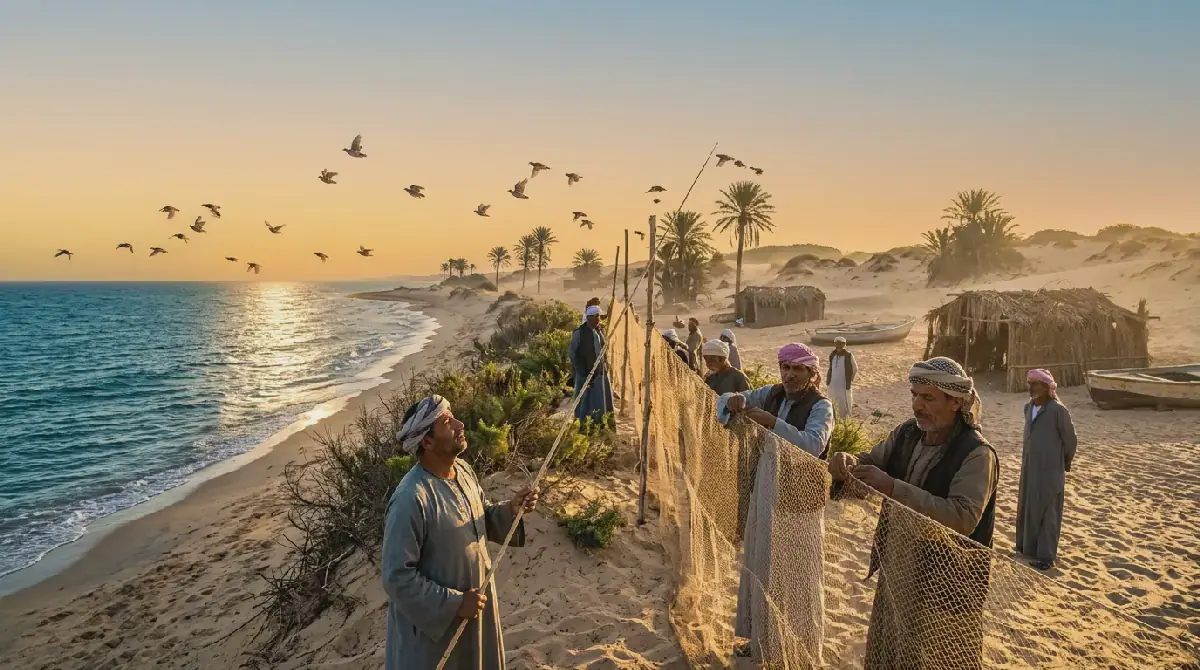
The quail migration season in Egypt's Sinai Peninsula has begun, bringing with it a renewed sense of life and tradition to the region. This annual event, which usually starts on September 1st and lasts until mid-November, is more than just a natural phenomenon; it's a source of income for many families and a cherished tradition passed down through generations. Locals prepare for the season by setting up makeshift homes, including nests made of palm fronds, and traditional fishing nets.
The quail season is not just about hunting; it's a significant economic activity that involves various stakeholders, including fishermen, traders, and restaurant owners. Fishermen sell their catch to traders, who then transport and sell the quail to local markets and restaurants. This creates a vital economic cycle that benefits many, including those involved in transportation, equipment supply, and other related activities. The season also boosts the local economy by providing job opportunities and stimulating trade.
The prices of quail vary depending on the season's stage and the available supply. According to local traders, prices tend to be higher at the beginning of the season when quantities are scarce and may decrease as the supply increases. The price of a pair of quail can range from 40 to 100 Egyptian pounds, depending on the market conditions. This fluctuation in prices reflects the seasonal nature of the market, which is influenced by the birds' migration patterns and demand.
Over the years, the methods of quail hunting have evolved, from using primitive tools to more modern equipment. Locals have adopted new technologies, such as devices that mimic the sounds of quail, to attract the birds. The evolution of hunting methods has also led to changes in the way people prepare for the season, with some opting for more comfortable and modern accommodations. Despite these changes, the traditional aspect of the season remains an essential part of the local culture.
The quail season holds significant social and cultural value for the local communities in Sinai. It's an occasion for families and friends to gather, share stories, and pass down traditions to younger generations. Many locals look forward to this time of the year, as it allows them to reconnect with their heritage and enjoy the natural beauty of the region. The season also provides an opportunity for people to bond over traditional foods, such as quail dishes cooked over open fires.
The quail season has become an integral part of the local identity, with many residents regarding it as a cherished tradition. The event brings people together, fostering a sense of community and social bonding. As the season progresses, the local markets and restaurants come alive with the sights and sounds of quail hunting, further solidifying the region's connection to this time-honored tradition.
As the quail migration season continues, locals and visitors alike are drawn to the region's natural beauty and rich cultural heritage. The event offers a unique experience, allowing people to immerse themselves in the local way of life and appreciate the traditions that have been passed down through generations. With its significant economic and social impact, the quail season has become an essential part of life in Egypt's Sinai Peninsula.
Key points
- The quail migration season in Egypt's Sinai Peninsula provides a vital source of income for local communities and stimulates economic activity.
- The season holds significant social and cultural value, fostering a sense of community and social bonding among locals.
- The event offers a unique experience, allowing people to immerse themselves in the local way of life and appreciate the traditions that have been passed down through generations.