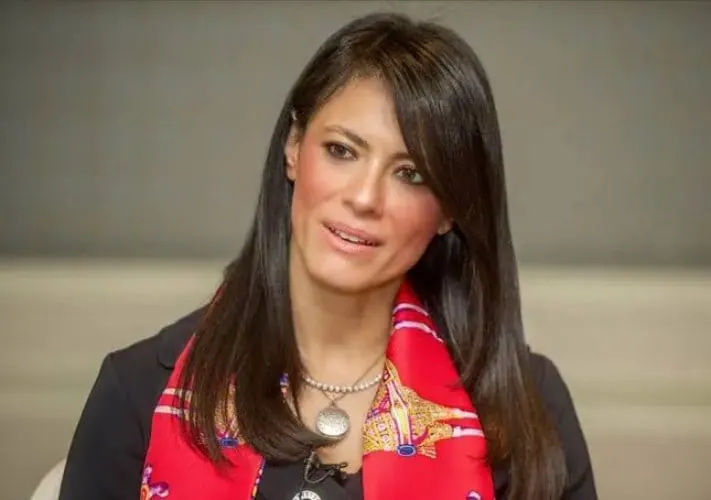
Dr. Rania El-Mashat, UN Under-Secretary-General and Executive Secretary of the UN Economic and Social Commission for Western Asia (ESCWA), emphasized that maritime security is no longer just a commercial issue, but a crucial economic and developmental one. Speaking on MBC Egypt's program "Al-Hakaya," El-Mashat highlighted that the current situation has proven that the geographical location of maritime corridors remains a decisive factor in the global economy. She noted that the region, including the Gulf, Strait of Hormuz, Red Sea, and Bab-el-Mandeb, forms interconnected links in the global energy, food, and trade movement.
El-Mashat explained that disruptions in these corridors can have far-reaching consequences, as seen in the recent disturbances in the region, which have impacted transportation costs, insurance, and supply chains. She cited estimates from ESCWA, indicating that the conflict's costs during the first month of the crisis reached approximately $150 billion, equivalent to nearly 4% of the regional GDP. This, she stressed, reflects the significant economic repercussions of maritime and energy trade disruptions.
The UN official outlined several priorities to address the current challenges, including protecting freedom of navigation and ensuring the safety of civilian and commercial vessels in accordance with international law. She also emphasized the need to prevent the escalation of the conflict and contain its repercussions across borders. Furthermore, El-Mashat highlighted the importance of enhancing regional preparedness and resilience to economic shocks.
El-Mashat revealed that ESCWA has been working with Arab member states to establish a technical working group for rapid support and response since the crisis began. She underscored the commission's role in regional coordination and supporting member states. The executive secretary also noted that ESCWA has programs in cooperation with several Arab countries, including Egypt, Lebanon, Syria, Yemen, Somalia, and Djibouti, tailored to each country's specific needs.
El-Mashat discussed the role of ESCWA, which was established in 1973, in promoting regional cooperation and supporting development in the Arab region. She explained that the commission facilitates collective thinking among member states, builds capacities, and fosters communication and convergence. ESCWA also works on various economic, social, and institutional files with governments.
The UN official highlighted ESCWA's efforts to support Arab countries in addressing climate change, including training negotiators to participate more effectively in international negotiations. She also mentioned the commission's work on public finance, increasing local resources, social disparities, and promoting economic growth and diversification. El-Mashat noted that ESCWA collaborates with various Arab and international institutions, including the Arab League, World Bank, and International Monetary Fund.
El-Mashat concluded that the current developments underscore the significance of cooperation and partnerships in addressing the challenges facing the Arab region. She stressed that the impact of the crisis extends beyond the countries directly involved, affecting the global economy through trade, energy, and supply chains. The executive secretary emphasized that reinforcing cooperation among Arab states and expanding partnerships with international and regional institutions is crucial to mitigating the economic repercussions of the crisis and protecting development gains.
Key points
- Maritime security is crucial for global economy and stability
- Disruptions in maritime corridors can have far-reaching consequences
- Cooperation and partnerships are essential to address the challenges facing the Arab region