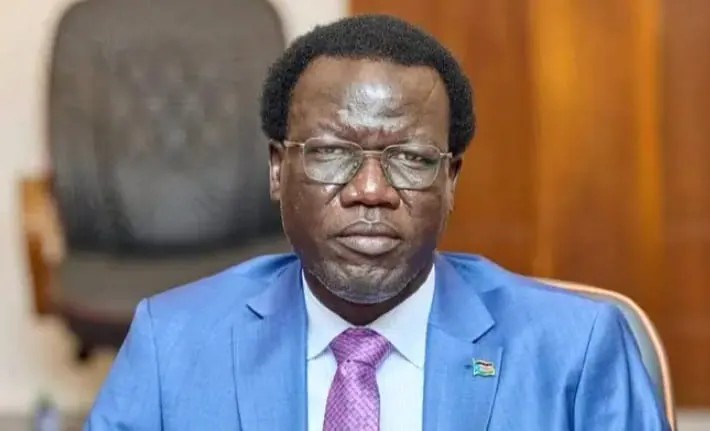
The Minister of Finance and Planning, Kuol Daniel Ayulo, presented the proposed budget to the Transitional National Legislature, themed "Building Resilience and Economic Prosperity for Sustainable Peace." The budget proposes SSP 11.34 trillion in expenditures, with SSP 2.16 trillion allocated for debt servicing and loan repayments. Ayulo stated that the budget aims to address the country's economic challenges while preparing for the upcoming December elections.
Oil revenue is estimated at SSP 9.01 trillion, representing approximately 79.5% of total revenue, while non-oil revenue is projected at SSP 2.32 trillion, accounting for 20.5% of total revenue. The government's continued dependence on oil revenue is evident, despite efforts to broaden domestic revenue collection. Ayulo announced plans to expand the domestic tax base through digital tax collection and stronger revenue administration.
The proposed budget allocates SSP 1.187 trillion for infrastructure, SSP 2.71 trillion for capital expenditure, and SSP 513.1 billion for education. The health sector is allocated SSP 371.5 billion, while public administration and security receive SSP 927.4 billion and SSP 710.89 billion, respectively. The budget also sets aside SSP 183.99 billion for pre-election activities and the December general elections.
The government has proposed SSP 933.42 billion for transfers and grants to states, administrative areas, and counties. Additionally, SSP 1.18 trillion is allocated for payments to Sudan under existing oil-related agreements. Oil-producing states and communities are set to receive SSP 156.65 billion and SSP 234.97 billion, respectively, under revenue-sharing arrangements.
The proposed budget also includes SSP 234.97 billion for the Ministry of Petroleum and SSP 500 billion to recapitalise the Bank of South Sudan. Speaker Joseph Ngere Paciko referred the proposed budget to specialised parliamentary committees for scrutiny, directing them to submit their findings within a week. The committees will review spending plans for ministries, departments, and agencies under their jurisdictions.
The parliamentary clusters will review the committees' reports and forward them to the Economic Cluster, which will prepare a second-reading report within 21 days. The proposed budget remains subject to parliamentary scrutiny, debate, and approval before becoming the official national spending plan. Ayulo urged lawmakers to consider and approve the draft budget, finance bill, and appropriation bill for 2026/27.
Key points
- Oil revenue is estimated at 79.5% of total revenue in the proposed SSP 11.34 trillion budget.
- The government aims to broaden domestic revenue collection through digital tax collection and stronger revenue administration.
- The proposed budget allocates SSP 183.99 billion for pre-election activities and the December general elections.