Iran and the United States are experiencing increased tensions, with both countries exchanging threats and warnings. Iranian authorities have cautioned against any new US attacks, stating that they would be met with a different response than previous assaults. The Iranian Revolutionary Guard Corps' spokesperson, Hossein Mobebi, emphasized that Iran is prepared for a prolonged conflict. This escalation occurs as diplomatic efforts, including a visit by Pakistani Interior Minister Mohsen Naqvi to Tehran, aim to promote de-escalation.
The Iranian military has announced that it possesses information suggesting the US is preparing to resume combat operations. In response, Iranian Army Commander General Amir Hatami stated that the nation and its armed forces will firmly address any threats to the country's security and territorial integrity. On the political front, US President Donald Trump indicated that options regarding Iran include economic pressure or reaching an agreement, expressing openness to a meeting with Iranian President Masoud Pezeshkian during the United Nations General Assembly.
Pezeshkian has shown willingness to engage in peace talks with the US, emphasizing the need for cautious handling and maintaining internal unity. He is set to attend the UN General Assembly in New York, accompanied by his media team, although reports indicate that the US has denied visas to team members. Meanwhile, US Representative Anna Paulina Luna has suggested that reaching an agreement to end the conflict with Iran serves American interests, requiring extensive negotiations with governments that have communication channels with Tehran.
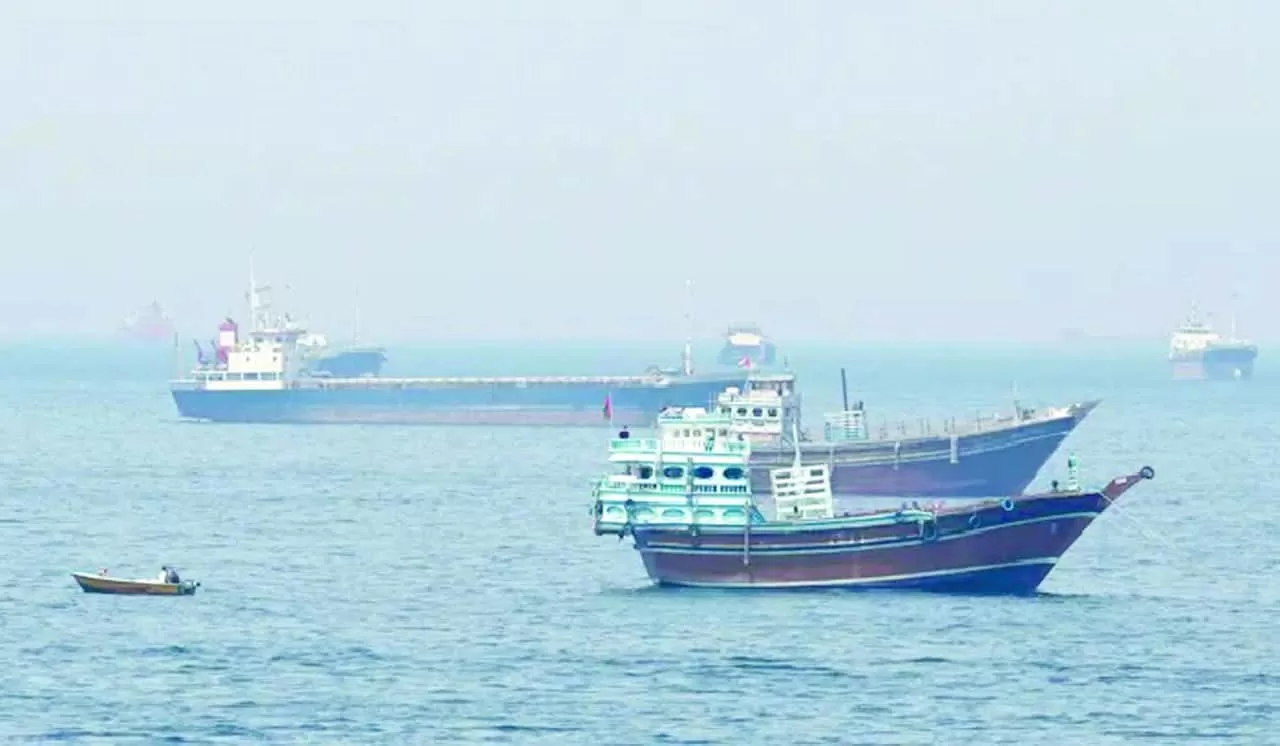
Tensions have also intensified in the Strait of Hormuz, a critical waterway for global energy trade, due to concerns about ship safety. The British Maritime Trade Operations reported an incident involving a tanker that was hit by an unknown projectile while traversing the strait, resulting in minor injuries to two crew members. The vessel continued its journey under its own power, and authorities are investigating the incident.
The incident in the Strait of Hormuz has raised concerns about the impact of security tensions on maritime navigation. Data collected by the shipping tracking company Kepler indicates that 12 vessels crossed the strait over the weekend, compared to 35 during the previous weekend. This decrease highlights the challenges posed by escalating tensions in the region.
Iranian President Pezeshkian's visit to the UN General Assembly and potential talks with the US are being closely watched. The US has expressed openness to negotiations, but Iran remains cautious. The international community is monitoring developments, as a prolonged conflict between the US and Iran could have far-reaching consequences for global energy markets and regional stability.
As diplomatic efforts continue, the situation in the Strait of Hormuz and the broader Middle East remains volatile. All parties involved must exercise restraint and engage in meaningful dialogue to address their concerns and avoid further escalation. The international community has a vested interest in promoting peace and stability in the region.
Key points
- The US and Iran are engaged in a heated exchange of threats and warnings.
- Diplomatic efforts, including a visit by Pakistani Interior Minister Mohsen Naqvi to Tehran, aim to promote de-escalation.
- Tensions in the Strait of Hormuz have raised concerns about ship safety and the impact on global energy trade.