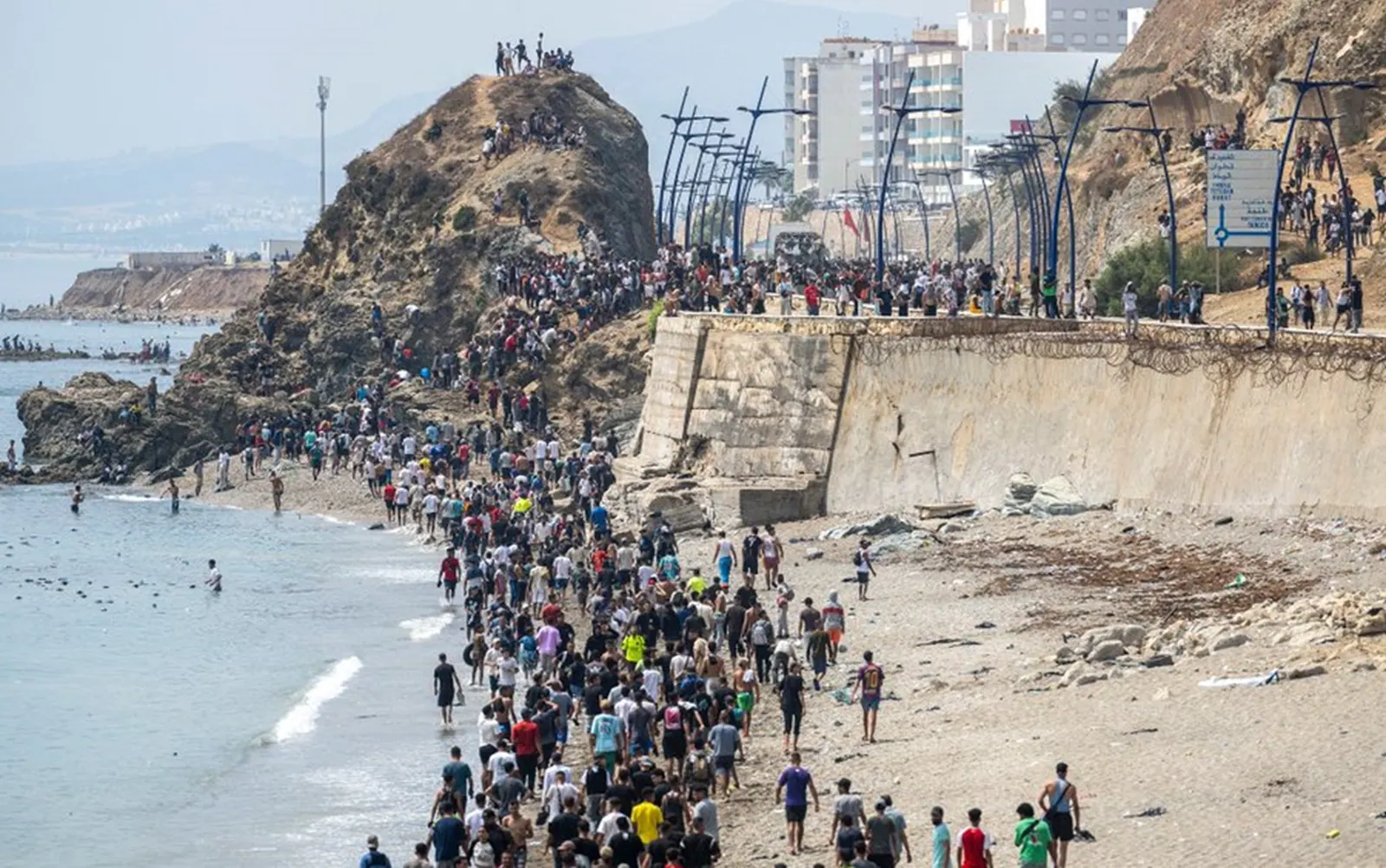
The European Parliament has adopted a resolution on the migration situation in Ceuta, a Spanish enclave in Morocco. The text, which was approved by 339 votes, 225 against and 16 abstentions, calls for enhanced cooperation between the European Union and Morocco to address the challenges posed by migration. The resolution comes amid heightened tensions between Spain and Morocco over the enclave.
The Spanish People's Party had urged the European Parliament to take a tougher stance on Morocco, with some members accusing Rabat of planning and coordinating a mass influx of migrants into Ceuta. However, the European People's Party, which is part of the European Parliament, took a more cautious approach, calling for increased cooperation with Morocco to strengthen border protection and accelerate the return of irregular migrants.
The European Parliament's resolution does not accuse Morocco of planning or coordinating the migration influx, nor does it call for sanctions or the suspension of cooperation agreements. Instead, it urges the EU and Morocco to work together to address the migration challenges, including the return of irregular migrants. The text also calls for the reinforcement of the EU's external borders and the acceleration of return procedures.
Morocco has expressed its willingness to cooperate with Spain and the EU on migration issues, including the return of its nationals who have entered Ceuta irregularly. The Moroccan government has stated that it is ready to receive those who need to be returned. This willingness to cooperate has been welcomed by the European Parliament, which has called for a strengthened partnership between the EU and Morocco to tackle migration challenges.
The resolution adopted by the European Parliament has been met with mixed reactions. While some MEPs have welcomed the text, others have expressed concerns about its tone and content. The resolution has also been criticized for not being more nuanced in its approach to Morocco. Nevertheless, the text represents a significant step forward in the EU's efforts to address migration challenges in cooperation with Morocco.
The European Parliament's resolution has also highlighted the need for a more practical and operational approach to migration issues. The text calls for the reinforcement of border protection, the acceleration of return procedures, and enhanced cooperation between the EU and Morocco. This approach has been welcomed by some MEPs, who argue that it is more effective than simply adopting a tough stance on migration.
The adoption of the resolution has also sparked debate about the future of EU-Morocco cooperation on migration issues. Some argue that the EU needs to work more closely with Morocco to address the root causes of migration, while others believe that the EU should take a tougher stance on migration. The resolution represents a significant step forward in the EU's efforts to address migration challenges, but it also highlights the complexities and challenges of EU-Morocco cooperation on migration issues.
Key points
- The European Parliament has called for enhanced cooperation with Morocco to tackle migration challenges.
- The resolution adopted by the European Parliament does not accuse Morocco of planning or coordinating the migration influx.
- Morocco has expressed its willingness to cooperate with Spain and the EU on migration issues, including the return of its nationals who have entered Ceuta irregularly.